We remain fully operational. Our teams are working around the clock to ensure your deliveries continue safely.

DOWNLOAD THE APP


Customer Services
Copyright © 2025 Desertcart Holdings Limited
DOWNLOAD THE APP
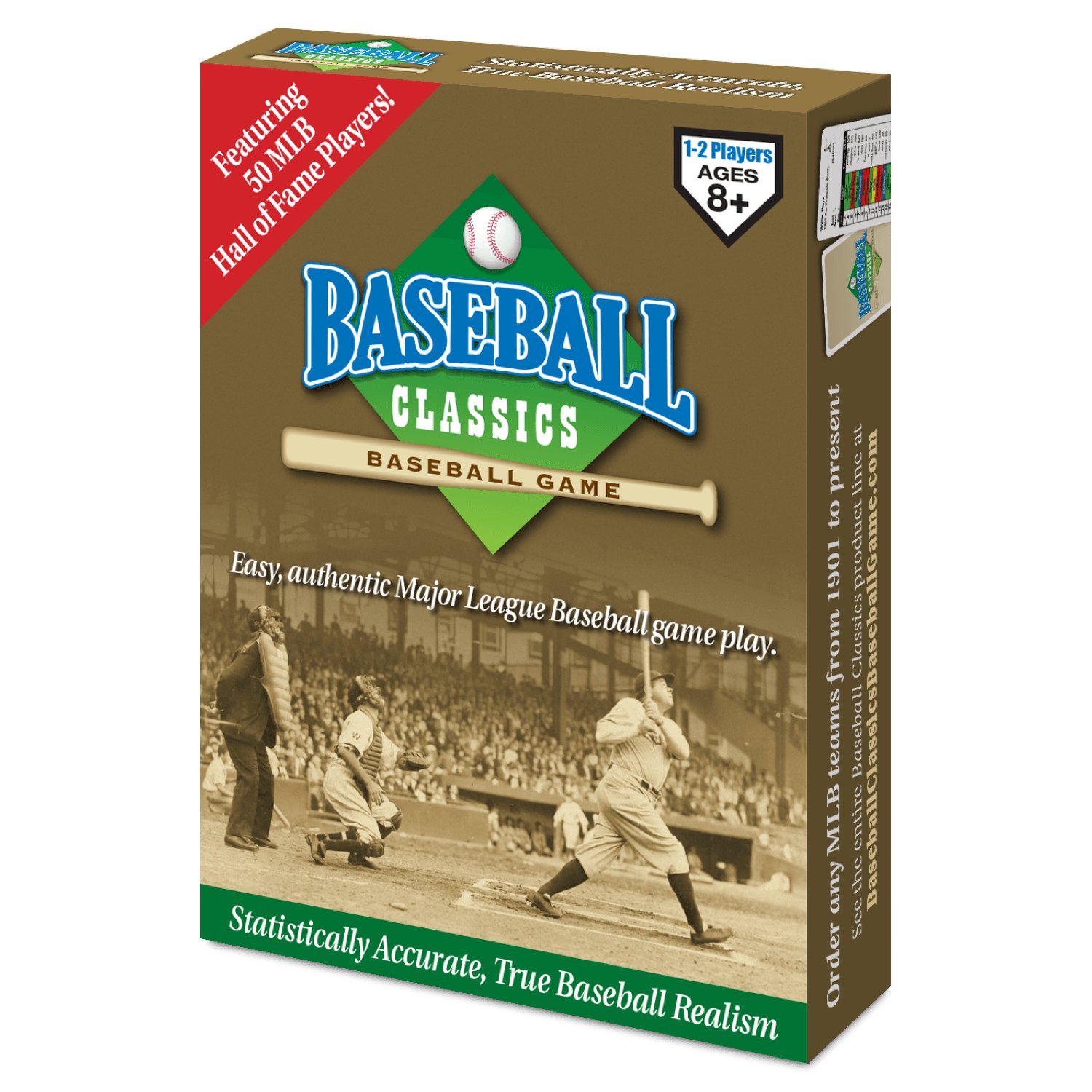
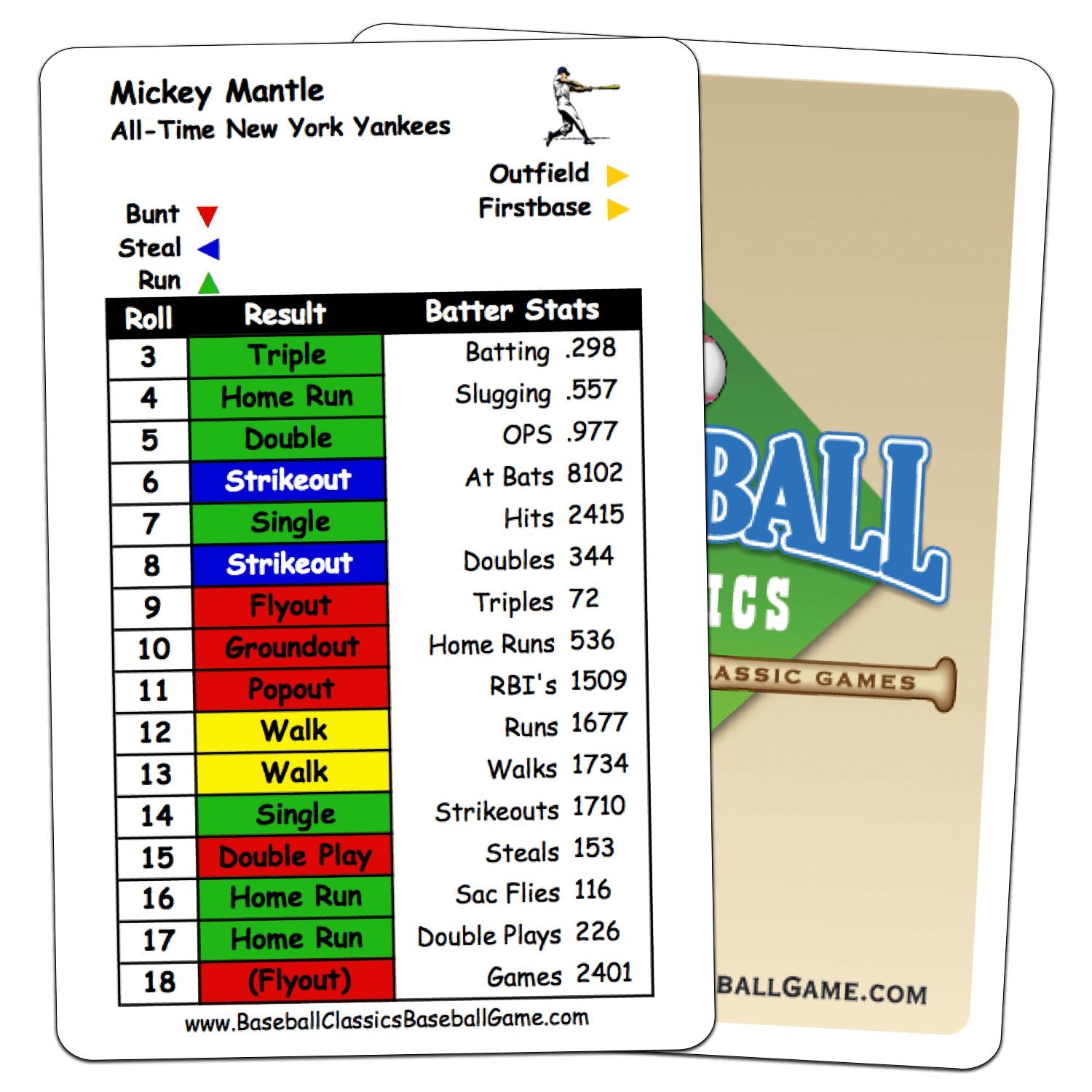
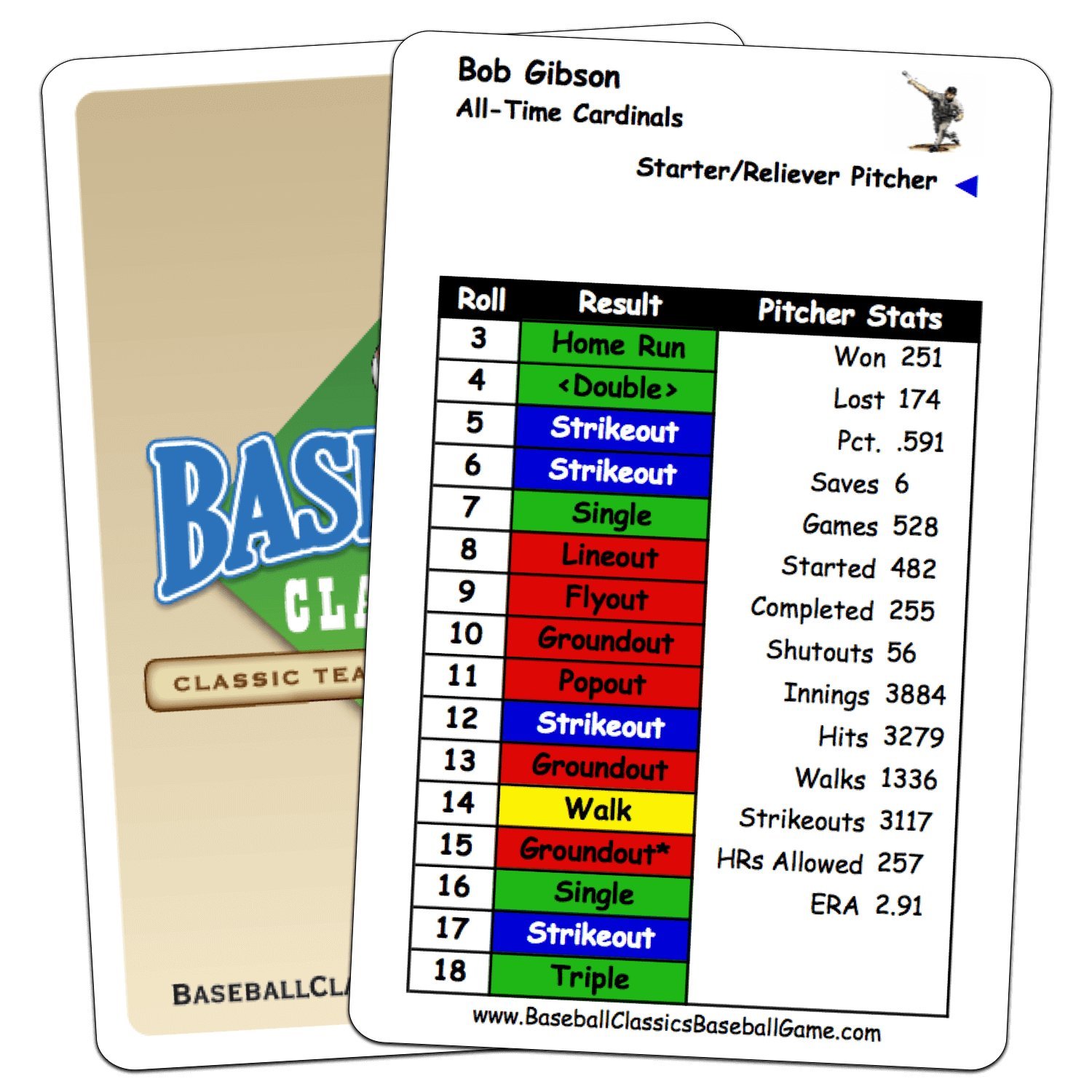
Review: Fun. - Very nice. Review: Based on a lazy & outdated view of the game - In any card-and-dice baseball game, there are little windows into how the game functions that tell you a lot. For this game, you can tell they cut corners on fielding. And although I sympathize with being able to "normalize" a difficult stat like fielding across generations, this game does it in a very ham-handed & ultimately counter-productive way. Exhibit A: Honus Wagner. Wagner was not only a HOF-er, but a guy that played all over the diamond, and was at minimum competent at those positions, if not exceptional. He's got 12 seasons in the top-10 in fielding percentage, 13 seasons in the top-10 in modern Range Factor, and many top seasons in putouts, assists, and double-plays turned. He has a lifetime accumulated modern dWAR of 21.3 and five seasons where just his dWAR was 2.0 or above. So what rating do you think Baseball Classics gives ol' Honus? Well, they have 4 grades for fielding (as well as for most non-batting attributes) with the best being the "up green" arrow, and the worst being the "down red" arrow. So what does he get? If you said "up green" you would be wrong: He gets the worst possible rating in the game as a "down red" arrow. And if you ask why, I can tell you: Lazy normalization. They likely put all of the HOF players on a spectrum and ranked them by errors made. And statistically, Wagner did indeed make a lot of errors. Part of that is simply deadball baseball: There were a LOT of fielding plays made back then (contrasted to now, where every inning is strikeout, followed by fly ball out, followed by homerun, rinse and repeat.) So Wagner got to a lot of ground balls (thus his tremendous range factor) but in this game, that fact becomes a liability, and Wagner is duly punished simply for the crime of having a lot of errors. The game goes no further in assigning fielding ability, so lots of errors means you must be a bad-fielding baseball player. This is sad, and absolutely inaccurate. And if you want to go beyond that ("Maybe they got the non-deadball guys right?") well just look at poor Luke Appling. Again, a noted great defender (lifetime dWAR of 19) with great range, great putout totals, great double-plays, great assist totals, and even a very good fielding percentage, BUT... lots of errors and, you guessed it: Appling gets the dreaded "down red" error as ranking among the worst ever. And it really makes you wonder: If they are short-changing defensive metrics, then what batting stats are they cutting corners on? It's bad enough they don't even bother listing OBP on the cards (yet they have AVG, SLG, and OPS, so figure that out) but they list such vital stats as triples and sacrifice flies! And like I said previously: I sympathize with how fielding can be difficult to pin down, but even a cursory examination of the ratings BC came up with should have made them pause and concoct a better formula for fielding ratings. It also makes me wonder how they can possibly normalize "any team ever" against every other team, like how they claim to do on their website. If they can't normalize across a single HOF set, I have no idea how badly accuracy gets butchered when you want to tell consumers you can "print any team ever." Because I'm pretty sure the only way to do that is by ignoring modern stats & doing it poorly. There are many card-and-dice games available for your gaming dollar, even in today's digital age, so approach this one with caution.
| ASIN | B074MCRJYY |
| Age Range Description | Adult |
| Brand Name | Baseball Classics |
| Container Type | Box |
| Customer Reviews | 3.7 out of 5 stars 11 Reviews |
| Global Trade Identification Number | 00865786000404 |
| Included Components | Cards |
| Item Dimensions | 3.6 x 2.6 x 0.7 inches |
| Item Weight | 0.24 Pounds |
| Manufacturer | Baseball Classics |
| Material Type | Cardboard |
T**R
Fun.
Very nice.
P**R
Based on a lazy & outdated view of the game
In any card-and-dice baseball game, there are little windows into how the game functions that tell you a lot. For this game, you can tell they cut corners on fielding. And although I sympathize with being able to "normalize" a difficult stat like fielding across generations, this game does it in a very ham-handed & ultimately counter-productive way. Exhibit A: Honus Wagner. Wagner was not only a HOF-er, but a guy that played all over the diamond, and was at minimum competent at those positions, if not exceptional. He's got 12 seasons in the top-10 in fielding percentage, 13 seasons in the top-10 in modern Range Factor, and many top seasons in putouts, assists, and double-plays turned. He has a lifetime accumulated modern dWAR of 21.3 and five seasons where just his dWAR was 2.0 or above. So what rating do you think Baseball Classics gives ol' Honus? Well, they have 4 grades for fielding (as well as for most non-batting attributes) with the best being the "up green" arrow, and the worst being the "down red" arrow. So what does he get? If you said "up green" you would be wrong: He gets the worst possible rating in the game as a "down red" arrow. And if you ask why, I can tell you: Lazy normalization. They likely put all of the HOF players on a spectrum and ranked them by errors made. And statistically, Wagner did indeed make a lot of errors. Part of that is simply deadball baseball: There were a LOT of fielding plays made back then (contrasted to now, where every inning is strikeout, followed by fly ball out, followed by homerun, rinse and repeat.) So Wagner got to a lot of ground balls (thus his tremendous range factor) but in this game, that fact becomes a liability, and Wagner is duly punished simply for the crime of having a lot of errors. The game goes no further in assigning fielding ability, so lots of errors means you must be a bad-fielding baseball player. This is sad, and absolutely inaccurate. And if you want to go beyond that ("Maybe they got the non-deadball guys right?") well just look at poor Luke Appling. Again, a noted great defender (lifetime dWAR of 19) with great range, great putout totals, great double-plays, great assist totals, and even a very good fielding percentage, BUT... lots of errors and, you guessed it: Appling gets the dreaded "down red" error as ranking among the worst ever. And it really makes you wonder: If they are short-changing defensive metrics, then what batting stats are they cutting corners on? It's bad enough they don't even bother listing OBP on the cards (yet they have AVG, SLG, and OPS, so figure that out) but they list such vital stats as triples and sacrifice flies! And like I said previously: I sympathize with how fielding can be difficult to pin down, but even a cursory examination of the ratings BC came up with should have made them pause and concoct a better formula for fielding ratings. It also makes me wonder how they can possibly normalize "any team ever" against every other team, like how they claim to do on their website. If they can't normalize across a single HOF set, I have no idea how badly accuracy gets butchered when you want to tell consumers you can "print any team ever." Because I'm pretty sure the only way to do that is by ignoring modern stats & doing it poorly. There are many card-and-dice games available for your gaming dollar, even in today's digital age, so approach this one with caution.
S**E
Good, fun, speedy game
This is the basic, introductory game, and doesn't have some of the features of the more advanced game. Still, it's a fun game for a couple people to while away an afternoon with (especially if one of them is, like my wife, not really interesting in fooling with some of the intricacies of a Strat game). Great game for the baseball fan who isn't the kind, like me, who checks the lefty-righty stats on players I've never heard of.
A**R
One Star
I expected a box game, not just a deck of cards. The picture is misleading.
J**N
Five Stars
loved it
G**Y
A taste of a bigger board game.
I bought this because I am an avid tabletop baseball gamer. Baseball Classics is one of the newer players in this market, trying to muscle in on the better known players in the hobby (APBA, Strat-o-Matic, Replay, PlAAY games, etc.). This is basically a deck of cards representing various star players, enough for two teams, along with playing card-sized charts that are nearly impossible to read without a magnifying glass. You do not need dice, as there is a bizarre way to get results from the cards in the pack. But if you have three dice of your own you'll be better off and not have to use this weird method to resolve plays. You cannot determine how realistic the games results are without playing a full season. This is basically a sample of the larger game available at the company's web site. There you'll find various iterations of the game available in rather pricey combinations. Of course, what you are paying for is the presentation. The other tried and true companies are printed on nice card stock, usually in black & white, or maybe black, white, and red, and so on. But Baseball Classics is printed on colorful playing card stock resplendent with bright colors. But to keep this review focused on the deck of cards you get here, I'd say it's a nice little game for a couple of 10-year-old baseball fans who just want to knock off an hour playing against each other. (It also plays solitaire, as 99 percent of tabletop baseball games do.) Again, it's hard to read the card-sized charts. If you want bells and whistles and lots of pretty colors, go for it. I like a little more substance, such as rare plays and things I did not see in this intro version to the larger game, available on the company web site. I can't recommend to the serious baseball gamer except as a collector or novelty item. But it might be fine fun for kids.
A**R
Four Stars
ok
Trustpilot
3 weeks ago
3 days ago