
DOWNLOAD THE APP


Customer Services
Copyright © 2025 Desertcart Holdings Limited
DOWNLOAD THE APP

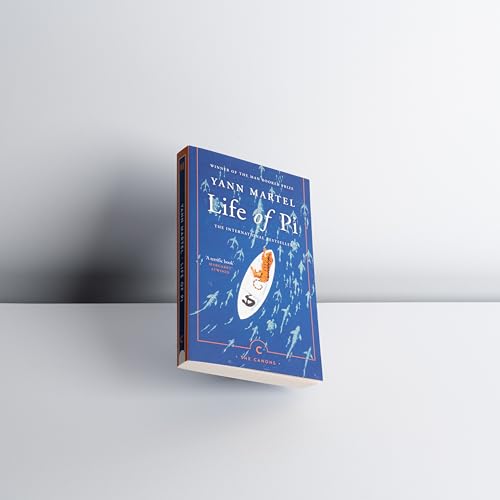

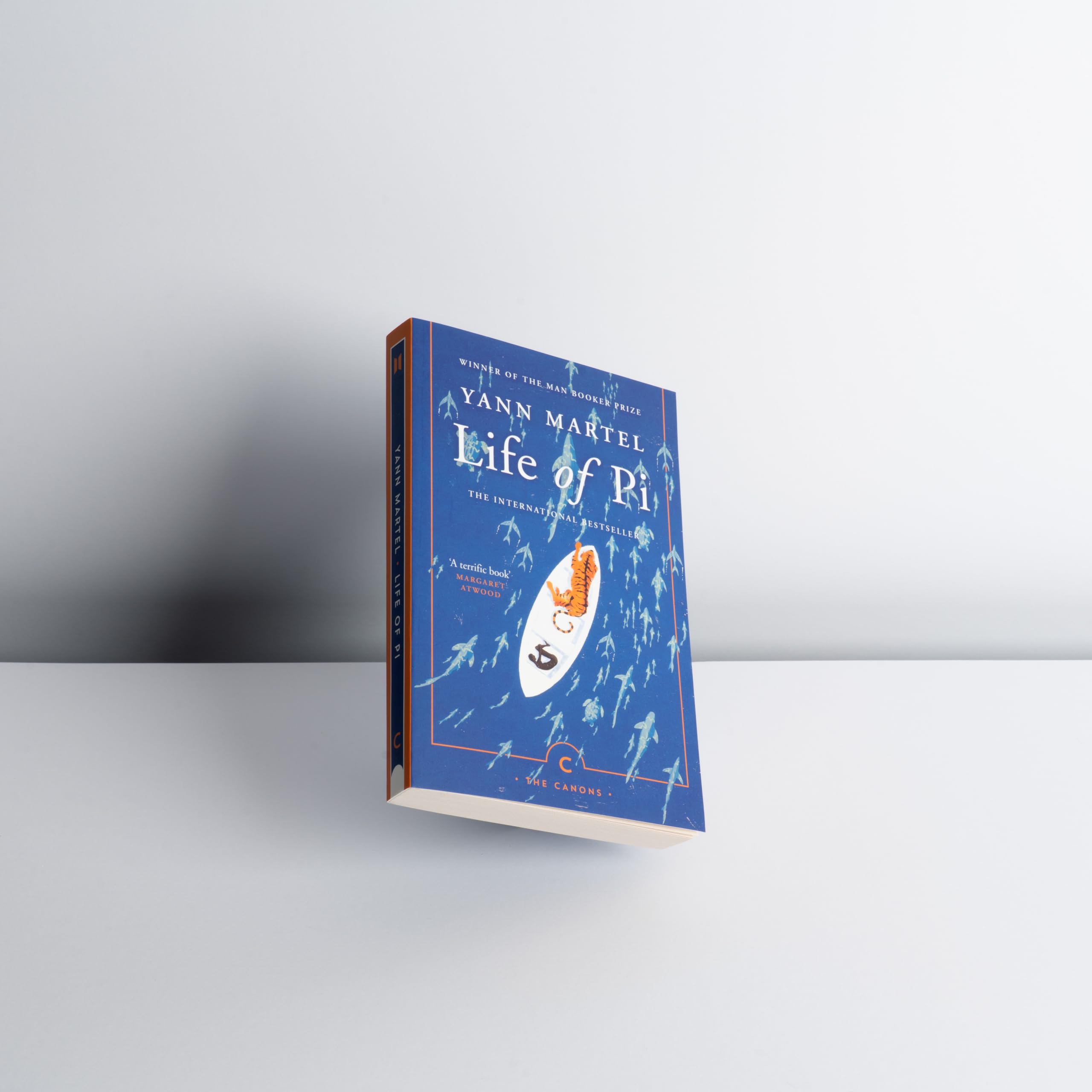
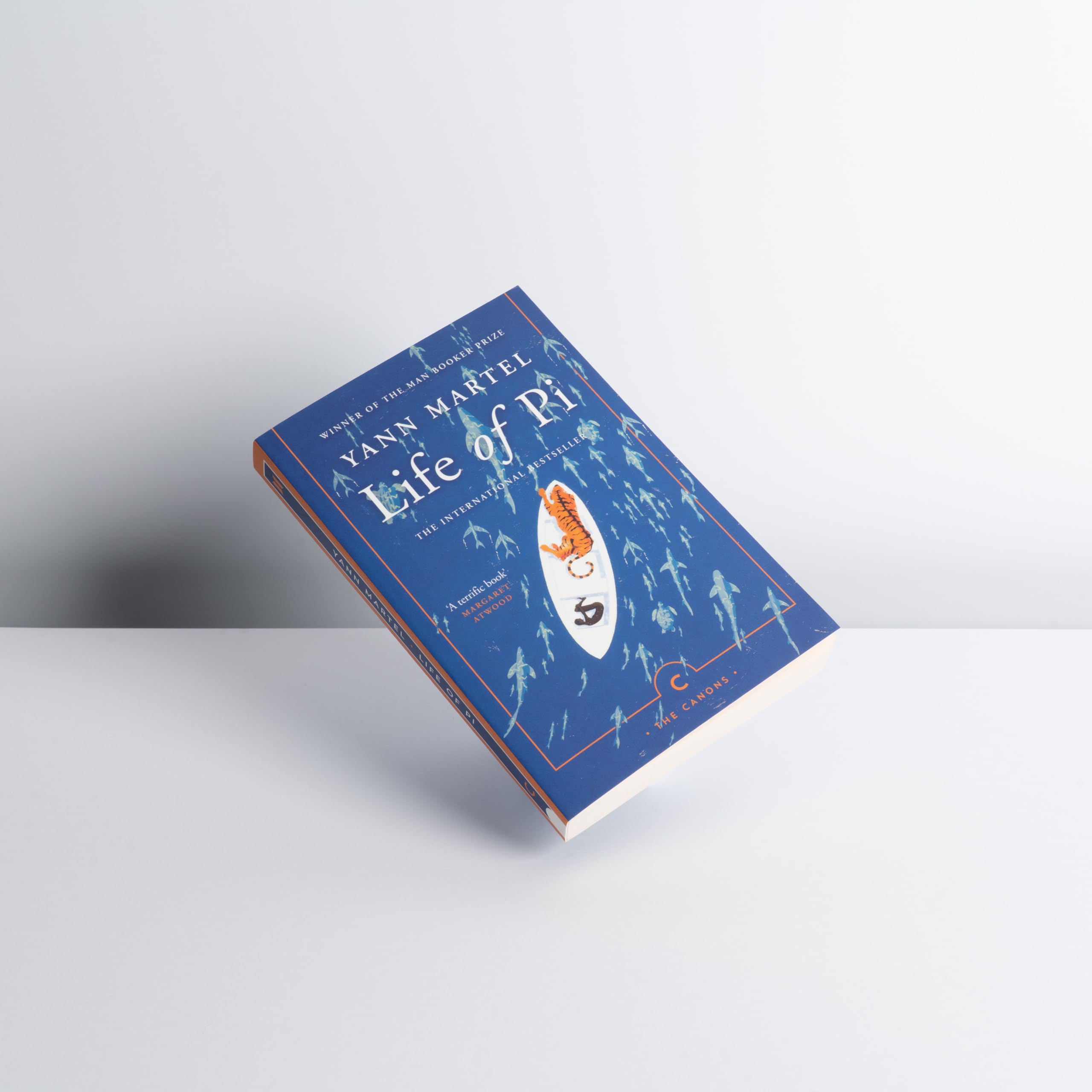

desertcart.in - Buy Life Of Pi (Canons) book online at best prices in India on desertcart.in. Read Life Of Pi (Canons) book reviews & author details and more at desertcart.in. Free delivery on qualified orders. Review: A must have book for your personal library - Pi Patel is the son of a zookeeper in Pondicherry, India. He was given the full name of Piscine Molitor after a Parisian swimming pool frequented by a family friend. But when kids at school took to calling him Pissing, he shortened it to Pi, that familiar figure for the ratio of a circle's circumference divided by its diameter. At one point he says: "And so in that Greek letter that looks like a shack with a corrugated roof, in that elusive, irrational number with which scientists try to understand the universe, I found refuge." Although occasionally uncomfortable at school, Pi is incredibly happy at home surrounded by a veritable wonderland. He learns that the zoo animals live by habit and, once their basic needs are met, are content to repeat the same rhythms and rituals every day. Change the routine in the slightest way, however, and the animal will express confusion, anger, or retreat into a safe place. He grows up knowing not to anthropomorphize — assign human characteristics — to the animals. In one very scary scene, Pi's father demonstrates than animals are ferocious beasts who are driven by their hungers and passions. He also teaches the boy about how a circus animal trainer is able to control large animals by assuming the position of the alpha male, demonstrating dominance and an ability to provide for their needs. Pi's parents are secularists with no interest in religion. This teenager, who is a Hindu, finds himself also attracted to Christianity and Islam. Although he thinks that Jesus' ministry can't hold a candle to the exotic adventures of Hindu gods, his message of love seems very important. He begins to meet regularly with a Catholic priest and soon asks to be baptized. Pi finds Islam to be "a beautiful religion of brotherhood and devotion." After meeting a Sufi mystic in the market, he puts a prayer rug in the garden facing Mecca and prays five times a day. However, once the local leaders of each religion discover what he is doing, they try to convince Pi that he must choose one over the others. But this ardent teenager refuses to give up his multifaith path of loving God. All of this spiritual practice leads to a mystical experience which he describes this way: "I left town and on my way back, at a point where the land was high and I could see the sea to my left and down the road a long ways, I suddenly felt I was in heaven. The spot was in fact no different from when I had passed it not long before, but my way of seeing it had changed. The feeling, a paradoxical mix of pulsing energy and profound peace, was intense and blissful. Whereas before the road, the sea, the trees, the air, the sun all spoke differently to me, now they spoke one language of unity. Tree took account of road, which was aware of air, which was mindful of sea, which shared things with sun. Every element lived in harmonious relation with its neighbour, and all was kith and kin. I knelt a mortal; I rose an immortal. I felt like the centre of a small circle, coinciding with the centre of a much larger one. Atman had met Allah." When Pi's father decides to leave India and move to Winnipeg, Canada, he closes the zoo and arranges to distribute its inhabitants to other facilities. The family and some of the animals board a Japanese cargo ship. Then the unexpected happens, and the boat sinks in the middle of the Pacific Ocean. Pi makes it to a lifeboat where his only companions are a zebra, a hyena, a orangutan, and a Bengal tiger named Richard Parker. The sixteen-year-old boy watches horrified as the war begins for supremacy between the animals. In the end, of course, just he and the tiger are left. Luckily, the lifeboat is stocked with survival supplies and a detailed survival manual. Pi sets up equipment to collect water, learns to fish and catch turtles, and makes a raft for those times when he needs to stay some distance from Richard Parker. Everything he has learned about animals serves him well. In shark-infested waters, with no land in sight, Pi attends to the needs of the 450-pound tiger. This section of Martel's phantasmagorical novel is absolutely enthralling, a true adventure where Pi's physical prowess, intellectual courage, and spiritual perseverance are all tested. At one point, he observes: "For the first time I noticed — as I would notice repeatedly during my ordeal, between one throe of agony and the next — that my suffering was taking place in a grand setting. I saw my suffering for what it was, finite and insignificant, and I was still." Throughout his journey, Pi practices religious rituals — "solitary Masses without priests or consecrated Communion hosts, darshans without murtis, and pujas with turtle meat for prasad, acts of devotion for Allah not knowing where Mecca was and getting my Arabic wrong." But these provide a stay against despair and loneliness and his grief for his lost family. The worst enemy is fear. He observes: "It is life's only true opponent. Only fear can defeat life. It is a clever, treacherous adversary, how well I know. It has no decency, respects no law or convention, shows no mercy. It goes for your weakest spot, which it finds with unerring ease. It begins in your mind, always. One moment you are feeling calm, self-possessed, happy. Then, fear, disguised in the garb of mild-mannered doubt, slips into your mind like a spy." One of the things that makes Life of Pi such an extraordinary read is that it covers so many fascinating subjects with aplomb. Martel provides overviews of animal behavior, survival at sea, the limits of reason, and a boy's coming of age. The novel is a work of spiritual adventurism, a expression of mystical awareness, and a salute to the ample powers of imagination and the versatility of storytelling. During his long stay aboard the lifeboat with the tiger, Pi notes: "My greatest wish — other than salvation — was to have a book. A long book with a never-ending story. One I could read again and again, with new eyes and a fresh understanding each time. Alas, there was no scripture in the lifeboat." This ambitious novel is stuffed with ideas, interesting people, and exciting situations. Each reader could spend quite a bit of time pondering the spiritual implications of the deep relationship that develops between Pi and Richard Parker over the course of their confinement together. At first, the teenage is scared out of his wits that the animal will eat him. Then he tries to keep the tiger happy with food, fresh water, and regular routines. The final level of their interaction is a surprise that will only startle those who haven't had the delight of close mystical relationships with animals. Life of Pi is a multileveled exploration of the beautiful mysteries that light up our lives and have no rhyme nor reason of their own. Yet without them, we would be nothing more than wonder-deprived creatures. Review: Your money worth book - I read this book because of Irfan khan sir and this book is amazing for reading a great story a great story to gain knowledge of survival in ocean alone with a tiger for 100 days this book is fantastic itself...
| ASIN | 1786891689 |
| Best Sellers Rank | #41,887 in Books ( See Top 100 in Books ) #1,002 in Indian Writing (Books) #1,628 in Contemporary Fiction (Books) |
| Country of Origin | USA |
| Customer Reviews | 4.5 4.5 out of 5 stars (19,954) |
| Dimensions | 12.9 x 2 x 19.8 cm |
| Edition | Main - Canons |
| Generic Name | BOOK |
| ISBN-10 | 9781786891686 |
| ISBN-13 | 978-1786891686 |
| Item Weight | 226 g |
| Language | English |
| Net Quantity | 500.00 Grams |
| Print length | 336 pages |
| Publication date | 5 July 2018 |
| Publisher | Canongate Canons |
₹**Y
A must have book for your personal library
Pi Patel is the son of a zookeeper in Pondicherry, India. He was given the full name of Piscine Molitor after a Parisian swimming pool frequented by a family friend. But when kids at school took to calling him Pissing, he shortened it to Pi, that familiar figure for the ratio of a circle's circumference divided by its diameter. At one point he says: "And so in that Greek letter that looks like a shack with a corrugated roof, in that elusive, irrational number with which scientists try to understand the universe, I found refuge." Although occasionally uncomfortable at school, Pi is incredibly happy at home surrounded by a veritable wonderland. He learns that the zoo animals live by habit and, once their basic needs are met, are content to repeat the same rhythms and rituals every day. Change the routine in the slightest way, however, and the animal will express confusion, anger, or retreat into a safe place. He grows up knowing not to anthropomorphize — assign human characteristics — to the animals. In one very scary scene, Pi's father demonstrates than animals are ferocious beasts who are driven by their hungers and passions. He also teaches the boy about how a circus animal trainer is able to control large animals by assuming the position of the alpha male, demonstrating dominance and an ability to provide for their needs. Pi's parents are secularists with no interest in religion. This teenager, who is a Hindu, finds himself also attracted to Christianity and Islam. Although he thinks that Jesus' ministry can't hold a candle to the exotic adventures of Hindu gods, his message of love seems very important. He begins to meet regularly with a Catholic priest and soon asks to be baptized. Pi finds Islam to be "a beautiful religion of brotherhood and devotion." After meeting a Sufi mystic in the market, he puts a prayer rug in the garden facing Mecca and prays five times a day. However, once the local leaders of each religion discover what he is doing, they try to convince Pi that he must choose one over the others. But this ardent teenager refuses to give up his multifaith path of loving God. All of this spiritual practice leads to a mystical experience which he describes this way: "I left town and on my way back, at a point where the land was high and I could see the sea to my left and down the road a long ways, I suddenly felt I was in heaven. The spot was in fact no different from when I had passed it not long before, but my way of seeing it had changed. The feeling, a paradoxical mix of pulsing energy and profound peace, was intense and blissful. Whereas before the road, the sea, the trees, the air, the sun all spoke differently to me, now they spoke one language of unity. Tree took account of road, which was aware of air, which was mindful of sea, which shared things with sun. Every element lived in harmonious relation with its neighbour, and all was kith and kin. I knelt a mortal; I rose an immortal. I felt like the centre of a small circle, coinciding with the centre of a much larger one. Atman had met Allah." When Pi's father decides to leave India and move to Winnipeg, Canada, he closes the zoo and arranges to distribute its inhabitants to other facilities. The family and some of the animals board a Japanese cargo ship. Then the unexpected happens, and the boat sinks in the middle of the Pacific Ocean. Pi makes it to a lifeboat where his only companions are a zebra, a hyena, a orangutan, and a Bengal tiger named Richard Parker. The sixteen-year-old boy watches horrified as the war begins for supremacy between the animals. In the end, of course, just he and the tiger are left. Luckily, the lifeboat is stocked with survival supplies and a detailed survival manual. Pi sets up equipment to collect water, learns to fish and catch turtles, and makes a raft for those times when he needs to stay some distance from Richard Parker. Everything he has learned about animals serves him well. In shark-infested waters, with no land in sight, Pi attends to the needs of the 450-pound tiger. This section of Martel's phantasmagorical novel is absolutely enthralling, a true adventure where Pi's physical prowess, intellectual courage, and spiritual perseverance are all tested. At one point, he observes: "For the first time I noticed — as I would notice repeatedly during my ordeal, between one throe of agony and the next — that my suffering was taking place in a grand setting. I saw my suffering for what it was, finite and insignificant, and I was still." Throughout his journey, Pi practices religious rituals — "solitary Masses without priests or consecrated Communion hosts, darshans without murtis, and pujas with turtle meat for prasad, acts of devotion for Allah not knowing where Mecca was and getting my Arabic wrong." But these provide a stay against despair and loneliness and his grief for his lost family. The worst enemy is fear. He observes: "It is life's only true opponent. Only fear can defeat life. It is a clever, treacherous adversary, how well I know. It has no decency, respects no law or convention, shows no mercy. It goes for your weakest spot, which it finds with unerring ease. It begins in your mind, always. One moment you are feeling calm, self-possessed, happy. Then, fear, disguised in the garb of mild-mannered doubt, slips into your mind like a spy." One of the things that makes Life of Pi such an extraordinary read is that it covers so many fascinating subjects with aplomb. Martel provides overviews of animal behavior, survival at sea, the limits of reason, and a boy's coming of age. The novel is a work of spiritual adventurism, a expression of mystical awareness, and a salute to the ample powers of imagination and the versatility of storytelling. During his long stay aboard the lifeboat with the tiger, Pi notes: "My greatest wish — other than salvation — was to have a book. A long book with a never-ending story. One I could read again and again, with new eyes and a fresh understanding each time. Alas, there was no scripture in the lifeboat." This ambitious novel is stuffed with ideas, interesting people, and exciting situations. Each reader could spend quite a bit of time pondering the spiritual implications of the deep relationship that develops between Pi and Richard Parker over the course of their confinement together. At first, the teenage is scared out of his wits that the animal will eat him. Then he tries to keep the tiger happy with food, fresh water, and regular routines. The final level of their interaction is a surprise that will only startle those who haven't had the delight of close mystical relationships with animals. Life of Pi is a multileveled exploration of the beautiful mysteries that light up our lives and have no rhyme nor reason of their own. Yet without them, we would be nothing more than wonder-deprived creatures.
M**A
Your money worth book
I read this book because of Irfan khan sir and this book is amazing for reading a great story a great story to gain knowledge of survival in ocean alone with a tiger for 100 days this book is fantastic itself...
S**H
Great Story, Okay Print Quality, Slightly Overpriced
I bought the paperback version of Life of Pi, and the delivery was very quick — Amazon did a great job on that front. The paper quality is decent, though not exceptional. The story itself is absolutely brilliant — imaginative, deep, and beautifully written. However, I do feel the paperback price is a bit on the higher side, especially since the Kindle and Audible versions are available at a much lower cost. Still, it’s a wonderful read and worth having in your collection if you prefer physical books.
P**V
Best Book Ever!
It's a bit of a tricky situation when reviewing a book on amazon. Do I review the quality of the book as a capitalistic object or do I review it an intellectual entity. Well lucky for you I will do both. To begin with The book arrived on time, was in great condition and by the texture of the pages and the quality of the book it is safe to say that the book I received was an original work and not a pirated copy. This however is a subjective experience I have had experiences when the books I have received were nit of that great quality. The Books Gods were happy with me that day. Now let us talk about the book in regard's to its content. A little but of background though: I had ordered this book last moment as it was a prescribed reading in my syllabus for Canadian literature. And at first I was like: wait you're telling me canada has also contributed to literature??? I thought their contribution in world economy was of maple syrup and importing kids for education. Anyways I bought this book and rest is history. As evident in the video and the excessive tabs I have used it was one of my best purchases this year and I am so glad I bought it because I would really hate myself if I had read it online and enjoyed it this much. It's fast paced novel but at the same time has very intellectual monologues and thoughts that our central character has which is such a nuanced look on life in general. One problem with this book however is that after you finish reading it you will have this inexplicable urge to recommend it to your friends in order to have a discussion and they will reply with their stupid smirk saying "oh but I have already seen the movie" you will have an impulse to slap them. Please control that.
S**I
A good purchase
I am amazed that in such a reasonable price I got an original copy of the book and I feared otherwise. The pages are slightly yellowing from the edges and have few stains but in the given price the drawbacks can be overlooked. The purchase won’t make you regret. And as a cherry on top the book was wrapped with a note written on it which I found sweet.
N**A
Good
Good
R**H
Must read book
Nice book. Seen the movie so bought the book. I loved this book. Must buy.
V**R
The item quality
It is very good
X**X
This book is one of my favourite stories. Martel blends reality and fantasy so well that I had to keep examining the book jacket to see if it said "based on a true story" anywhere.
C**Y
When I finished reading, I was stunned and lost for words. Lots of wonders and lots of thoughts. This book reminds me of "Lord of Flies." Deeply hidden human weakness and strength surface when small numbers of people (and/or animals) are trapped in a small space in pressing life-threatening conditions. How do we react from our fears, hopelessness, and desperation when we face the power of wild animals and wild nature? It is when our human strength, power, and wisdom as well as vulnerability come out. Some readers may react because we don't want to face our potential weakness or evil that may exist within ourselves. But I personally think it's good to face and realize, so that we can minimize risks that come from human weaknesses. This book is full of implications, symbolisms, and philosophical, religious, and moral questions. What makes humans being humans? What makes animals being animals? What is a crime? How far is self-defence justified? Facing death, what kind of actions are crimes and what kind are not? Where can we draw a line in moral code? We can find a few dozens extremely challenging questions to ponder in this book. Some readers may simply enjoy the breath-taking, fast-moving adventure aspect of this book. Some readers who are interested in zoology and animals may find the detailed information interesting; while some who are not interested find boring at the beginning. This book is intellectually stimulating and emotional moving from time to time. My favorite quotes: "You must fight hard to shine the light of words upon it. Because if you don't, if you fear becomes a wordless darkness that you avoid, perhaps even manage to forget, you open yourself to further attacks of fear because you never truly fought the opponent who defeated you." I'm hoping that people don't simply label or judge this book because the topics are quite taboo matters. They are not light-hearted, simple, and easy matters. I applause the courage of the author who challenged these profound topics together with his great writing skills.
M**G
Tertemiz ve elime hızlı ulaştı teşekkürler
R**4
Life of Pi is one of those books I always thought about reading but somehow never did. When the film came out it got everyone talking about it again and all I heard anyone say was how great the book was. So I decided rather than watch the film first and then be annoyed at myself, I'd better read the book. From the moment I picked up Life of Pi, I couldn't put it down. The story begins after Pi Patel's adventure/ordeal, explaining to some extent what he did afterwards and how his life turned out in Toronto. He went to university to study religious studies and zoology: the two subjects of his childhood, and also possibly the two subjects that allowed him to survive in the Pacific Ocean. The next chapter goes back to Pi's early childhood, where he narrates his experiences growing up in Pondicherry, India. Son of a zoo keeper, Pi knows a lot about animals, and the stories told are fascinating. I learnt a lot about the psychology of animals. I also really liked Pi's open mindedness and commitment to various religions. There was a particularly funny part where a Catholic Priest, a Muslim Imam and a Hindu Pandit are arguing over which religion Pi belongs to and insulting each others faiths along the way. Pi has taken an interest in all three and fails to see why this is a problem. It's hard to talk about the main part of this book without spoiling the story, so apologies if you haven't read/seen it yet! But even the book cover kind of gives it away, so I don't think I'm doing too much of a terrible thing. The story of how Pi survives living on the lifeboat is exciting and compelling from start to finish. Amazing really, considering the minimal amount of dialogue. The reader is engaged by the great detail in the descriptions of what Pi does, of the relationship with Richard Parker, and of his intense thought processes and emotions. At the end of the book I wanted to read more about what happened to him after finding dry land. But actually if you revisit the first chapter then you get just that. And so the story is a whole, a never ending circle that can be enjoyed over and over. I have now seen the film too. I enjoyed it for the cinematic spectacle that it is, but I found it veered severely from some of the main parts and points of the book. They are too very different things, so I would say that even if you have seen the film already you should still read the book.
S**P
delivered as promised
Trustpilot
2 days ago
1 month ago