The Invention of Hugo Cabret [Selznick, Brian, Selznick, Brian] on desertcart.com. *FREE* shipping on qualifying offers. The Invention of Hugo Cabret Review: Far more than a children's book - I simply have never had this experience before. No book I've read has ever combined graphics as part of the actual movement of the story - not as supportive to the dialog, not to clarify the words, but as vehicles themselves to carry the story forward. They are pencil drawings, beautifully shaded. It is a more like the merging of a book and a silent black and white movie. Good stories are layered. The tale hangs mainly on our protagonist, the orphan Hugo, living within the walls and spaces of a Parisian train station. He has taken on the function of time keeper/clock winder that his now missing uncle once performed. A mysterious mechanical man in disrepair, left to Hugo by his beloved father, becomes the vehicle to join the child to another station character - the crotchety toy merchant who maintains a small shop in the main concourse. Hugo uses pieces from the mechanical toys - which he has stolen from the merchant - to tinker with the mechanical man. Once he is caught, we have the opportunity to learn more about the old man through Hugo's interaction with him and his young niece, Hugo's new friend. The pivotal character of the station's toy merchant pulls us further into this world when Hugo discovers his past as a magician and as a pioneer with film. By placing the story within a train station, Brian Selznick can tip his hat to some of the groundbreaking first attempts at film which used the same type of venue, as well as the genius of imagination that was set free with this new medium. The great clocks of the station's tower help us remember Harold Loyd, and the trains were the subjects of some of the first films. It is at this point that the use of the black and white illustrations takes on another function, speaking to us about the dramatic way images, without sound and color, can still speak to us so eloquently. This is one of those special books that has a compelling story that can be read by a young reader, and at the same time can be a bridge to historical events when read by an adult. I chose to explore Hugo Cabret after seeing a trailer for the movie "Hugo." My intention was to pre-screen the book to see if it was appropriate for a great niece's Christmas present. To my surprise, as an adult I was enthralled. And as so often happens, the book's story became a doorway - it led me to trace more information about the earliest experiments with film. The relationship between early film and magicians was a surprise to me. And perhaps as a person living approximately a century after film began, let alone having no memory of a life without it, it is understandable that I had no perspective about the effects of the first films on their viewers - a world of imagination, nightmares and dreams. How strange, magical and wonderful it all must have seemed. Knowing Scorsese's love of film history, I am now anxious to see how he has brought this book to film to tell both a child's story and to help all of us appreciate the evolution of what we are watching. Review: beautiful illustrations and fun story involving George Melies - The Lumiere Brothers were the first documentary filmmakers; George Melies was the first movie maker. While they filmed workers emerging from a factory he, who had been a magician, immediately saw the potential for film as a medium to create magical illusions. Melies also collected automata -- intriguing mechanical devices -- which were donated to a museum and later destroyed in a fire. Author Brian Selznick runs with that bitty fact and ... Enter Hugo Cabret, a boy who knows none of this and, through no fault of his own, now lives in the walls of a train station in Paris, maintaining the station's many important clocks. One night wandering Hugo comes upon the remains of a fire and finds a mechanical man, who seems to be trying to write something. As if all that isn't intriguing enough, Hugo becomes convinced the device wants to give him a last message from his father, who was attempting to repair it, and who perished in the fire. The illustrations are gorgeous. No stick figures here! These black and white pencil drawings are lush, detailed depictions that often propel the story, delightfully content-rich. I would estimate over half the pages are illustrations, and I'd imagine the most difficult part of the job for Selznick is knowing when to stop. Not so much stylized as framed beautifully, tending toward the naturalistic but with touches of Van Gogh, Dore, others. Will draw in even persnickety children AND will interest parents as well. Can't be read in one night, and shouldn't be. A nice clean font and smooth black-bordered paper make this 5 by 8" tome a pleasure to hold and read, and the story's slow revelations include secret identities, orphans, cruel gendarmes and the realization that one can visit this very train station-turned-museum today. A lovely delight for soulful children of all ages. Can't wait to read others by this author.


| Best Sellers Rank | #9,870 in Books ( See Top 100 in Books ) #5 in Children's Europe Books #99 in Children's Mystery, Detective, & Spy #439 in Children's Action & Adventure Books (Books) |
| Customer Reviews | 4.8 out of 5 stars 3,271 Reviews |
R**8
Far more than a children's book
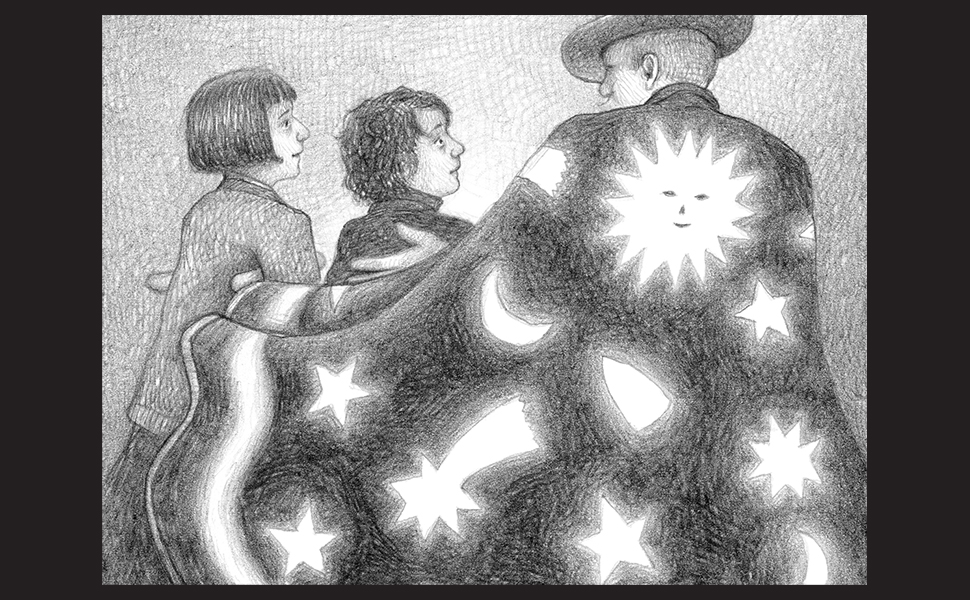
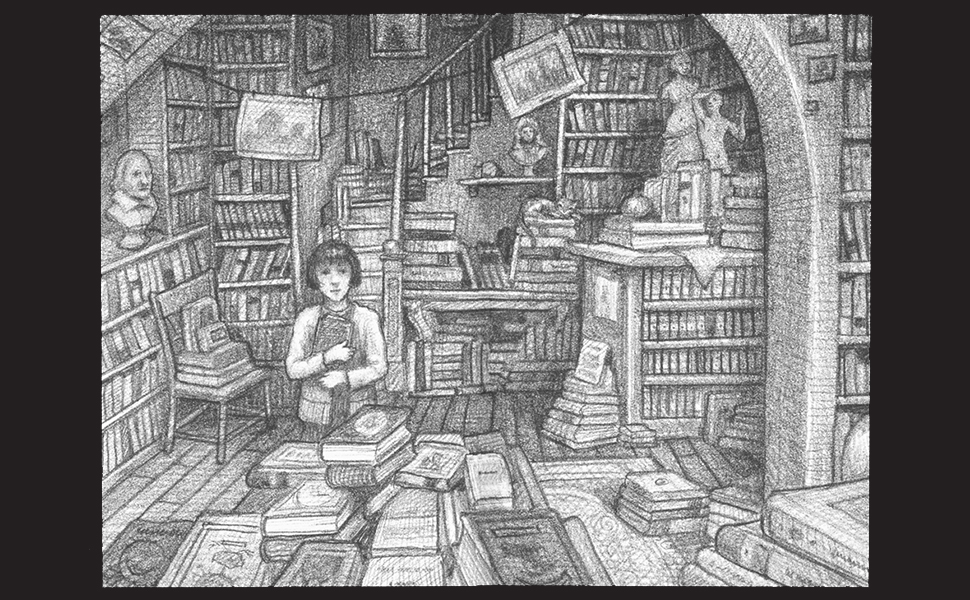
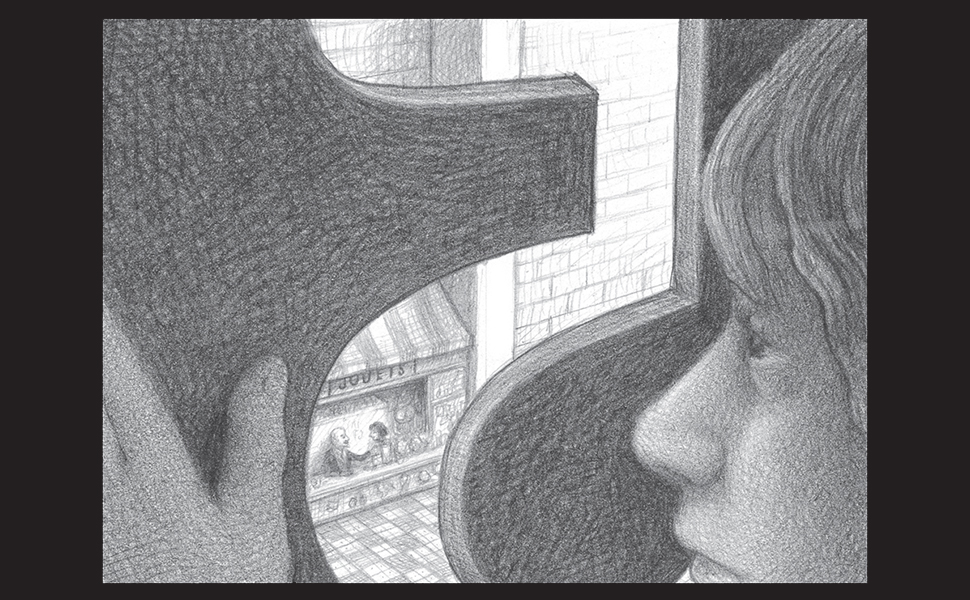
I simply have never had this experience before. No book I've read has ever combined graphics as part of the actual movement of the story - not as supportive to the dialog, not to clarify the words, but as vehicles themselves to carry the story forward. They are pencil drawings, beautifully shaded. It is a more like the merging of a book and a silent black and white movie. Good stories are layered. The tale hangs mainly on our protagonist, the orphan Hugo, living within the walls and spaces of a Parisian train station. He has taken on the function of time keeper/clock winder that his now missing uncle once performed. A mysterious mechanical man in disrepair, left to Hugo by his beloved father, becomes the vehicle to join the child to another station character - the crotchety toy merchant who maintains a small shop in the main concourse. Hugo uses pieces from the mechanical toys - which he has stolen from the merchant - to tinker with the mechanical man. Once he is caught, we have the opportunity to learn more about the old man through Hugo's interaction with him and his young niece, Hugo's new friend. The pivotal character of the station's toy merchant pulls us further into this world when Hugo discovers his past as a magician and as a pioneer with film. By placing the story within a train station, Brian Selznick can tip his hat to some of the groundbreaking first attempts at film which used the same type of venue, as well as the genius of imagination that was set free with this new medium. The great clocks of the station's tower help us remember Harold Loyd, and the trains were the subjects of some of the first films. It is at this point that the use of the black and white illustrations takes on another function, speaking to us about the dramatic way images, without sound and color, can still speak to us so eloquently. This is one of those special books that has a compelling story that can be read by a young reader, and at the same time can be a bridge to historical events when read by an adult. I chose to explore Hugo Cabret after seeing a trailer for the movie "Hugo." My intention was to pre-screen the book to see if it was appropriate for a great niece's Christmas present. To my surprise, as an adult I was enthralled. And as so often happens, the book's story became a doorway - it led me to trace more information about the earliest experiments with film. The relationship between early film and magicians was a surprise to me. And perhaps as a person living approximately a century after film began, let alone having no memory of a life without it, it is understandable that I had no perspective about the effects of the first films on their viewers - a world of imagination, nightmares and dreams. How strange, magical and wonderful it all must have seemed. Knowing Scorsese's love of film history, I am now anxious to see how he has brought this book to film to tell both a child's story and to help all of us appreciate the evolution of what we are watching.
A**S
beautiful illustrations and fun story involving George Melies
The Lumiere Brothers were the first documentary filmmakers; George Melies was the first movie maker. While they filmed workers emerging from a factory he, who had been a magician, immediately saw the potential for film as a medium to create magical illusions. Melies also collected automata -- intriguing mechanical devices -- which were donated to a museum and later destroyed in a fire. Author Brian Selznick runs with that bitty fact and ... Enter Hugo Cabret, a boy who knows none of this and, through no fault of his own, now lives in the walls of a train station in Paris, maintaining the station's many important clocks. One night wandering Hugo comes upon the remains of a fire and finds a mechanical man, who seems to be trying to write something. As if all that isn't intriguing enough, Hugo becomes convinced the device wants to give him a last message from his father, who was attempting to repair it, and who perished in the fire. The illustrations are gorgeous. No stick figures here! These black and white pencil drawings are lush, detailed depictions that often propel the story, delightfully content-rich. I would estimate over half the pages are illustrations, and I'd imagine the most difficult part of the job for Selznick is knowing when to stop. Not so much stylized as framed beautifully, tending toward the naturalistic but with touches of Van Gogh, Dore, others. Will draw in even persnickety children AND will interest parents as well. Can't be read in one night, and shouldn't be. A nice clean font and smooth black-bordered paper make this 5 by 8" tome a pleasure to hold and read, and the story's slow revelations include secret identities, orphans, cruel gendarmes and the realization that one can visit this very train station-turned-museum today. A lovely delight for soulful children of all ages. Can't wait to read others by this author.
O**N
Beautiful, Amazing, Wonderful, Genius
As a teacher of dyslexic students, I appreciate just how hard it is to find a book for a low-skilled older student. Virtually impossible. You don't want to insult the student, but you don't want to frustrate them with a book that is entirely too difficult. And what about your emergent readers? Older students who are just learning to read. Do you give them picture books and chapter books? What if you had a really beautiful story, full of gorgeous illustrations disguised as usual middle reader book (except much bigger and much heavier)? Brian Selznick created a masterpiece with The Invention of Hugo Cabret, but when he did, I am sure he didn't realize he was creating a bridge for emergent readers into the world of book lovers. Hugo was orphaned twice. When his father was killed in a fire in his workshop working on a device Hugo wanted him to fix, Hugo was sent to live with his uncle. Hugo's uncle lived in the train station and was responsible for winding all the clocks twice a day. It wasn't the hardest job in the world, but it took a lot of responsibility so the clocks didn't fall behind and break down. When Hugo's uncle disappears, Hugo takes over the clocks and keeps up the ruse his uncle is still there because he has no other place to go. Unable to cash his uncle's checks, Hugo is forced to steal his food. He only steals out of necessity, except for toys. Hugo can't resist the toy booth run by the old man, but when he is caught stealing a toy mouse, the old man forces him to fix it. He takes Hugo's notebook- the last thing Hugo has from his father that holds the secrets to fixing the device his father died trying to fix for Hugo- the automaton. Hugo salvaged the automaton from the building where his father was killed, but without the notebook, he will never get the figure to work. When the old man sees Hugo's ability to fix the toy, he puts him to work fixing toys in the shop. By day Hugo works in the shop, but night he works on the automaton. It is a busy life, but Hugo just wants his notebook back. When the old man's goddaughter promises to get it back for him, he doesn't realize the secrets they will uncover together. There is more to the old man than Hugo ever realized, but then again, the old man didn't know Hugo was an orphan living in the train station either. The beauty of this book, besides the pages and pages of beautiful illustrations, was the ability of those illustrations to tell huge parts of the story. An emergent reader must look at a book and be completely overwhelmed by all those words. Pages and pages of words. So what if half the story was told by a series of illustrations that wordlessly told a beautiful story of a sad boy who finds people who care about him? I love this book for many reasons, but the biggest reason is that I can just see a student who is just starting to read being able to successfully wade through this book in all its bulk (500+ pages) and know they have read a book. Imagine the pride that would come from that student? So I have to say, I think Selznick is a genius. He created a book that is not only beautiful, but one that can appeal to even the most low-skilled students. I think it is an important book for any children's library or classroom, especially for students with learning disabilities. The illustrations can emote with little effort and will provide tons of material for discussions. You can have students write the dialogue or describe the illustrations as an activity. If a student is creative, you can have them illustrate the portions of the book that aren't already illustrated. The opportunities are limitless.
D**N
Half illustrations! Intriguing!
Brilliant! I was reluctant to chose this book by its mere size - over 500pages! But I am blown away by the hand drawn pages of pictures that tell the story as if they were words. Each picture is frameable! No wonder it is a classic. BE BRAVE and you'll be rewarded with this story!
P**3
🥰🥰
I remember this was a book that was so popular at my school when I was in middle school and everyone always had this book check out before I got to read it. It was the first book that was super large to finish it. I love it and so happy to have a physical copy of this book.
W**Y
A New Genre Emerges
When I first pulled this book off the shelf and thumbed through it, I was hesitant to read it. It seemed more like a picture book than a novel. I gave it a chance, and I was glad I did. The storyline is somewhat predictable in a folktale way - we know the figurative damsel will be saved from the dragon and the hero will ride off into the sunset - but the road was an enjoyable and adventurous one. Even though I knew how it would turn out, I was eager to see how the puzzle pieces would fall into place. All in all, it was a fun story with a satisfactory conclusion. The most incredible thing about this book, however, is the use of the pictures. This is no simple picture book for the higher reader. The pictures let you look right into the author's mind and see what he saw when writing the story. They are intricate and beautiful and each one held surprises for me. My favorite is one of a close-up of Hugo's face as he looks at the great clock. The drawing of the face is exquisite - those of us who have taken drawing know how hard it is to draw an eye, let alone capture emotion in it - but if you look closely, the great clock is reflected so perfectly in the pupil that the lines in Hugo's iris become the minutes on the clock face. It is at once magnificent and profound, and yet easily overlooked. If each picture is savored and digested, the reader comes away with far more than a novel with pictures. It is as if one has read a movie and seen a novel. I believe that the author has created a new genre of fiction with this novel. Much more than a graphic novel, much more than a picture book, this is a Illustrated Novel and, as a fan of non-adult literature and of art, I look forward to more works from Mr. Selznick.
E**E
Fantastic book with great pictures
I had seen these books in a Middle School library and they were so thick that I couldn't imagine the kids actually reading them but they were constantly being checked out. When I worked at the Book Fair at the school, I flipped through one. A great percentage of the pages do not have writing but tell the story with pictures which is quite ingenious. The pictures are wonderful and are drawn by the author. The books were about $25 at the Book Fair but I got it on Amazon quite a bit cheaper. I couldn't put it down and read it in one day. My daughter read it to my 7 year old grandson and he loved it and was so excited when he watched the movie. She said, while they were reading the book, he would want to know how big the clock was and other questions. He was glued to the front of the TV watching the movie and knew a lot of stuff from the book. So if a 70 year old grandma, oodles of middle school kids and teachers, and a 7 year old loved it, it has to be good. It is the story of a small boy whose father is killed in an accident and he has to live with his drunken uncle who tends the clocks in a railway station and also lives there. It is kind of a cinderella story in that the boy doesn't have a bed and has to do the work for the uncle. There is no fairy godmother though. After the uncle disappears, the boys has to keep up the clocks so they won't find him and take him to an orphanage. There is a automaton (sp) that his father was working on and the boy is trying to get it running. How all this takes place and the boy finds a home is what the story is about. Try it, you'll like it!!!
T**Y
Unexpectedly Educational
Although it doesn't come across as a historical fiction piece, that's exactly what this book is. Much like the film Amadeus , The Invention of Hugo Cabret uses real life historical people to create an exaggerated (if not downright false) interpretive biography. Works of this particular genre contain a strange mixture of true and false elements, and are actually good tools for teaching. True, they may lead to some initial misconceptions, but adequate research after the reading can clear these misconceptions up in a hurry. I wouldn't make a big deal out of a minor conception though, if in turn you get a wondrous discovery to go along with it. From this book I learned that intricate machines were being invented long before computers and television. Robots that could draw and write as far back as perhaps the 18th century. Amazing. Why aren't we taught things like this in school? Probably because the textbooks that are issued make people of the past look like complete dimwits when that really isn't the case. The revelation of the existence of ancient robots alone is enough for me to give this book a high amount of praise. But the artistry in the book brings it to another level. So much work went into the dozens and dozens of beautiful pencil illustrations that you'd have to be a complete jerk to not give Selznick at least a little respect for his efforts. Often I have to read five or six unexciting books before I get to one that really makes me say, "Wow!" This is a "Wow!" book, and makes a fitting addition to any library. The risk of constructing it in such an unusual style has greatly paid off. Books like this are the reason I read. I know I'm not the first one to say this, but this might be the book of the future we're looking at here.
Trustpilot
1 month ago
5 days ago