
DOWNLOAD THE APP


Customer Services
Copyright © 2025 Desertcart Holdings Limited
DOWNLOAD THE APP
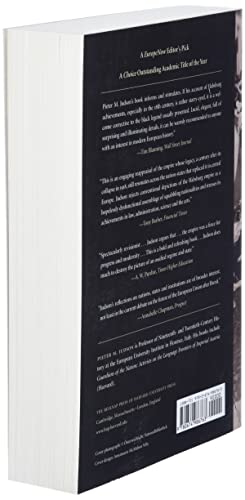
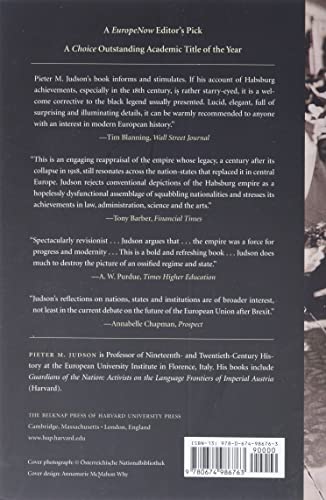
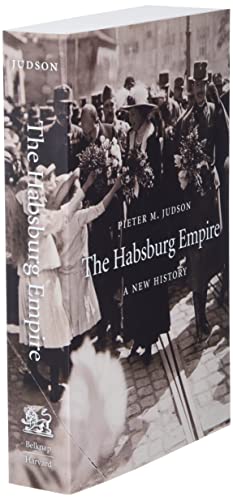
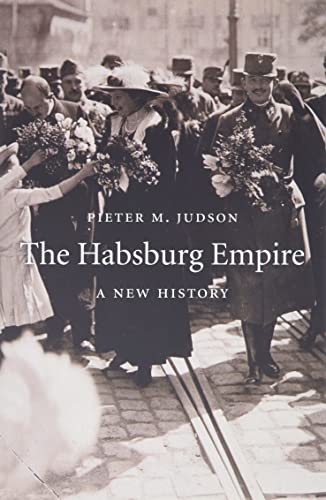


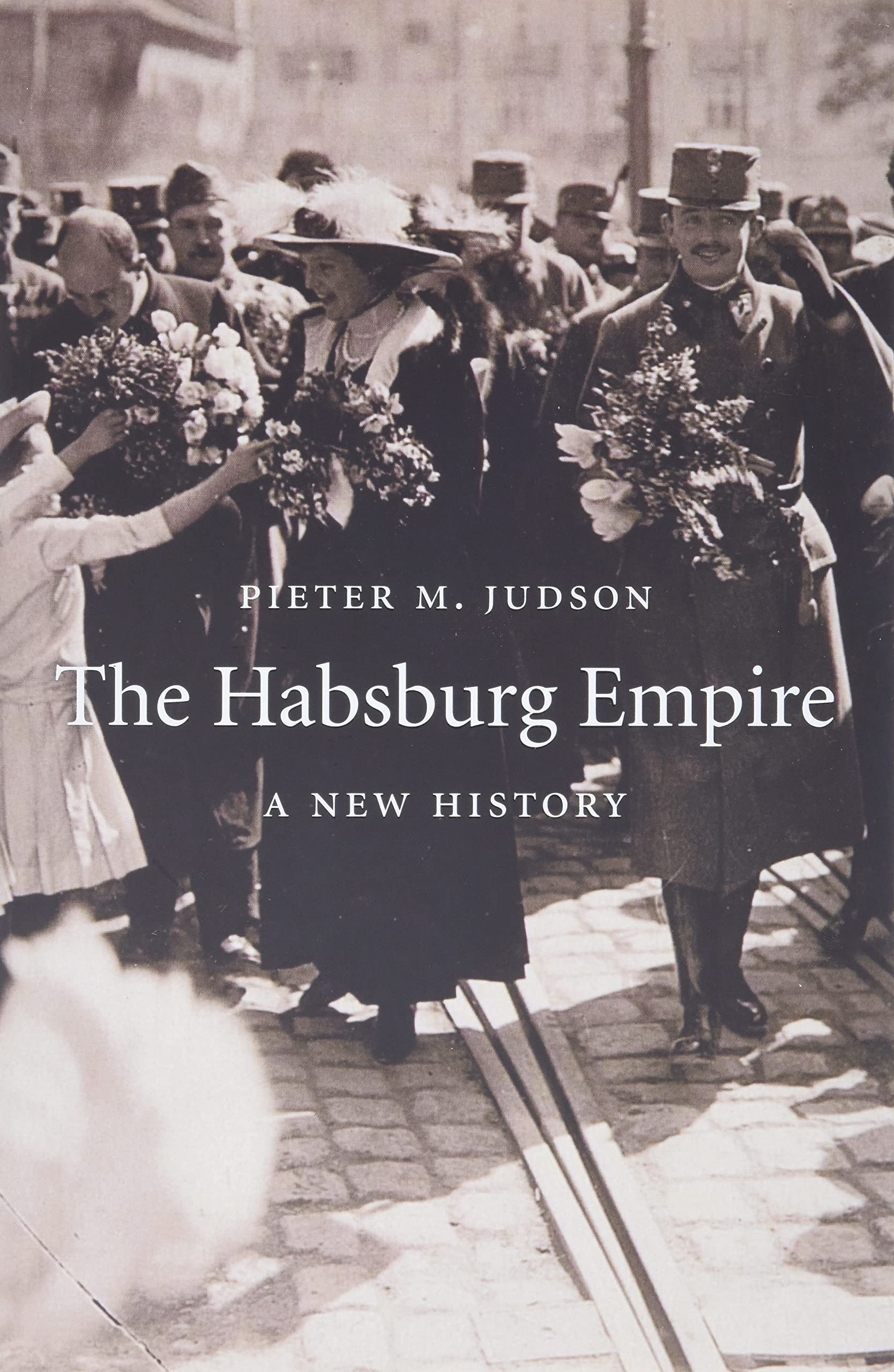
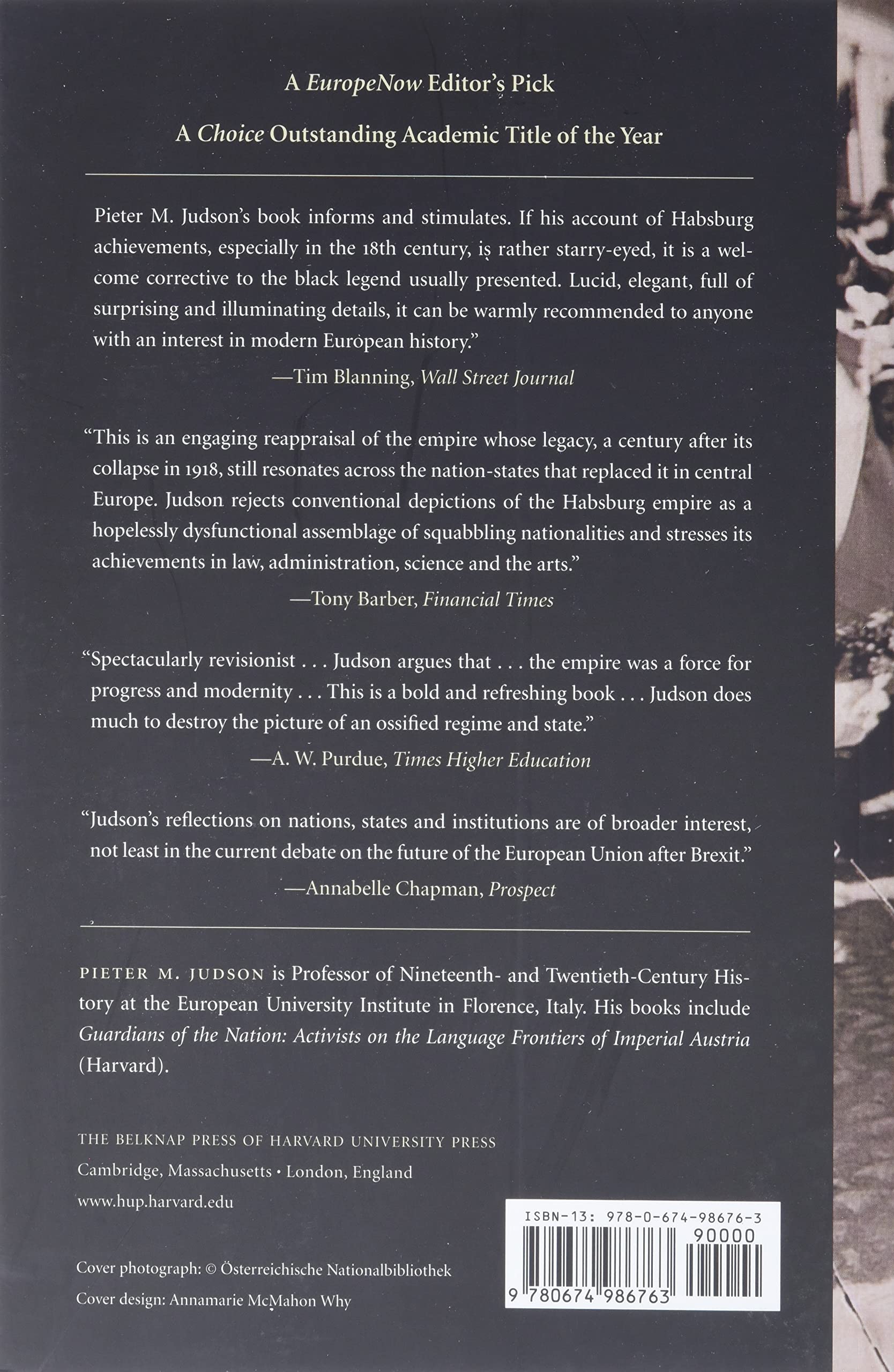
The Habsburg Empire: A New History [Judson, Pieter M.] on desertcart.com. *FREE* shipping on qualifying offers. The Habsburg Empire: A New History Review: A new appraisal of Austro-Hungary - An exceptionally thorough history of the Austrian empire, concentrating on the period from the Napoleonic wars until its fall in 1918. Rather than an archaic "prison of nations", Professor Judson uses exhaustive research to demonstrate that the empire evolved into a liberal union in which competing regions and nationalities were ultimately reconciled with the benefits of a supra-national state. He also presents a compelling argument that the demise of the monarchy was by no means preordained. Instead the fatal combination of inept military leadership/wartime dictatorship and profound misunderstanding of the Empire's internal popularity on the part of the Entente Powers proved to be its undoing. The author's detailed description of the late 19th-early 20th century democratized Habsburg state, its fall and aftermath provide an illuminating discussion of Central European history. Review: Not the complete history - This is a pretty good book, but not a comprehensive history of the Habsburg Empire. It starts in the late 1700's, long after the empire was well established, and goes until the end of the First World War when the Empire is split up. Much of the book deals with how an "Empire" deals with so many different ethnic and language groups. A lot of detail on the various sub-units of the empire - some of the "Crown Lands" which went by different names than we know them today. In the end, they were all broken into their own nations during the last days and after WWI. That is how they stayed until the fall of communism in the 1990's when further splintering occurred. It was a bit refreshing to read this book, because it did not take the usual path of a nations history by following just the kings/emperors, prime minsters, wars and other major events. It told the story of the many peoples and how they dealt with the problems of living in a multi-cultural and multi-lingual society. Took me almost halfway through the book before I realized it was worth it though.
| Best Sellers Rank | #137,264 in Books ( See Top 100 in Books ) #130 in European Politics Books #495 in History & Theory of Politics #1,607 in World History (Books) |
| Customer Reviews | 4.2 4.2 out of 5 stars (376) |
| Dimensions | 6.12 x 1.5 x 9.25 inches |
| Edition | Reprint |
| ISBN-10 | 0674986768 |
| ISBN-13 | 978-0674986763 |
| Item Weight | 1.8 pounds |
| Language | English |
| Print length | 592 pages |
| Publication date | October 1, 2018 |
| Publisher | Belknap Press: An Imprint of Harvard University Press |
H**R
A new appraisal of Austro-Hungary
An exceptionally thorough history of the Austrian empire, concentrating on the period from the Napoleonic wars until its fall in 1918. Rather than an archaic "prison of nations", Professor Judson uses exhaustive research to demonstrate that the empire evolved into a liberal union in which competing regions and nationalities were ultimately reconciled with the benefits of a supra-national state. He also presents a compelling argument that the demise of the monarchy was by no means preordained. Instead the fatal combination of inept military leadership/wartime dictatorship and profound misunderstanding of the Empire's internal popularity on the part of the Entente Powers proved to be its undoing. The author's detailed description of the late 19th-early 20th century democratized Habsburg state, its fall and aftermath provide an illuminating discussion of Central European history.
M**R
Not the complete history
This is a pretty good book, but not a comprehensive history of the Habsburg Empire. It starts in the late 1700's, long after the empire was well established, and goes until the end of the First World War when the Empire is split up. Much of the book deals with how an "Empire" deals with so many different ethnic and language groups. A lot of detail on the various sub-units of the empire - some of the "Crown Lands" which went by different names than we know them today. In the end, they were all broken into their own nations during the last days and after WWI. That is how they stayed until the fall of communism in the 1990's when further splintering occurred. It was a bit refreshing to read this book, because it did not take the usual path of a nations history by following just the kings/emperors, prime minsters, wars and other major events. It told the story of the many peoples and how they dealt with the problems of living in a multi-cultural and multi-lingual society. Took me almost halfway through the book before I realized it was worth it though.
J**D
Competing Nationalisms
The Habsburg Empire, also known as the Austrian Empire, the Austro-Hungarian Empire, or Austria-Hungary, often seems to conjure up a comic-opera image of strutting officials in lavish uniforms, overdressed ladies consuming vast quantities of sweets, and a general air of pomposity, inefficiency, and incompetence. Nearly one hundred years after the Empire's collapse in 1918, however, Pieter M. Judson's new history makes the case that the Habsburgs and the bureaucracies they created to help them rule their vast territories were more capable and better organized than is generally perceived. This is a lengthy book of some 450 pages, plus another 100 pages of extensive Notes. Divided into eight chapters and an epilogue, it covers the period from Maria Theresa's reign in the eighteenth century through the 1918 collapse and its aftermath. It's a lengthy book with a lot of detail, but it is also well written, with new material and conclusions that challenge long accepted interpretations and hold the reader's interest. The Habsburg Dynasty was one of the world's great success stories. Emerging from a single castle in what is now Switzerland during the Middle Ages, the family managed through an adroit policy of making advantageous marriages and managing inheritances to gain control of much of Central Europe and become Holy Roman Emperors. Judson's history begins with Maria Theresa, only child of Emperor Charles VI. When she succeeded her father in 1740 her territories almost immediately came under attack from rapacious neighbors like Frederick the Great's Prussia. Maria Theresa was intelligent and charismatic, and she was able to rally her subjects and defeat or at least fight to a stalemate most of her enemies. The Empress was responsible for developing a new way of treating the people she ruled: as individual citizens with rights and privileges that were to be guaranteed and protected by the central state. She and her two sons Emperors Joseph II and Leopold II laid the groundwork for a bureaucracy that helped them govern from the center and weaken the power of local landlords and nobles. This process continued under Emperor Francis I, who became Emperor of Austria when the Holy Roman Empire was dissolved by Napoleon in 1806. During the nineteenth century the policy of centralization and bureaucratic rule continued. Emperor Francis Joseph I, who ruled from 1848 to 1916, had to deal with the growth of nationalist impulses that threatened the unity of his multi-ethnic empire. These nationalisms could be based on language, ethnicity, or a combination of both. The Emperor proved to be fairly adroit in playing off competing sides against each other and in balancing demands so that he and the central government kept the upper hand most of the time. When he was forced into allowing the Hungarian section of his territories to become independent, thus creating the Dual Monarchy of Austria-Hungary in 1867, he continued to manage to keep things rumbling along successfully most of the time. At the back of Francis Joseph and his predecessors' plan all along was the commitment to keep the Empire's subjects loyal to the Empire rather than to their specific language or national group. For the most part, during the prosperous late nineteenth century, Francis Joseph succeeded. Railroads, telephones, telegraphs and other technological developments helped tie distant provinces firmly to the capitals of Vienna and Budapest, and most of his subjects saw Francis Joseph as the final guarantor of their rights and freedoms. The outbreak of World War I in 1914 is commonly held to have doomed Austria-Hungary right way. Judson makes the point that the Empire was fairly successful in holding together for the first year or so of the war, but food and supply shortages and high casualty rates placed too much stress on its governing structure. Francis Joseph's death in 1916 and the succession of his great-nephew Emperor Charles seemed to provide a brief burst of new energy and hope, but by the fall of 1918 the end was inevitable. In a several weeks long collapse the different segments of the Empire broke free, and the last Emperor and his family were forced to flee. In the post war period the new nation-states that arose from the ruins of Austria-Hungary tore down imperial emblems and statues but retained many of the Empire's laws and even some of its officials. The new nations were often weak and their governments frequently turned to a fervent new form of nationalism that emphasized specific peoples and languages, rather than continuing the Imperial policy that focused on the unity of disparate peoples under one government. That is probably one of the most important of Judson's insights, especially at a time when new fears of immigration appear to be encouraging new and more strident forms of nationalism in the West.
K**N
I have long been looking for a book describing the internal administration of the Austrian-Hungarian Empire. Never mind the Emperors, the wars and the generals. There are superb books dealing with these issues. My prayers have been answered by P. M. Judson, who has tried to describe the political wranglings of an Empire, created by force, not consensus. Living in our times, we may compare this empire to the European Union, and discover lesson to learn and some pitfalls for future EU policies, even though the EU was created by volutary and peaceful means. However, this was not my reason for reading this book. My interest was simply to study the workings of a large and multi-ethnic society in the heart of Europe. It was an amazing achievement of the many peoples of the empire to hold this monarchy together for so long. The book clearly describes this achievement, but also the dowfall when it eventually came. Imperial Germans described their alliance with Austria-Hungary during World War I as being 'fettered to a corpse'. This was clearly not true. There was a lot of life and many positive reforms in the latter days of the empire, but history has seemed to overlook this. The victors write the history books after all. This book offers a much more balanced view on its subject.
A**I
Public opinion about the Habsburg Empire suffers from two opposite prejudices. One sees it as "the prison of the people", an outdated polity where Germans and Hungarian oppressed other ethnicities and the Emperors' staunched conservatism hindered any progress. The opposite prejudice, influenced by Sissi movies, idealize the Empire as a joyful place of waltz, culture and harmony. The truth, as always, is much more complex, and Pieter Judson provides a precise and rigorous account of what the Empire meant for Emperors, bureaucrats, politicians and subjects. Firstly, one must consider that the Habsburg Empire underwent enormous changes during the time period analysed by Judson: the enlightened absolutism of Maria Theresia and Joseph II was different from Metternich's conservatism, post-1948 bureaucratic absolutism, post-1867 constitutional and parliamentary era and WWI military dictatorship. Of these periods, only the last one gets an indisputable negative assessment, and by no coincidence did it coincide with the fall of the Empire. The Habsburg Empire described by Judson, although not idealized, is described as a dynamic entity capable of adapting to the needs of the times and certainly not doomed to fall. The role of nationalism is also widely discussed, and it seems clear that it did not cause the collapse of the Empire. Instead, especially in the Constitutional era, nationalists were a highly active part of parliamentary policies and almost always aspired to gain more autonomy for their ethnicity or region within the Empire, not independence. However, nationalists did not always manage to mobilize the masses. Most of the population did not perceive themselves as Czechs, Germans, Slovenes etc., but as subjects of the Empire who wished to improve their well-being and often perceived Vienna as their sole ally in the fight against local notables and landowners. Bureaucrats also received an extensive cover in this book. Highly competent and well-educated, bureaucrats often substituted the State or the Parliament in difficult times and found creative and surprisingly innovative solutions to difficult problems, from infrastructures to education, from minority rights to economic issues. The collapse of the Empire was actually caused by the utter incompetence of WWI military leaders, who ran the state as a dictatorship, suppressed constitutional rights, persecuted and executed suspected traitors and, most of all, failed to provide the population with goods of first necessity. Only at this point did the Empire delegitimize itself in the eyes of the people. What followed were small, weak and heterogeneous "nation-states", which did not take long to fall into dictatorship, protectionism and constant upheaval before being swallowed by Hitler and Stalin.
H**R
Just what we expected! Great.
B**L
Es muy interesante. Lástima que no haya versión en español
F**O
10
Trustpilot
2 months ago
2 months ago