
DOWNLOAD THE APP


Customer Services
Copyright © 2025 Desertcart Holdings Limited
DOWNLOAD THE APP
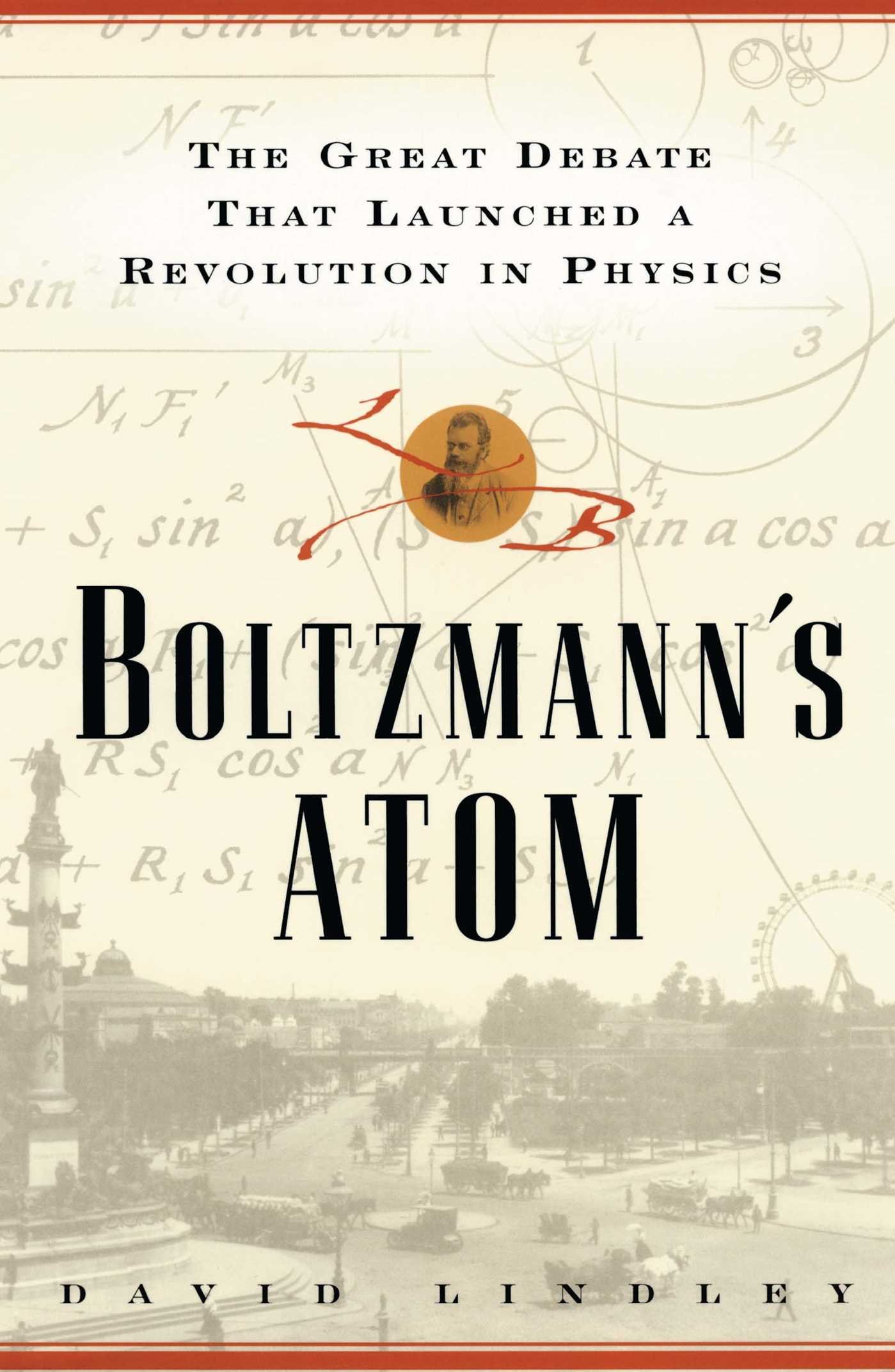
Boltzmanns Atom: The Great Debate That Launched A Revolution In Physics - Kindle edition by Lindley, David. Download it once and read it on your Kindle device, PC, phones or tablets. Use features like bookmarks, note taking and highlighting while reading Boltzmanns Atom: The Great Debate That Launched A Revolution In Physics. Review: Fascinating history of atomism, thermal physics, and Botzmann's life - As a college professor who has taught thermal physics to undergrads several times, I could not put this book down. It was incredibly interesting to learn in more detail the intellectual debates that occurred during the development of equilibrium statistical physics in the later years of the 19th century. David Lindley is a clear expositor and offers many insights into the changes in the process and approach to science that this period produced, especially the introduction of statistical thinking into physics, and the willingness to accept and theorize about unseen things (e.g atoms) which led to the full development of modern theoretical physics. The book also sets these scientific developments in the historical context of the time, illustrating the role that politics played in shaping the science. Although Botzmann's life had elements of frustration and sadness in it, and came to a tragic end, his life and this book are inspiring as well as captivating. Highly recommended! Review: Boltzmann and understanding the behavior of atoms - Today we have little problem understanding that certain laws of physics are probabilistic. Statistical probabilities are an integral part of trying to understand the behavior of atoms. But in the late 1800’s suggesting that we understand nature by statistics was anathema to most physicists. Nature had “laws” and those laws were either true or not true. If they were statistical probabilities they were not “laws.” It was Ludwig Boltzmann who revolutionized the way we think of atoms by showing, for example, that in the second law of thermodynamics the increase of entropy at any given moment in time is a very high probability but never an absolute certainty. It is not impossible that heat could flow to a hotter body; it is just enormously unlikely. This change in thinking about the way we understand nature led to so much more after Boltzmann’s death. He spent much of his life repeating his point again and again. Plagued by bad health, long periods of apathy and depression that he called “neurasthenia,” and a frequent sense that his work was not appreciated, Boltzmann committed suicide at age 62. Largely unknown to him, his work opened the door to a new way of understanding the very small in nature – a critical part of the foundation of physics. David Lindley is a fine writer and his descriptions of Boltzmann’s life and work are clear and easy to follow. My only problem with the book is with the digressions. Lindley also wrote the superb biography of Lord Kelvin published three years after this book. In the Kelvin biography he also digresses and talks for several pages about people that Kelvin worked with. I found those discussions interesting, relevant and well-written. But I did not feel that way about some of the digressions in this book. Lindley’s discussions of other historical figures are less directly relevant here at times. For example, he spends much of the second chapter talking about the atomic theories of Lucretius and Democritus. The idea is to give a thumbnail sketch of the history of atomic theory but to this reader it was much more than I wanted to know in a book about the life of Boltzmann. His dozen page discussion of the background, life and work of the American Josiah Gibbs is much more directly relevant to Boltzmann’s work but seemed to include more than was necessary. Other digressions like the ones on Helmholtz and Maxwell I thought were better tied to the overall context. But this is really a minor problem. Perhaps it is because his book on Kelvin is so consistently strong that my disappointment rises because I am comparing Lindley’s work here against his own later book. In any case this work stands by itself as a worthwhile book on both Boltzmann and the state of physics in the late 1800's. Ludwig Boltzmann is not a household word, even among those with some background in science. But his place in the history of physics is critical in the development of the modern scientific worldview. Lindley’s book gives Boltzmann his due and fleshes out the life of a brilliant but often tortured person. I recommend the book.


| ASIN | B017RNBRRC |
| Accessibility | Learn more |
| Best Sellers Rank | #436,077 in Kindle Store ( See Top 100 in Kindle Store ) #306 in Biographies of Scientists #460 in Scientist Biographies #720 in Science History & Philosophy |
| Customer Reviews | 4.4 4.4 out of 5 stars (115) |
| Edition | Reprint |
| Enhanced typesetting | Enabled |
| File size | 1.0 MB |
| ISBN-13 | 978-1501142673 |
| Language | English |
| Page Flip | Enabled |
| Print length | 274 pages |
| Publication date | December 19, 2015 |
| Publisher | Free Press |
| Screen Reader | Supported |
| Word Wise | Enabled |
| X-Ray | Not Enabled |
B**T
Fascinating history of atomism, thermal physics, and Botzmann's life
As a college professor who has taught thermal physics to undergrads several times, I could not put this book down. It was incredibly interesting to learn in more detail the intellectual debates that occurred during the development of equilibrium statistical physics in the later years of the 19th century. David Lindley is a clear expositor and offers many insights into the changes in the process and approach to science that this period produced, especially the introduction of statistical thinking into physics, and the willingness to accept and theorize about unseen things (e.g atoms) which led to the full development of modern theoretical physics. The book also sets these scientific developments in the historical context of the time, illustrating the role that politics played in shaping the science. Although Botzmann's life had elements of frustration and sadness in it, and came to a tragic end, his life and this book are inspiring as well as captivating. Highly recommended!
D**N
Boltzmann and understanding the behavior of atoms
Today we have little problem understanding that certain laws of physics are probabilistic. Statistical probabilities are an integral part of trying to understand the behavior of atoms. But in the late 1800’s suggesting that we understand nature by statistics was anathema to most physicists. Nature had “laws” and those laws were either true or not true. If they were statistical probabilities they were not “laws.” It was Ludwig Boltzmann who revolutionized the way we think of atoms by showing, for example, that in the second law of thermodynamics the increase of entropy at any given moment in time is a very high probability but never an absolute certainty. It is not impossible that heat could flow to a hotter body; it is just enormously unlikely. This change in thinking about the way we understand nature led to so much more after Boltzmann’s death. He spent much of his life repeating his point again and again. Plagued by bad health, long periods of apathy and depression that he called “neurasthenia,” and a frequent sense that his work was not appreciated, Boltzmann committed suicide at age 62. Largely unknown to him, his work opened the door to a new way of understanding the very small in nature – a critical part of the foundation of physics. David Lindley is a fine writer and his descriptions of Boltzmann’s life and work are clear and easy to follow. My only problem with the book is with the digressions. Lindley also wrote the superb biography of Lord Kelvin published three years after this book. In the Kelvin biography he also digresses and talks for several pages about people that Kelvin worked with. I found those discussions interesting, relevant and well-written. But I did not feel that way about some of the digressions in this book. Lindley’s discussions of other historical figures are less directly relevant here at times. For example, he spends much of the second chapter talking about the atomic theories of Lucretius and Democritus. The idea is to give a thumbnail sketch of the history of atomic theory but to this reader it was much more than I wanted to know in a book about the life of Boltzmann. His dozen page discussion of the background, life and work of the American Josiah Gibbs is much more directly relevant to Boltzmann’s work but seemed to include more than was necessary. Other digressions like the ones on Helmholtz and Maxwell I thought were better tied to the overall context. But this is really a minor problem. Perhaps it is because his book on Kelvin is so consistently strong that my disappointment rises because I am comparing Lindley’s work here against his own later book. In any case this work stands by itself as a worthwhile book on both Boltzmann and the state of physics in the late 1800's. Ludwig Boltzmann is not a household word, even among those with some background in science. But his place in the history of physics is critical in the development of the modern scientific worldview. Lindley’s book gives Boltzmann his due and fleshes out the life of a brilliant but often tortured person. I recommend the book.
R**O
Fun to read, and I learnt a lot.
This is a well written book, it paints a vivid picture of both Boltzmann and the development of kinetic theory, and what came to be known as statistical mechanics. I think it is possible that people without a scientific background could find it hart to follow. I enjoyed it very much, and I understand the history of one of the greatest minds of mankind and o an important area of science much better now.
W**E
Excellent popular history of statistical mechanics with a chapter on Gibbs.
This is an excellent popular history of statistical mechanics with much on the H theorem, not a lot on Maxwell’s demon, but a whole chapter on the Yale physicist Gibbs. Covers the debate over atoms between Mach and Boltz-mann.
G**S
Mech without Math
The title of my review is an expression of disappointment. I was expecting deeper explanations and discussion of Boltzmann's game changing approach to physics, but what this fine treatment offers is a narrative history of Boltzmann's work and life. Lindley provides a fine sketch of the intellectual climate of physics in mid nineteenth century Vienna, Graz, Munich, and Cambridge. His discussion of Loschmidt and Mach is very good-- especially Mach. And he manages to capture the taciturn Gibbs in an off-handed way. But Lindley is no biographer. He is writing a research review narrative that is neither biography nor intellectual history, but rather a kind of graduate students' table talk of thermodynamics. I turned to Boltzmann's Lectures of Gas Theory for the math and was delighted. This book is fine when taken on its own modest terms and goals: to tell the reader about how physicists in the nineteenth century thought about and argued over heat. It is a worthwhile "quick and dirty" history those arguments.
H**S
Accurate and insightful account
Lindley manages to convey the essence of Boltzmann's contributions and the controversies surrounding them correctly and with insight and grace. Especially interesting is Planck's and Einstein's adoption of Boltzmann's methods for different purposes. The controversy over the nature of entropy increase and the arrow of time continues unabated.
N**N
Excellent Read!
I loved this book. I was very wrapped up in it throughout. I highly recommend it to any physics students who are about to undertake a course in Thermo or Stat Mech. Amazingly, Lindley does a better job of explaining some things than many textbooks. I learned a lot from this book. I think seeing the historical development aides in learning the science. One downside is the lack of more in-depth science. Only one equation is written (S=klnw). It would be nice to see more of the physics being developled...possibly an idea for a new textbook... All in all, very fun. I would love to read more history of physics books that are written similarly.
H**T
My kind of nerdiest
I’m always amazed to read about times when the simple models that were explained to me as facts were not known at all. There is so much to be learned from examining the lives of the trailblazers.
A**R
Very well researched and written. Right mix of biography, history and physics. Recommended to anyone interested in the history of atomism.
D**E
Despite being interesting, well written, and a good read the book unfortunately doesn’t quite succeed in explaining Boltzmann kinetic theory sufficiently nor does it succeed in being a comprehensive biography. But it does provide quite good background on both.
Trustpilot
2 weeks ago
1 month ago