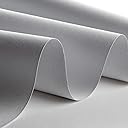


🎬 Transform your space into a private cinema with Carl’s Blackout Cloth!
Carl's Blackout Cloth is a premium DIY projector screen fabric measuring 66x110 inches, featuring a matte white surface with a gain of 1.0 for clear, glare-free images visible from any angle. Made from a sturdy 70% polyester and 30% cotton blend coated with rubber layers, it is designed for tension mounting on fixed wooden frames, delivering a flat, ripple-free viewing surface ideal for controlled lighting environments. This budget-friendly material is the go-to choice for millennial professionals seeking a customizable, high-quality home theater upgrade.


| ASIN | B007KA07YM |
| Brand | Carl's Place |
| Color | White |
| Customer Reviews | 4.4 out of 5 stars 748 Reviews |
| Display Dimensions | 66"x110" |
| Enclosure Material | Polyester |
| Item Dimensions W x H | 110"W x 66"H |
| Item Weight | 3.4 Pounds |
| Manufacturer | Carls Place |
| Material | Polyester |
| Model Number | 4331044093 |
| Mounting Type | Surface |
| Operation Mode | Manual |
| Product Dimensions | 110"W x 66"H |
| Screen Dimensions | 66"x110" |
| Screen Finish | Matte |
| Screen Surface Description | Matte |
| UPC | 795468704798 608729701330 |
W**Y
One Nice Looking Screen!
Carl's Place blackout cloth screen material. This is the budget stuff, so if you want a million dollar picture, there are other options available. They even sell a sample pack so you can decide which material is the best for your projector. Obviously there is some work involved since this is a DIY solution, but even the fixed frame screens have some assembly required. I recommend you check out not only this website's how-to instructions, but even the fixed frame assembly videos as well to familiarize yourself with the proper technique for stretching the screen and the best way to get good results. My local fabric store does not carry 66" wide blackout cloth, that is why I ordered this from Carl's. If you build a sturdy frame, and stretch the material properly, you will get little to no wrinkles. My wife and I did iron it lightly, but I'm not sure how much that helped. I'd recommend an electric stapler or air driven one that will make the hundreds of staples you need to apply that much easier. Even if you (cough, cough) buy one and return it when you're done (cough, cough), but you didn't hear that from me. Stapling Tip: DON'T SKIMP ON THE STAPLES!!! Stretch as you go and put staples every inch apart, yes, every inch! You cannot put them six or eight inches apart then go back around putting more in between, it won't work that way. Just work in five or six inch sections, alternating as you go around and keep pulling at the corners that you are working towards as you stretch across. Take your time. Some will claim they made their screens in an hour or two, if done correctly, it should take a little more time than that. I'm just trying to give you realistic expectations. Not including building the frame, I spent over an hour just to flatten out the material and attach it to the frame. I started at the top center, shot a few staples, moved to the bottom, then left center then right, then back to the top, five more left of center then shot five more to the right side of center, etc... working my way out to the corners. In any upholstery application, corners are always my arch nemesis. I have found that if you treat them like hospital corners on a bed, you get very good results. We prefer the edgeless design, it looks clean, modern and high end. The professional ones are at least two hundred dollars more than the black bordered options and I saw some that are over a grand. The frames of this type seem overly complicated. Some even appear to bow inwards on the long edge. Really?! So I'm not using any felt or trim around the edges. Essentially, I built mine like a gallery-edge style paint canvas, 2" thick with the material wrapped around the back. I included some photos I took as I assembled my screen just to give you an idea. I am a woodworker and have also done some upholstery so this was a walk in the park for me except maybe for the sheer size of the project. I have all the tools and skills needed for this at my disposal. I did this DIY project because I'm on a tight budget, knew that it was within my skill set and I enjoy the sense of pride from a job well done. And I planned... planned... and planned some more. I designed the screen long before I even got my projector. Then, while I waited for the material to arrive, I built the frame. My previous screen was quarter inch medium density fiberboard (MDF) with a white vinyl coating. The image is really good but in order to get the size I needed (100x56), I had to cut three pieces 33x56 hung on a french cleat. There were two visible seems and the panels started to bow (still a nice image, though). I thought about a fixed frame screen but even those are hundreds of dollars and I knew I could make one myself to the exact size I wanted. Plus, I wanted to use the new stapler I got for Christmas. The results are fantastic! There are still a few creases but, they are not too obvious. This stuff will crease even if you have it bunched up on a chair for fifteen or twenty minutes. If you can, order it on a roll and treat it with kid gloves. I opened it and unfolded it as soon as I got it. I wasn't expecting a better image over my previous screen, necessarily, just a nicer looking screen. Now, movies and video games look just like they should, a giant, moving painting!
J**N
Good and Cheap Material, But Have a Plan
I ventured out to build myself a home theater, looking for the best quality products without spending an arm or a leg on anything. I came by Carl's DIY section and after seeing all the good reviews decided to give the screen a shot. Here's the deal on the 'projector screen'. When you think of a projector screen you probably have an idea in mind of the type of material it's going to be. I paid the extra $20 to have the fabric rolled instead of folded, as I did not want to mess with having to get out any creases in the screen. As it turns out the material is very soft and pliable like fabric, opposed to a sturdier canvas like projector screen that I thought it would be, so I probably didn't need to spend the extra $20 after all. The quality of the fabric is good and seems to work well with a projected image. However, if you do not have a plan on exactly what you are going to do with the material, you may find yourself at a crossroads. Carl recommends buying lumber and constructing your own frame for the screen, then stretching the material over the frame, and stapling it to the edges, finally adding Carl's 'contrast boosting border' (very nice marketing phrase) to the edges of the frame. If that seems like an inordinate amount of work to you, there are other options. Since my projector didn't quite fill up the 66x110-inch space at the recommended viewing distance (most people's won't), I had to do something about the excess screen that was effectively washing out the picture. You will definitely need something to line the edges of your screen and ideally it should be black. What I did was first paint the wall I was projecting on black (highly recommended). After putting the fabric on the wall (which you have to be careful when doing so you do not create any ripples in the screen) I then hung a black piece of fabric on the ceiling so the projection would be absorbed rather than bounced off of the white ceiling. Finally I used the same black fabric to outline my screen so the only thing showing was the projected image. Overall, I would suggest this method or a similar one to save yourself excess time and money in the end.
M**T
Home Made Big Screen with Carl's Blackout Cloth was Great Quality and easy to work with!
I originally purchased this screen because of the cheap price and so that I could build my own design frame as I was mounting from a second story ceiling (about 18ft high). It did come folded with minor creasing in the fabric. This was no big deal after following instructions from the website found on the card that came with it. There are easy to follow instructions on the site that walk you through building a frame custom to the aspect ratio of your projector. The site has a material list and pictures as well. Once the frame is built and off the dirty ground the creased cloth was unfolded and just resting on the frame in this case was a 16:9 aspect ratio so the frame is 9' X 5'. I found that the fabric can be ironed as long as you use a low heat or med heat just keep the iron moving as the Carl's Blackout cloth has a rubber polymer mixed with the cotton and so it can over heat and shrink. I had not problems at all with this fabric and would recommend this product to anyone who has good carpentry skills and plenty of clean and dry area to work on this project. I made this screen last minute for my father to watch the superbowl on. The picture was crystal clear and looked great! The Seahawks looked great as well! :-)
A**R
Great product. Great price.
I bought a pretty basic projector. I tested it out, casting the picture against my wall before putting the cloth up. Once I calibrated the projector, I put the screen against the wall. Even without the screen secured I could tell the huge difference between the picture on the wall versus the picture against the cloth. It was clearer and brighter. I didn't have to use any kind of heat to get the creases in the cloth out (as it comes folded instead of rolled). I went pretty basic and just tacked the cloth to my wall, stretching it as I secured it in place. The instructions or very straight forward, and the makers are kind enough to add in some resources in the form of web directories for your reference. If you'd like to get ideas for framing and more, they tell you where to go. That's a pretty cool gesture. All in all, the cloth removed the grainy texture the painted wall produced, made the picture brighter and clearer, and laid the groundwork for some really cool home theater design ideas I'm creating. What's more, the size of the cloth is very generous. I actually had to cut it down because it was longer than my wall was wide. This is the perfect compliment for your projector, and the price is more than reasonable. I definitely recommend it.
M**O
Considering the price, it is a steal
We recently set up a home theater in our living room, but the theater had been a long time in the planning. We enjoy great picture and full sound - not to mention a sizable screen - but as most other people, we were constrained significantly by cost. However, we were able to put together a full system - 120", a 1080p 3D projector, a game surround sound system and a digital media center together for less than 1500 dollars. EVERYTHING included. This screen material is one major reason why we were able to keep the cost down. On the quality of the product: With this cloth the limiting factor for picture quality will almost always be your projector. For most people looking into making their own screen there will be no reason to opting for a much more expensive fabric because to go along with the screen will be an entry level projector like ours (a BenQ W1070). Most people are unlikely to notice slight improvements caused by higher quality screens. Some projectors, unlike ours, needs a slightly grey material to help along black levels (at the cost of other colors) - the same manufacturer sells this material as well. We found the cloth incredibly user friendly. Unlike many other reviewers, we had no trouble stretching the fabric out to remove folds left behind by the way the screen is shipped and stored. We followed the instructions on the manufacturer's website and made short work of it. We do recommend that you are at least two people involved as it will make stretching the fabric that much easier. With respect to the fabric not being cut completely straight as some other reviewers have noted: my initial impression of the problem, which we had too, was that it seemed a little lazy from the manufacturers end - because it is not that hard to cut it straight. That said, the fabric is intended to be stretched over a frame (so the edge doesn't matter at all) - AND, more importantly, the slightly frayed and less-than-straight edges were beyond the promised measurements. That is, the screen material we received could be cut straight and we would still have more material than promised in the product listing. We would happily buy this product again. It is now a central and refined part of our home theater system - at a fraction of the price that a manufactured screen would have cost for the same quality viewing experience. ---------- Beware of some of the caveats in choosing your projector screen type and quality: 1. With this material you will have to construct your own frame. It took me about two hours of construction, along with about two hours for planning and shopping for materials. I would not recommend using the material without a frame as stretching the material over the frame is what gives it a smooth surface that produces a great picture. The manufacturer of this material has a guide to make a frame on their webpage. 2. Unless your are incredibly adept at carpentry (or, I suppose, metalworking and engineering), your frame will be a fixed one. That means it will have to become a permanent feature in the room where you install it. For us that is not a big deal - even considering it is in our living room, because our media is a big part of our lives. But, that is not true for everyone. If you would like your wall back at the end of a movie showing, consider getting a retractable screen, but be prepared to pay a steep premium for that feature (while often, but not always, giving up several benefits associated with fixed screens - many, especially entry level retractable screens, will curl at the edges after some use for example. A fixed frame will not). 3. A fixed screen will not sway if there is a draft (which can even be what an A/C unit or heating unit with a fan can produce) or someone passing by the screen on their way to get popcorn. Many retractable screens will take a long time to become completely still again - until they do, you will have a poor picture experience.
A**R
Works great! Folds won't come out though.
This material is perfect for making a DIY projector screen and is very good quality. I was able to find instructions online to make my projector screen. I made it out of wood and staple gunned the cloth onto the frame. After making my screen with this cloth, it looks great! I'm very pleased with the way the projection looks on the screen. The colors are crisp and the screen doesn't glare. The only reason I won't be giving this product 5 starts is because the creases on the screen from when it was folded in delivery won't come out no matter how hard I stretch the screen. This may bother some people but this isn't much of a problem for me because the folds become unnoticed when watching a movie in the dark. Overall I'm very happy with my purchase and can't wait to watch a ton of movies on my screen!
W**N
120" of PURE AWESOMENESS!
If you have any doubt in your mind about purchasing this screen material, stop doubting and just buy it! Shipping was light speed and arrived in just a couple days! Please note, my handyman/carpentry skills are roughly that of high school woodshop. However, do not fret...the Carl's Place website [...] provides awesome simple instruction on how to build your very own high quality screen. This screen rivals any factory made screen on the market, and at a fraction of the cost. Construction Again follow the instructions on the website and you'll be fine. Constructing the frame was easy peasy. The hardest part was getting the measurments right. The rest is cake. Stretching the Screen This can be done with one person. However, I STRONGLY RECOMMEND you stretch the screen with at least two people. One to pull and stretch, while the other staples it down. My wife helped me with this and it turned out awesome! Smooth as a baby's bottom! I haven't been able to build my border with the backband and felt tape as of yet. The backband trim seems to be non-existant in Hawaii. Order online from Home Depot did you say? Well, they don't ship to Hawaii. I have found a similar trim that could work, I was just hoping to find the backband before I broke down and bought somehting else. I'm still looking... The screen is up and hanging on my wall, and it provides an amazing picture. It's white with just the right amount of grey to provide awesome contrast and black levels. I am projecting with an Optoma GT750E and could't be happier. Semper Fidelis
T**S
Turned out better than I expected
I bought this product as a cheap alternative to buying those other expensive screens online. after spending over a grand on my projector i really didnt wana spend that much on a screen so this seemed like a great choice. After i bought it i realized i would need to figure out how to build it. Other reviews for this product say to go to the carl's place llc website and follow their instructions which i was worried about since i never took a high school shop class or anything. My wood working skills were next to zero. I went to home depot after getting the canvas and some black felt tape in the mail. I used select pine like the instructions say and it really was the perfect material, super light weight and easy to staple if you put about fifty pounds of pressure on your staple gun as you drive each one in. Also just get home depot to cut the wood for you to whatever specifications you need. It says use a heavy duty stapler but i bought an electric staple gun that was really only 7 dollars more than the non electric kind. That was the best decision i made and ill explain why. The instructions are easy to follow and despite being intimidated by the canvas stapling step my screen turned out great. Only thing i would change in the instructions is that since i have no idea how to do that whole pocket screw thing to build the frame I just used the staple gun i bought to join the wood together. about ten staples on each side (be careful when you are flipping it if you do this because it will bend the staples on the one side until you put staples on the other side) and the frame is as sturdy as if i nailed the thing together (i put a little elmers glue on there too but i dont think it really did anything). This was WAY easier than using a drill and all that plus i didnt need to buy a drill bit or screws. I also didnt put the wooden trim around the edges. i just used the felt tape as a border and it looks great to me... way less work for the same effect(less money too). All in all i built my screen in about 2 hours with my girlfriend's help holding it up and stretching the canvas; stuff like that. I spent about $150-$160 total including the canvas and all the materials from home depot. I would recomend this product to anyone looking to save on a projector screen. I was intimedated at first at the thought of building it and messing up but after seeing it put together I couldnt be more satisfied.
Trustpilot
2 weeks ago
1 week ago