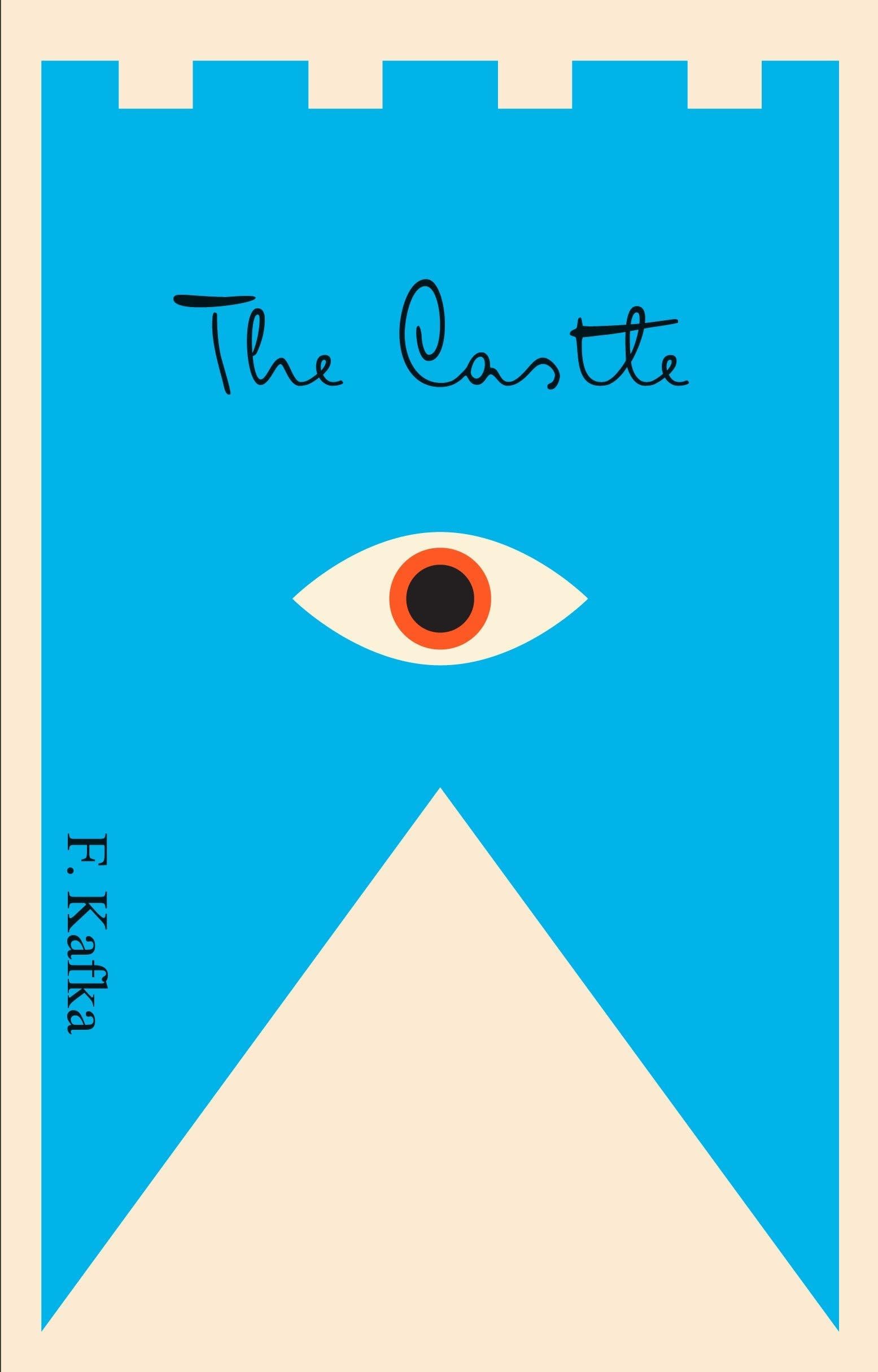
The Castle
Product ID: 8468587
Buy anything from 5,000+ international stores. One checkout price. No surprise fees. Join 2M+ shoppers on Desertcart.
Desertcart purchases this item on your behalf and handles shipping, customs, and support to Israel.
From the author of The Metamorphosis and The Trial— one of the greatest writers of the twentieth century—the haunting tale of K.’s relentless, unavailing struggle with an inscrutable authority in order to gain access to the Castle. Translated and with a preface by Mark Harman. Arriving in a village to take up the position of land surveyor for the mysterious lord of a castle, the character known as K. finds himself in a bitter and baffling struggle to contact his new employer and go about his duties. The Castle 's original manuscript was left unfinished by Kafka in 1922 and not published until 1926, two years after his death. Scrupulously following the fluidity and breathlessness of the sparsely punctuated original manuscript, Mark Harman’s new translation reveals levels of comedy, energy, and visual power previously unknown to English language readers. Review: Classic Account of Alienation and Absurdity - Review of "The Castle" by Franz Kafka This book made me into a Kafka admirer. He brings life to characters in otherwise drab situations and makes them seem very real. The reader feels the frustration, absurdity, the pettiness and the powerlessness in a personal way. You feel the haughtiness and aloofness of the Castle staff as if they were a part of your own community. You feel the pettiness and delusional gossip of the townspeople as if you were seeing it first hand. The story is riveting and the pace seems fast even when there is little action. The story starts with the protagonist (identified only by his initial, K.) walking to what sounds like a routine surveying job. Soon he is frustrated by a very confusing series of obstacles. As the story develops the obstacles become more chaotic. K.'s original purpose in going to the castle is never fully elaborated and his motives seem lost or stolen. The forces acting upon K. are shrouded. It seems as if some invisible force has plotted to test K. to the limit of human endurance of tolerance of ambiguity. Kafka combines the themes of: social class commentary, alienation from a heartless social system, absence of any protective power, salvation, redemption, fear of strangers, fear of change, search for the meaning of life, inscrutability of authorities, indifference of forces ruling human fate, persistence in the face lost purpose, abuse of power and acceptance of pointlessness goals. As the plot progresses it takes on a surreal nightmare quality. Is the protagonist having a nightmare, going insane or confronting the reality of his situation? There is no end to the frustration. We are never told if K. is having a nightmare or going insane. We never discover why K. is so determined to enter the castle that he would tolerate and even join in to the absurdity. His original purpose of doing a surveying job could never justify his struggle to gain admittance. We are left seeing K. as a perpetual outsider. Perhaps Kafka is telling us that there is no end or limit to frustration, alienation and absurdity. Those seeking an answer to the ageless enigma of existence will never find a simple resolution. This is a disturbing work that challenges conventional notions of plot and character development while testing the readers conception of his/her purpose in life. The Castle will confront the reader in unexpected ways and raise emotional personal issues that would otherwise be repressed. See: The Metamorphosis The Trial Amerika Collections: The Diaries of Franz Kafka (Schocken Classics Series) Collected Stories (Everyman's Library) The Zürau Aphorisms of Franz Kafka Blue Octavo Notebooks Kafka's Selected Stories (Norton Critical Edition) Give It Up: And Other Short Stories Great German Short Stories (Dover Thrift Editions) I highly recommend this book. Review: Kafka's Dream - “It was late evening when K. arrived. The village lay under deep snow. . .K. stood a long time on the wooden bridge that leads from the main road to the village, gazing upward into the seeming emptiness.” Thus begins one of the greatest novels of the 20th Century, Franz Kafka’s The Castle, written during the last two years of Kafka’s life while he was suffering from the chronic tuberculosis that eventually killed him in 1924, and first published in 1926 as Das Schloss with Max Brod’s significant deletions, changes, revisions and ‘corrections.’ This, however, is the Mark Harmon translation from Kafka’s actual original manuscript (i.e., without Brod’s alterations), which wonderfully captures both Kafka’s flowing, lucid, unpunctuated prose and the frenetic, anxious space of Kafka’s dreamworld. Kafka deftly sketches the stories and characters and scenes that consist of his dreamworld. Be forewarned: It’s a postmodern novel: there is no foreshadowing of events, no character development, no history behind any of the characters that inhabit this dreamworld; indeed, some denizens are not even characters, they are mere caricatures—just placeholders in Kafka’s dreamworld—for example, the two ‘Assistants’ that K. decides to call by the same name, or the ‘Peasants’ that frequently occupy space at the inns where K. seeks to find lodging. The Castle itself is a mystery wrapped in an enigma, “Keeping his eyes fixed upon the Castle, K. went ahead, nothing else mattered to him. But as he came close he was disappointed in the Castle, it was only a rather miserable little town, pieced together from village houses, distinctive only because everything was perhaps built of stone.” K. is summoned to the Castle as the new ‘surveyor.’ Yes, K. is surveying the landscape of his world, and publishing the truth of it for all the world to see, including all the corruption and internecine conflict that authoritarian bureaucracies suffer from. He is an outsider to that world, and he reports as a dissident: “K. did not hesitate to choose, nor would he have hesitated to do so even if he had never had certain experiences here. It was only as a village worker, as far from the Castle gentlemen as possible, that he could achieve anything at the Castle, these people from the village who were so distrustful of him.” It is not just with the people from the Castle that K. experiences anxiety, sometimes flowing intensely and other times ebbing to merely an undifferentiated dread, all these friendly characters presenting themselves to his consciousness: Olga, Barnabas, Frieda, Amalia, Pepi, the Landlady, the Commissioner, the Teacher, always perfectly sketched in their dreamlike essence, and always perfectly balanced in their ambiguous connection to K. Olga says to K., “But you’re spending the night with us,” to which K. replies, “To be sure” . . . “leaving it to her to interpret the words he had spoken.”

| Best Sellers Rank | #30,863 in Books ( See Top 100 in Books ) #12 in German Literature (Books) #640 in Classic Literature & Fiction #2,111 in Literary Fiction (Books) |
| Customer Reviews | 4.3 out of 5 stars 1,005 Reviews |
S**S
Classic Account of Alienation and Absurdity
Review of "The Castle" by Franz Kafka This book made me into a Kafka admirer. He brings life to characters in otherwise drab situations and makes them seem very real. The reader feels the frustration, absurdity, the pettiness and the powerlessness in a personal way. You feel the haughtiness and aloofness of the Castle staff as if they were a part of your own community. You feel the pettiness and delusional gossip of the townspeople as if you were seeing it first hand. The story is riveting and the pace seems fast even when there is little action. The story starts with the protagonist (identified only by his initial, K.) walking to what sounds like a routine surveying job. Soon he is frustrated by a very confusing series of obstacles. As the story develops the obstacles become more chaotic. K.'s original purpose in going to the castle is never fully elaborated and his motives seem lost or stolen. The forces acting upon K. are shrouded. It seems as if some invisible force has plotted to test K. to the limit of human endurance of tolerance of ambiguity. Kafka combines the themes of: social class commentary, alienation from a heartless social system, absence of any protective power, salvation, redemption, fear of strangers, fear of change, search for the meaning of life, inscrutability of authorities, indifference of forces ruling human fate, persistence in the face lost purpose, abuse of power and acceptance of pointlessness goals. As the plot progresses it takes on a surreal nightmare quality. Is the protagonist having a nightmare, going insane or confronting the reality of his situation? There is no end to the frustration. We are never told if K. is having a nightmare or going insane. We never discover why K. is so determined to enter the castle that he would tolerate and even join in to the absurdity. His original purpose of doing a surveying job could never justify his struggle to gain admittance. We are left seeing K. as a perpetual outsider. Perhaps Kafka is telling us that there is no end or limit to frustration, alienation and absurdity. Those seeking an answer to the ageless enigma of existence will never find a simple resolution. This is a disturbing work that challenges conventional notions of plot and character development while testing the readers conception of his/her purpose in life. The Castle will confront the reader in unexpected ways and raise emotional personal issues that would otherwise be repressed. See: The Metamorphosis The Trial Amerika Collections: The Diaries of Franz Kafka (Schocken Classics Series) Collected Stories (Everyman's Library) The Zürau Aphorisms of Franz Kafka Blue Octavo Notebooks Kafka's Selected Stories (Norton Critical Edition) Give It Up: And Other Short Stories Great German Short Stories (Dover Thrift Editions) I highly recommend this book.
J**S
Kafka's Dream
“It was late evening when K. arrived. The village lay under deep snow. . .K. stood a long time on the wooden bridge that leads from the main road to the village, gazing upward into the seeming emptiness.” Thus begins one of the greatest novels of the 20th Century, Franz Kafka’s The Castle, written during the last two years of Kafka’s life while he was suffering from the chronic tuberculosis that eventually killed him in 1924, and first published in 1926 as Das Schloss with Max Brod’s significant deletions, changes, revisions and ‘corrections.’ This, however, is the Mark Harmon translation from Kafka’s actual original manuscript (i.e., without Brod’s alterations), which wonderfully captures both Kafka’s flowing, lucid, unpunctuated prose and the frenetic, anxious space of Kafka’s dreamworld. Kafka deftly sketches the stories and characters and scenes that consist of his dreamworld. Be forewarned: It’s a postmodern novel: there is no foreshadowing of events, no character development, no history behind any of the characters that inhabit this dreamworld; indeed, some denizens are not even characters, they are mere caricatures—just placeholders in Kafka’s dreamworld—for example, the two ‘Assistants’ that K. decides to call by the same name, or the ‘Peasants’ that frequently occupy space at the inns where K. seeks to find lodging. The Castle itself is a mystery wrapped in an enigma, “Keeping his eyes fixed upon the Castle, K. went ahead, nothing else mattered to him. But as he came close he was disappointed in the Castle, it was only a rather miserable little town, pieced together from village houses, distinctive only because everything was perhaps built of stone.” K. is summoned to the Castle as the new ‘surveyor.’ Yes, K. is surveying the landscape of his world, and publishing the truth of it for all the world to see, including all the corruption and internecine conflict that authoritarian bureaucracies suffer from. He is an outsider to that world, and he reports as a dissident: “K. did not hesitate to choose, nor would he have hesitated to do so even if he had never had certain experiences here. It was only as a village worker, as far from the Castle gentlemen as possible, that he could achieve anything at the Castle, these people from the village who were so distrustful of him.” It is not just with the people from the Castle that K. experiences anxiety, sometimes flowing intensely and other times ebbing to merely an undifferentiated dread, all these friendly characters presenting themselves to his consciousness: Olga, Barnabas, Frieda, Amalia, Pepi, the Landlady, the Commissioner, the Teacher, always perfectly sketched in their dreamlike essence, and always perfectly balanced in their ambiguous connection to K. Olga says to K., “But you’re spending the night with us,” to which K. replies, “To be sure” . . . “leaving it to her to interpret the words he had spoken.”
A**I
Subtle Narrative Interspersed with moments of Brilliance
The Castle is one of those rare works of fiction that one can choose to interpret however one sees fit. That being said, the central theme of the book seems to be bureaucracy - but not bureaucracy for bureaucracy's sake, but rather, how bureaucracy affects all the characters in the novel, chiefly the lone figure of K. I read the novel as something of a commentary on modern life: The main character K. arrives in a completely foreign village, knowing nothing of local custom or etiquette. K. strives to do only one thing; begin work as a land surveyor, his chosen occupation. But In order to do so, he must appeal to officials at the castle. K. quickly becomes the one being appeased, as the officials offer him a post in a completely unrelated field, he falls for a barmaid, and is inundated on all sides by local affairs - all the while never giving up on his dream, only becoming more weary and worn. Could this possibly be social commentary on the absurdities of modern living, on the world we've built for ourselves? How it is exceedingly difficult, sometimes nearly impossible, to do the things which should be most simple - chiefly, doing what your want for a living and surviving by your own merit? A task made difficult through the fettering hands of authorities and our complete and utter dependence on them. Kafka's narrative style is a little hard to digest at first - there are many passages that seem like run-on sentences, and many times characters venture complex, lengthy monologues in order to explain themselves and their situations - but upon cozying up, one eventually finds it endearing. There are also moments of profound insight that seem only all the more brilliant because of the somewhat "tedious" nature of the rest of the prose. I found myself marking passages. Throughout the work, an unreal, dreamlike quality persists, as if Kafka were himself writing in a trance. Is the book good? Yes. Worth reading? Yes. Challenging at times? Yes. Ultimately rewarding - of course. Kafka manages to build a world full of such intriguing characters, with so many varied and competing self-interests, and an enduring, central, "underdog" character, that I couldn'g help wishing that the novel didn't end mid-sentence...I couldn't help longing for more.
A**W
Becomes tedious
The concept of the book is quite good: through a simple lie, a man becomes pulled into a nightmarish situation controlled by an inscrutable, unreachable bureaucracy. And it starts off decently, but eventually descends into tedium. Narrative sections fall off almost completely as characters monologue for pages and pages, chapter after chapter, talking about officials, their relationship with officials, other characters' relationship with officials, interpretations of officials' behaviors, duties of officials, appearances of officials, and so on... I made it more than two thirds of the way into the book and finally gave up. The book is unfinished and unpolished, and it shows. "The Trial" is just as good of an example of Kafka's writing and themes, while also being a much more enjoyable read. I would also recommend "The Metamorphosis" over this.
S**N
An Original and Extraordinary Work of Lierature
An extraordinary and original novel that truly deserves to be called a masterpiece of literature. At times funny, moving, melancholy and unnerving, Kafka's Castle is a literary experience that cannot be equaled or replicated. I am now reading and re reading all of his works and I must place him as my second favorite author behind only Dostoevsky. If you love literature that makes you think, and is also wonderfully hilarious, then this is a novel that you will enjoy and treasure.
R**N
For me, this book is an absolute treasure. 'The Castle' will bring joy.
For me, this book is an absolute treasure. To anyone who has studied Sartre's later philosophy in the 'Critique of Dialectical Reason' and pondered the 'series' and the 'fused group' as the two fundamental kinds of human groupings, Kafka's 'The Castle' will bring joy. Here is all the vagueness, Otherness, elsewhereness and infinity that haunts the serial arrangement of men, men who are loosely grouped but essentially 'separated' both in their relations with one another and in the very interiority of their consciousness. By contrast, in the 'fused group,' seriality has disintegrated; people who may have once been superior or inferior to other people, now become 'the same'. This happens during a time of revolution when people who were once arbitrarily separated, come to realize that they have a common goal: staying alive. But it also happens simply in the process of growing up. In our teens we come to a point where we liquidate parental values and control. Perhaps on the occasion of a failure, we will realize that we can not go on living to please 'other' people, our parents, teachers or friends; we can not go on living to control other people. So, the importance of the Other is relegated to its proper place. We start living in the here and now rather than deferring life to an 'elsewhere' either in time or in space. We give up our false superiority and inferiority to other people and realize a new 'sameness' with our fellow man which is both humble, in that we are capable of failure, and proud in that we now assert our own identity. This is self-acceptance, but it's also the liquidation of seriality. We put our feet on the ground among men in a finite world. Kafka shows us the opposite, the infinite.
A**S
Prophesying the Twentieth Century’s Loss of Humanity
Like many of his works, Franz Kafka’s the Castle foresaw some of the most alienating aspects of the twentieth century. Even a first read of the book allows the reflective reader to see Kafka’s major theme: bureaucracy and a state that obliterates the difference between the private and the political leads to dehumanizing personal relations and a loss of our collective humanity. Kafka epitomizes this in a scene where a state assigned gopher and his boss temporarily forget that the gopher is ostensibly at the boss’s command (though he is actually a spy). The boss suddenly realizes their common humanity and changes from legalese to a more natural tone. The reader can also witness this in a reversal of such movement as the book progresses. At first, a surveyor comes to a village full of common sense and thinking reasonably. As the story develops, he increasingly begins to think and act in the self-evidently mad but ostensibly rational bureaucratic manner that pervades the townsmen. Decades before the National Socialists and the Bolsheviks created societies that resembled all too well the collective life of the Castle, Kafka was somehow able to pen one of the most eloquent, while still humorous, defenses of human nature in the face of ideologies that sought to radically change it. It really isn’t optional reading given the pervasiveness of like minded systems in the twenty-first century. In my opinion, Kafka will only grow in importance by focusing on the changes over-bureaucratization brings to personal relations while Orwell and Huxley will wane by being too tied to attacking governments of their day. The Castle just makes me look forward to reading more and more of Kafka. Highest recommendation.
J**I
“Look out kid, they keep it all hid…”
… as Bob Dylan once sang, in “Subterranean Homesick Blues.” I’ve read two of Kafka’s major works twice: The Metamorphosis and The Trial , and have reviewed both. Franz Kafka was a German Jewish writer who was born and raised in Prague, when it was part of the Austro-Hungarian Empire. He would die young, at the age of 40, in 1924, and like some other writers, he would die of tuberculosis. His world view was worse than mere “gloomy.” There is this nightmarish quality to his writing: the lone protagonist, with the last name of “K,” locked in a struggle with a bureaucracy were all the rules, and all the people who espouse them, are “non-Euclidian,” as it were… operating in a geometry very different from the one that we were taught in school. And even those rules are shifting, “contextually.” And “K” never wanted to be there to begin with! His books resonate, since I have not only been there, but am there. Rare is the writer, Machiavelli, for example, whose last name has been turned into a word in the English language. Kafka is in that elite club. He is Kafkaesque. Thanks to a fellow Amazon reviewer who urged me to also read this work, I have again experienced the nexus between real world experience and the absurdity and existential angst of fight “the system” of Mitteleuropa of a century ago. K. is a surveyor, and has been hired by The Count of the Castle. He arrives in the village near the Castle, expecting to assume his new position. He immediately encounters the hostility of the villagers, not aimed at him specifically, but rather because he is an outsider, who does not understand the system or the power arrangements. But does anyone? The plot has two primary threads, naturally entangled. Like “The Trial,” there is K.’s dealings with the nightmarish bureaucracy, filled with idiosyncratic characters, who have their “prerogatives.” Is the messenger more important than his boss? K.’s meeting with the Mayor, in bed, with gout, is a classic. The Mayor infers that K.’s actual hiring may not have been authorized, that the bureaucracy is working on the issue, and that it is the most “trivial” of cases before it. The Mayor manages to stir in some threat and menace. Typical of Kafka’s layered style, concerning the messenger Barnabas: “But what were they to pardon him for, they answered; no charge had been brought, at least none had been entered in the records, at any rate not in the records available for public lawyers.” They do, indeed, try to keep it all hidden. There is what is available to the public, and, again as Kafka says: “I found out quite a lot from the servants about how to get taken on at the Castle by getting round the public recruitment process, which is difficult, and takes years…” Unlike “The Trial,” there is K’s relationship with women, commencing with the barmaid, Frieda, who was once Klamm’s mistress, and quickly became K’s fiancée. Barnabas has a couple of daughters who may, or may not be interested in K., and then there is the landlady. Towards the end of the work, I thought that Kafka made some interesting observations about Frieda, and her barmaid replacement (for a while) Pepi, as well as their customers. Serendipity, and those female relationships, present K. with the opportunity to pull back the curtain, a la The Wizard of Oz and see how power is actually distributed. Or perhaps not, as is Kafka’s style. And is K.’s own file that single sheet of paper? Nothing can be certain. After all, they are masters at keeping it all hid! This work was unfinished at Kafka’s death. He wanted all his works destroyed. The world owes Max Brod a debt of gratitude because he disobeyed his friend’s wish. This novel ends in mid-sentence. I do think a good editor would have substantially reduced its wordiness, and seemingly irrelevant tangents, such as the relationship of Frieda and Pepi. For Kafka’s work, 4-stars; for my real-world experience, as in “The Trial,” the jury is still out.
S**S
Good book
The book arrived completely fine, the only comment I have is that the cover and pages are very thin. But it's a very cheap softcover so I can't really be mad. Love the cover design on these.
A**R
Five Stars
Awesome!!!
W**H
The Castle
First off this is an excellent book, as you might expect given that it was written by, arguably, one of the most influential writers of the last 150 years. I would recommend this novel to anyone with an interest in contemporary philosophical and existential literature. However, I would also suggest that anyone wanting to read this should read 'The Trial' (also by Kafka) first, simply because it's a slightly gentler starting point with regards to style and narrative and is an easier way to become acquainted with Kafka's works, before tackling 'The Castle' which is a trickier and more unfinished novel, but ultimately just as challenging and interesting a story. (PS: Check out his short stories as well, most are similar works of genius from one of the most unique and tragic authors who ever put pen to paper.)
閑**閑
古典的サイコ
この作品が醸し出すものは、現在サイコサスペンスとかサイコホラーと呼ばれるジャンルの先駆けになるのではという印象を持ちました。有名な作品なので内容はよく知られていると思います。ユダヤ人であるカフカが生きた時代を比喩したものであるということは判るのですが、全体を見回してみると謎だらけの作品です。奇怪で滑稽、そして不可解。 謎だけにその分面白いです。
N**G
Excellent Novel and Good Translation
I love this novel, although I will admit that it's not everyone's cup of tea, so to speak. I also like this translation which, if I'm not mistaken, is more recent and modern.
Trustpilot
3 days ago
2 months ago