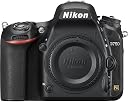
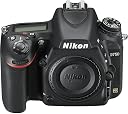
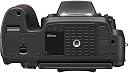
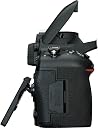
🚀 Elevate your vision with Nikon D750 — where full-frame power meets agile creativity!
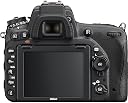
The Nikon D750 is a compact, lightweight full-frame DSLR featuring a 24.3MP FX-format CMOS sensor paired with the EXPEED 4 processor. It offers fast 6.5 fps continuous shooting, a sophisticated 51-point autofocus system, and professional Full HD video capabilities. Its 3.2-inch tilting Vari-angle LCD and built-in Wi-Fi enable versatile shooting and instant sharing. Designed for enthusiasts and pros alike, the D750 delivers exceptional image quality, speed, and connectivity in a nimble body.
| ASIN | B0060MVJ1Q |
| Age Range Description | Adult |
| Aperture modes | F2.8-F22 |
| Are Batteries Included | Yes |
| Aspect Ratio | 3:2 |
| Auto Focus Technology | Center, Continuous, Contrast Detection, Face Detection, Live View, Multi-area, Phase Detection, Selective single-point, Single, Tracking |
| Autofocus | Yes |
| Autofocus Points | 51 |
| Best Sellers Rank | #145,396 in Electronics ( See Top 100 in Electronics ) #207 in DSLR Cameras |
| Bit Depth | 14 Bit |
| Brand | Nikon |
| Built-In Media | BF-1B Body Cap, Camera Body Only, DK-21 Rubber Eyecup, DK-5 Eyepiece Cap, EN-EL15 Rechargeable Li-ion Battery, MH-25a Battery Charger, UC-E17 USB Cable AN-DC14 Strap, ViewNX 2 CD-ROM |
| Camera Flash | Hotshoe |
| Camera Lens | Nikon F-mount lens |
| Color | Black |
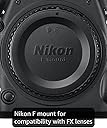
| Compatible Devices | Nikon F (FX) mount lenses |
| Compatible Mountings | Nikon F (FX) |
| Connectivity Technology | HDMI, USB |
| Continuous Shooting | 6.5 |
| Customer Reviews | 4.6 out of 5 stars 1,115 Reviews |
| Digital-Still | No |
| Display Fixture Type | Tilting |
| Display Resolution Maximum | 1229000 |
| Display Type | LED |
| Dots Per Screen | 1,229,000 |
| Effective Still Resolution | 24.3 MP |
| Expanded ISO Minimum | 50 |
| Exposure Control | Aperture priority, Manual, Program, Shutter priority |
| File Format | JPEG, Raw (NEF, lossless compressed, compressed 12 or 14 bit) |
| Flash Memory Bus Interface Type | SD |
| Flash Memory Speed Class | C2, C4, C6, or C10 |
| Flash Memory Type | SD/SDHC/SDXC (dual slots) |
| Flash Memory Video Speed Class | V30 |
| Flash Modes | Auto, Auto/Red-Eye Reduction, Fill Flash, Hi-Speed Sync, Off, Rear Curtain/Slow Sync, Rear Sync, Red-Eye Reduction, Slow Sync, Slow Sync/Red-Eye Reduction |
| Flash Sync Speed | 1/200 sec |
| Focal Length Description | 24-120mm |
| Focus Features | Multi-CAM 3500FX autofocus sensor module with TTL phase detection |
| Focus Mode | Automatic AF (AF-A), Continuous-Servo AF (AF-C), Manual Focus (MF), Single-Servo AF (AF-S) |
| Focus Type | Manual Focus |
| Form Factor | Mid-size SLR |
| Global Trade Identification Number | 00018208015436 |
| HDMI Type | Type C Mini HDMI |
| Hardware Interface | AV Port |
| Has Color Screen | Yes |
| Image Capture Type | Stills & Video |
| Image Stabilization | No |
| Image stabilization | No |
| Item Weight | 1.65 Pounds |
| JPEG Quality Level | Basic, Fine, Normal |
| Lens Construction | 18-70mm |
| Lens Type | Close-Up |
| Manufacturer | Nikon |
| Maximum Aperture | 5.6 Millimeters |
| Maximum Image Size | 6016 Pixels |
| Maximum Shutter Speed | 1/4000 Seconds |
| Metering Methods | Multi, Center-weighted, Highlight-weighted, Spot |
| Minimum Focal Length | 18 Millimeters |
| Minimum Shutter Speed | 30 seconds |
| Model Name | Nikon D750 |
| Model Number | 1543 |
| Model Series | D750 |
| Movie Mode | Yes |
| Night vision | No |
| Optical Zoom | 1 x |
| Phase Detection Sensor Points | 15 |
| Photo Sensor Resolution | 24.3 MP |
| Photo Sensor Size | Full Frame (35mm) |
| Photo Sensor Technology | CMOS |
| Real Angle Of View | 43.3 Degrees |
| Recording Capacity | 30 Minutes |
| Remote Included | No |
| Screen Size | 3.2 Inches |
| Self Timer | 20 Seconds |
| Sensor Type | CMOS |
| Series Number | 750 |
| Shooting Modes | Movie mode, burst mode, manual mode |
| Skill Level | Professional |
| Special Feature | Brightness Control |
| Specific Uses For Product | Photography, Videography |
| Supported File Format | JPEG, Raw (NEF, lossless compressed, compressed 12 or 14 bit) |
| Supported Image Format | MPEG-4 |
| Total Still Resolution | 24.3 MP |
| Total USB 2.0 Ports | 1 |
| Total USB 3.0 Ports | 1 |
| Total USB Ports | 1 |
| Total Video Out Ports | 1 |
| UPC | 018208015436 018208940325 628804146078 017893649230 |
| Video Output | Mini-HDMI |
| Video Resolution | FHD 1080p |
| Viewfinder | Optical |
| Viewfinder Magnification | 0.70x |
| Warranty Description | 1 year coverage for labor, 1 year coverage for parts, This warranty doesn't apply to the batteries and software driver that accompany this product |
| White Balance Settings | Auto, Cloudy, Color Temperature, Daylight, Flash torch, Fluorescent, Incandescent, Shade |
| Wireless Technology | BuiltIn |
| Write Speed | 6.5 fps |
| Zoom | Digital Zoom, Optical Zoom |
B**S
Well worth the investment and the wait!
I have owned a number of SLR and D-SLR cameras and have found a perfect match to my needs in the Nikon D750. I won't get into a comparison of brands - each brand has its merits. I chose the Nikon family because many of my original film SLRs were Nikon and I wanted to get even more use out of my lenses. My first Nikon D-SLR was the D90, followed by the D7100. I loved both, the D7100 even more so (which is fair, given that it had several upgrades to the D90). The D750 is everything I've been waiting for. For a full-frame camera, it is very reasonably-priced. The photo quality is excellent - with good lenses, the images are sharp and the colours are beautiful and accurate. Low-light photography is amazing - I am continually stunned at how sensitive the sensor is and how minimal the noise is at high ISOs. I've used the camera for everything from fast-moving action shots (sports, auto-racing) to meteor showers and everything in between, including portraits and nature photography. Images enlarged to poster size retain their sharpness and detail. I have greatly enjoyed the photo quality of the D7100 - it's a great DX camera that I highly recommend if you're looking for DX. Sorry, you can't have mine because I'm keeping it!:) I was eager to do some side-by-side comparisons with the D750. Using the same lens, I took photos with each camera and, while pleased with the results of each, the photos from the D750 were exceptional. Much of the difference is likely due to the full-frame sensor and simply having so much more image to work with, but I was also impressed with the outstanding clarity in low-light conditions which is surely a result of the updated CMOS. I took some ambient outdoor photos during the last full moon using a tripod and was stunned by the detail in the D750 images. And the photos of the full moon itself were astounding - they were so clear and detailed, I wouldn't have been surprised to see an astronaut waving to me. :) The D750 has many features I've been longing for. - the tilt LCD is fantastic. I sometimes shoot using a monopod to get an angle above people's heads and the tilt LCD allows me to see what I'm getting. I recommend a wireless remote (Nikon or the AmazonBasics) or Nikon MC-DC2 remote release cord. - the built-in Wi-Fi has made it infinitely easier to go from camera to smartphone/tablet without needing to pull SD cards out of the camera and use a computer. With the Nikon WMU app on your smartphone or tablet, it takes only seconds to transfer images that you can then further proof, email, or post to social media. I've transferred images in 1-2 seconds each. You can also take photos on the D750 from your smartphone or tablet. (Be sure you have a fully charged battery to get the most out of the experience so you can have Live View appear on your device.) I recently shot photos for a competitive event and people were amazed at both the quality and the speed of the photos I was posting to Twitter. Within seconds of taking a photo on the D750, I could have the image posted to social media. - Speed! 6.5 fps can capture a lot of action, especially combined with the advanced auto focus features. I've been able to capture some amazing moments. - Face recognition - HD video is really fun and the quality is amazing! Even though the camera has reasonably good autofocus for video, I do recommend using manual focus if only to avoid the noise form the auto-focus (if you're using an external microphone, which I recommend, this isn't as much of a consideration). Most of the video I've taken has been in inherently noisy locations, so the autofocus noise is barely discernible and can be easily removed in post-processing if desired. - Dual memory card slots are super convenient! I got spoiled by this feature in the D7100 and love that I can set it up so that raw goes on one card and JPEG on the other, or have an automatic backup, or even set it up for overflow so I never have to worry about filling up a card right before that vital shot. ~ A couple of additional notes ~ LENSES: Like many photographers, I tend to find that lenses can have a greater impact on the quality of my photographs than the camera itself. It had been my intention to purchase a full-frame camera ultimately, so I ensured that my lenses were FX, even when I had DX cameras. This made the eventual upgrade to FX a much easier transition because I had lenses to choose from. (The DX lenses will work on the FX cameras, but the sensor will only shoot as though it were DX, so it's not taking full advantage of the FX sensor. The FX lenses work on the DX cameras, so it's a good long-term strategy to invest in FX lenses even if you have DX bodies.) Invest in the best possible lens you can afford, even if it may mean waiting to get a better camera body later. RAW/NEF: the raw (NEF) format has been updated, so you'll need to get an update to your image-processing software. (I use Adobe Photoshop CC and the current update is able to correctly process the NEF format.) MEMORY CARDS: Be sure to get high quality memory cards that have a Class 10 rating. This is the write speed. Given how fast you can take photos and video with this camera, you'll appreciate having memory card that keep up. My personal favourites are SanDisk Extreme Pro (32GB or 64GB) that have a write speed of 95MB/s. They are also shockproof and waterproof. "FLARE" - you may have seen reviews where people mention a problem with flare. Although this seems to have affected a very, very small percentage of the original D750 and only under very specific conditions, Nikon has made a correction, so any D750 you buy now will not have an issue. If you happen across an older one, Nikon will fix it.
L**I
Great upgrade from DX
I have been in DSLR photography since 2009 and my first camera was Nikon D90, which I am still using as of today. Then I bought a great film camera (F100) to find out what "full frame" experience was. Well, I liked it enough to start thinking of upgrade to Full Frame by 2012. As long as photography is not my primary job, I never intented to invest a fortune here, so D600 was my first target, but I am glad I waited (dust/oil issue). Then D610 was announced and I was still concerned about my investment - I shoot sports sometimes and AF ponts spread across the frame was a major issue to me, as well as AF speed. Meanwhile, I made a thorough research of discontinued models as well, like D700 or D3. Then I heared something new is coming, possibly a D700 successor. That turned out to be D750. This review is from a position of enthusiast photographer, who has few years of experience in digital and film photography. But I bet I have spent enough time in researching possible upgrades. When D750 specs were finally announced officialy, I was happy with the price/value, so I preordered it and received on Sept 27, 2014. I strongly believe this is more D650 than D750, but this was not a post-purchase surprise. D610 is a very good camera itself (from my position) and improvements in D750 are significant, especially in AF performance. So far, what I can say about this camera is mostly positive. including: 1) low light capabilities - I think I re-discovered low light and night photography. high ISO performance of this camera is outstanding 2) AF speed/accuracy - I am used to 11 point autofocus on DX camera, where only one was crosstype. Now I have almost 5 times more points, which I still do not know how to use, but the bottom line is that AF speed is super fast and it just never missed so far (still needs to be checked in extreme tests) 3) body - my assumption was that FullFrames are big, heavy and bulky. This is not. I take it as an advantage, moreover, the grip is very solid and feels comfortable in my average size hand. I think I will never need a battery grip. 4) tiltable LCD - very nice addition. I always felt jelous to those amateur cameras having riltable screen for low/high angle pictures. And this LCD is definitely not for selfies, you cannot turn it all the way around to be facing front. 5) wifi built in - good thing to have, especially for sports photography. I will be sharing pics to my colleague in real time, so I do not have to exchange SD cards many times during the game. There are some issues already reported concerning security of wi-fi sharing, but I think this will be fixed in the new firmware. I have not tested video features yet as I am not a video guy. But this will be some new experience for me. Bottom line - I think this is a great camera to upgrade from DX. At the same time, this can be a very good option for a back-up camera for wedding photographers.
R**B
Camera is fun to operate
Just did a 2019 calendar and out of the thirteen pics i used; 5. P900 4. D5300 2. Sony wx350 2. iPhone Out off these cameras i was mostly disappointed with the D5300. The D750 attracted my attention because the price has been lowered and may be it was time to up grade from the D5300. Reading the reviews on these boards to a person were all recommendations for the D750 and many were previous owners of DX cameras. So i took the plunge and ordered the D750 with 50mm 1.8- 20mm 1.8 and a 70 200 f/4. After sequestering myself for a few days to the dreaded owners manual i got out and started shooting. As billed the D750 is very good in low light and auto focuses very quickly , it will shoot almost as fast as you can push the button. The auto TTL flash mode is a huge upgrade upgrade over the D5300 when i first saw a pic taken inside with pets i thought it was external flash quality. I have other favorites on this camera that push it beyond the D5300. First is the controls it is so nice to push a button and then spin a dail to make manual adjustments that alone makes this worth having and has made my photography more pleasurable. My pictures look much better in the bigger FX frame which is encouraging while i go through the adjustment stage switching to full frame. Maybe a surprise like is the feel of the camera in my hand it is taller than the DX, not much heavier, same thickness and not much wider all in all it feals good to shoot with. So far so good i walk with a camera up to 10 miles a week and with the primes i have no problem. A concern i do have is the cost and weight of the other great lenses Nikon offers i do believe there is a short ceiling for me with this camera and i will be watching the mirrorless as well this year.
D**N
Love my new D750
Great camera with an exhaustive list of useful features. Outstanding image quality. I have had a chance to use my D750 in a variety of light and subject situations and it always seems to have a way to take a great picture. Update after 4 months of use: I ordered my D750 through Amazon (fulfilled by OneCall) as soon as it was available last September, so mine is pretty early production. I have taken thousands of pictures since then and I am very pleased with the results. What I think has amazed me the most is the ability to take interior shots in low light situations with incredible results. Even after several months I still find myself shaking my head and marveling at what this camera will do with limited ambient light. Museums with no-flash rules and historical sites with limited interior lighting are just not a problem any more. Crisp well exposed hand held shots that I would not have thought possible are now routine. And that is using a zoom lens with f/3.5-5.6, not exactly the fastest lens to work with. The rich color and wide dynamic range is a delight and the resolution adds crispness and depth. After thousands of exposures in a wide range of shooting conditions, including very bright daylight, sunsets, well lit and poorly lit interiors, night cityscape photography with street light hot spots, I have never noticed the flare issue that has been causing a lot of chatter. I was suspecting that my particular D750 was one that was not going to need the adjustment that Nikon is offering to make. Out of curiousity I went to the Nikon web site where they have a serial number look up, and low and behold mine came up with a recommendation to have the adjustment made. I am not sure I would ever have know that without looking it up. I have never seen this in any of the pictures I have shot so far. For me the bottom line is that the Nikon D750 is a remarkable camera that has extended what I can shoot far beyond what I could in the past, and even after 4 months I am pretty sure I have hardly scratched the surface of what this camera can do. I am starting to plot photo shoots that I never would have bothered with before, and I can see a lot more fun coming in the future as I push the limits of this camera.
R**S
A great new camera from Nikon
Based on less than 100 images, I am VERY enthusiastic about this camera body. I have been using a D300s up until now. For a year or two, I planned to move to FX. But the D800/810 is more camera than I need, While the D610 didn't seem to be enough of an upgrade. The D750 hits a sweet spot between them, at $1,000 less than the D810. The initial images have been outstanding. Great resolution, color, and depth. I'm still getting used to the controls, but they seem to be more straightforward than the D300s. I had initially thought that I would keep the D300s as a backup along with a couple of DX lenses. I'm so satisfied with the D750, though, that I will likely sell the D300s and the DX lenses and buy the new FX wide angle that Nikon just announced. For current D300s users, here are some (unscientific and subjective) points of comparison: The D750 weighs just a bit less, but the overall dimensions are about the same. Nikon says that the front is "carbon fiber", but I can't tell any difference in build quality or strength. The tilting LCD display is very handy. It locks into place firmly, so doesn't appear to be particularly vulnerable in normal use. The grip for the right hand is much better on the D750 than the D200/300 series--deeper and narrower giving a better hand-hold. The controls are quite different, but seem to be more intuitive. The D750 has fewer dedicated buttons (and no AF-ON, which lots of folks are fretting over on the photography sites). But, the D750 interface is well thought-out and accessible, just different. One of the reasons I'm considering selling the D300s is that I don't want to have to move back and forth between the two control set ups. There is NO comparison on ISO sensitivity. I've experimented with the Auto ISO settings on the D750, and may make them permanent. The cameral detects the lens I'm using, adjusts the minimum shutter speed accordingly, then adjusts ISO depending on the aperture I've set. While the D300s has a similar function, the D750's sensitivity is greater by far...without unacceptable noise. In short, a great entry-point for Nikon full-frame photography. Not quite "professional grade" but a far better camera than my picture-taking skills deserve. If you have $2,000+ to spend, I highly recommend it.
M**H
Great Camera!
Bought this to replace my aging D7000 which had served me well. This is my first full frame camera. So far I enjoy it immensely. I had anticipated going to full frame prior to the purchase and thus had previously purchased all full frame lenses. I had seriously considered the D810, but the extra thousand dollars for the larger sensor and having to use different memory cards was a deal killer. This unit was also highly rated on DXOMark.com. Many of the features I liked on my D7000 are incorporated into this unit plus several enhancements. Pros ->The articulating back display is a real plus. I was able to rotate the display up and using live view, get down low right within inches of the surface of a lake to get some great pictures. This would have been extremely hard to compose with just using the normal live view. ->The dual SD memory cards are a plus. I was able to use the 32GB SD cards from my D7000 to save money. Why does Nikon not build this feature into the D810? ->The ability to shoot at a high ISO was a very important option for me. So far the camera has done a great job. Much better than my D7000. ->The 24MP sensor gives great detail in your pictures without having the extreme file size of the D810. ->The enhanced autofocus seems good so far but I have not yet used it for action shots. ->Haven't had a chance to try out the new video features yet. Cons ->I had to purchase a separate protective screen for the LCD back display. This should have came with the unit in my opinion. My D7000 had came with one. I purchased the Vello VEGSPUND800 LCD Screen Protector Ultra. ->The addition of GPS for geo tagging would have been nice. But using the Geotag Photos Pro App for my IPhone in combination with Lightroom, I have got a workaround. ->The built in Wifi operation seems flaky. It would constantly time out on me and lose connection with my IPhone. Hopefully this can be corrected with a future firmware update. This option, however, was not that important to me. Probably an option that will drain your battery much sooner if used extensively. ->A flash snyc of 1/250 would have been preferable to the 1/200.
R**I
You will love it as a new camera, not so different from D610 as to justify a replacement purchase.
Already received it and here's my initial take on it. Basically it IS a D610 with a new name and a handful of refinements. It has a new Expeed 4 processor in it which is supposed to be faster than the D610, however I see no differences in start up, menu response time, or menu navigation improvements. So the faster CPU isn't impacting the user-experience with the software in the camera. The Tilt screen is nice, but there is no LCD protective cover included with the camera. This is my first Nikon that did not include one. Maybe due to the design of the flippy LCD? I think this could be an issue down the road unless the type of glass covering the LCD is made out of diamond or similar. <g> The Focus points are better but are clustered together in the middle of the screen just like (but not as tight as) the D600/D610 and your average DX camera. This is very odd and probably done on purpose to put us in our place. The grip is new. It is deeper and I like it a lot. I grabbed my D610 and D90 to compare and the D750 grip was the best of them. Although there are some more angular corners on parts of it that some may not enjoy, but other previous sharp points on the camera (from the D610) have been rounded nicely. [UPDATE: The more I use it, the more I dislike the part of the grip under the heal of the thumb--it is part of the SD card door and really "sticks out" compared to prior Nikon models--a bit too pointy in my opinion.] There is no little plastic cover for the "hot shoe" that has been in every camera I've ever owned. This one is either missing or they just don't offer it. So I pulled the one from the D90 and will use it. [UPDATE: The hot shoe cover is not included for some dumb reason.] [UPDATE: The menu system is similar to D6xx however, the Timelapse option is moved to the new MOVIE menu. In addition the name of Movie files (at least the prefix of them) has an option to change the first 3 letters. So I tried to change it to VID instead of DSC and was able to type in the VID letters however the "geniuses" at Nikon did not include a way to actually save that change, so it always reverts back to DSC. [UPDATE: I have detected no fewer than 3 software issues which will need to be corrected via Firmware update when Nikon realizes and fixes these issues. I've spoke with Nikon on them. Those three software defects are: (1) as mentioned above, the naming on the Video files reverts back to the DSC prefix. (2) The camera needed the have the battery removed to power it off after leaving sit for a lengthy duration (about 40+ minutes) of non-use. (3) The message when an SD card is locked and can't be used by the camera is ambiguous at best. NONE OF THESE are show-stoppers and shouldn't influence your decision making. ] [UPDATE: I shot a dozen pictures of my wife on Ch (continuous high 6.5 fps) as she walked down the stairs at home. I used the Nikon 50mm f1.8 lens. Of the 12 shots, 4 were in focus. So the new AF wile "new" isn't much better than what you had with the D610. Just marketing BS. [UPDATE: I took it out in "my" environment and shot several nature photos. The autofocus was very accurate, more so than those I shot indoors. In fact, sandhill cranes taking off were continuously in focus. The pixel-peeper 100% zoom in on photos as higher ISO setting (about 640) do not have noise at all, but instead the "noise" pixels seem to be white. My wife commented that the photos at 100% zoom looked "dusty" but you don't publish 100% zoom typically. I'm not sure if I like this or not, but it may just be that it is different (from the D610 that I also own).] Oh, and the photos look great right out of the box, maybe a subjective tad better than the D610 but I can't be sure, but certainly not enough to warrant a D750 over the D610. [UPDATE: Test shots taken with my D610 and D750 using the same lens (Nikkor 50mm 1.4G) same camera setting and same everything showed the following: Focus on D750 was MUCH more accurate than D610. Colors on D750 were brighter due to D750 seeming to always shooting brighter images (this seems to always happen with new nikons until the first firmware update). The detail at 100% zoom/crop was subjectively different. The D750 showed more detail near the focus area than D610. But again, that "dusty" look is new for me. Perhaps someone with more experience can clarify what this may be. It could just be a perspective issue.] Bottom line: If you have a D610, enjoy it, this is pretty much the same thing but with a few refinements and a flippy LCD. If you are considering this vs D610, get the D750. If you're thinking about a D7100 vs D750, get this. It is a great camera, great quality but does have some (in my view) missing pieces. [UPDATE: My recommendation to get the D750 hasn't changed, so those who replied to this review with an attitudes that my recommendation was to the contrary, apparently can't read.] UPDATE: 26 March 2015: I have a "camera lockup" issue with the D750 and sent it to Nikon. Unfortunately for me, this was during the "Lens Flare" issue product recall period. My camera did not have the lens flare issue, however Nikon service performed the lens flare service request. Okay, fine... no harm. But (A) They did not resolve the lockup issue and (B) the splashed something on the lens causing at least a half dozen spots to appear (even at wider apertures). So I had to send it in a 2nd time. That time they did nothing but "clean the sensor" and return it. however, the spots remained. A 3rd trip to Nikon Service and a dozen or so emails and phone calls finally got them to restore the camera to "new working order' (i.e., "no spots") Again these were caused by something splashing on the sensor during the Lens Flare service, an issue I did not have with my camera. Bottom line, I'm very happy to have the camera back--I've been using other cameras and while the format is nicer (smaller) there is nothing quite as good as the D750 with good glass.
D**S
Good Work, Nikon.
The reason I decided to go with a D750 when I already owned the D610 was it's superior tracking ability of moving subjects in well-lit and low light conditions. I shoot a lot of wildlife, especially birds in flight, and they are not easy subjects to capture. I also enjoy shooting local live bands in very challenging lighting situations and while my D610 was handling these conditions pretty well, it did miss a few shots every now and then that I wish I had gotten. Especially when it comes to birds flying toward me at fast speeds, the D610 could not always keep up with them. The keeper rate was acceptable, but the D750 simply performs better in these situations. I get more keepers plus I get slightly faster FPS, which means I get slightly more frames to choose from. In low light where even my eyes struggle to see any contrast, there is no contest between the two cameras. The D750 locks on in near darkness, whereas the D600/D610 would hunt under the same conditions. As long as there is contrast visible, the D610 will do just fine. I've put it through some difficult circumstances and it handled them better than I expected. The D750 however is just more sure of itself. It hunts less, it will lock quickly and your results will be impressive. The image quality of the D750 is great of course, just as it is when using the D610. Auto white balance works surprisingly well. Skin tones look nice and so does everything else. Highlight-weighed metering is an interesting option and helps to preserve whites that might otherwise be blown out. At first I felt the flip screen wouldn't do me much good as a still photography shooter, but now that I have it, I do use it to get some odd angles which I wouldn't have gotten otherwise. I'm not always willing to lay on the ground or stand on my tip-toes to get a shot and now I don't have to. The screen is sturdy and hasn't gotten in the way, so it seems like a pretty useful feature. Fold it in when not in use, bring it out when you need it. Not only does it perform as promised, but I have also not experienced any negative issues that may have plagued some past Nikon models. I've shot around 5,000 frames with it so far and there are no signs of anything going awry. It focuses fast regardless of light availability, and high ISO photos look great, especially when processed through Lightroom. Basically, if you're looking for an action DSLR with lots of great features for a reasonable price, the D750 will fit you well. ----------------- UPDATE: (Some people have reported seeing a shadow band at the top of the frame when shooting flares at specific angles. I have not seen this problem with my D750, but Nikon issued an advisory to repair it for free if you happen to see it. Most have not encountered this problem during normal shooting, only when they intentionally tried to induce this shadow band. If you like to shoot flares or if you shoot a lot of video, you may want to check your body for the problem when you buy it. Personally I don't think this is as big of a problem as oil spots on sensor or left focusing issue, but there are a few buyers out there who might be affected by it. Personally I have not seen this problem with three different D750 bodies I used, but some others might.) ----------------- IF YOU'RE A BEGINNER TO DSLR PHOTOGRAPHY... and you haven't really handled a DSLR before, the D750 may be a lot of camera and it may be intimidating with all the buttons, menus and dials, but it does also have an "Auto" mode with some scene modes available that will get you through the first phase of learning how to operate it. I recommend you buy a comprehensive Nikon D750 guide book and use that instead of the Nikon-provided manual. The manual that comes with the camera is far too confusing and it doesn't really teach you anything about DSLR photography. All it does is explain what each function does, which is sometimes not enough to make you understand why you need to do something a certain way. Auto and scene modes are nice, but if you're buying a camera of this caliber, you want to be able to benefit from what it offers, which is amazing images when the correct settings are used. Get out of Auto mode and explore M, A, P and S. You'll be happy you did. IF YOU'RE A NIKON DX SHOOTER... thinking about moving to full frame, you currently have three choices at the 24 megapixel low to mid-range price; D600, D610 and D750. The D600, D610 and D750 are all pretty good choices, but your decision will heavily depend on how you're going to use the camera and how big of a budget you have. Here are the similarities between them: - They all have 1/4000s max shutter speed. - They all have very similar button controls (the D750 buttons on the left side are a little bit different by including the "i" for info button) - All three have a magnificent 24 megapixel sensor with plenty of dynamic range and great high ISO performance (You'd be hard-pressed to see the difference). - All three have two SD card slots and User 1/User 2 function. - All three are similar in size and weight. The D600 and D610 are pretty much identical to each other in that regard. - All three have a built-in flash. - All three have 100% viewfinder coverage. - All three have very similar buffer capacity. - Same 3.2" screen size (but the D750 screen resolution is slightly better going from 921,000 Dots on the D600/D610 to 1,229,000 Dots on the D750). - They use the same battery. - They all meter with AF, AF-S and AI lenses. The basic differences between the D600/D610 and the D750 are: - Price - Is about 10 grams lighter - D750 51 point AF focusing down to -3EV vs. D600/D610 39 point AF focusing down to -1EV in low light. - D750 is slightly lighter and smaller than the D600/D610, although it's barely noticeable. - D750 grip is deeper and slightly longer for a better hold if you have bigger hands. - The "OK" button can be reprogrammed to zoom into playback to 100%, which is better than having to press the zoom button multiple times to check for sharpness. - Tilting screen on the D750 which is helpful if the camera is mounted on a tripod at lower or higher than eye-level, etc. - Highlight-weighed metering (if you want to prevent blown highlights, this is a nice function, but you can also achieve this on the D600/D610 through matrix metering and setting it to -0.7EV to underexpose just slightly) - Slightly better video options such as being able to change the aperture in live view. - Built in Wi-Fi (You can buy a small external WiFi adapter for the D600/D610 for around $20 to $50). - Better weather-sealing on the D750 touted to be as good as it is on the pro bodies (although the D600/D610 are also weather-sealed well). - Faster FPS (6.5 vs. 6 with the D610, vs. 5.5 with the D600). - Better bracketing options (2 to 5 frames in steps of 2 or 3 EV, 2 to 9 frames in steps of 1/3, 1/2, 2/3 or 1 EV whereas the D600/D610 can only do 2 to 3 frames in steps of 1/3, 1/2, 2/3, 1 or 2 EV). This is beneficial to those who like to create HDR images. - Full HD 1,920x1,080 at 60 fps whereas the D600/D610 does 60 fps, but at max resolution of HD 1,280x720. - More Auto flash sync modes. - 1.2 crop mode, whereas the D600/D610 have only FX or DX modes. - Better white balance bracketing options (2 to 9 exposures in increments of 1, 2 or 3 EV whereas the D600/D610 do 2 or 3 exposures). - The D750 does a better job with in-camera high ISO noise reduction if you like to shoot JPEGs, but it can sometimes be at the cost of detail depending on how high a setting you choose. - Native ISO sensitivity on the D750 ranges from ISO 100 to 12,800 (options of ISO 50 in Lo-1, up to ISO 25,600 in Hi-1 and 51,200 in Hi-2 also available) vs. D600/D610 native ISO range going from 100 to 6,400 and expandable from ISO 50 to ISO 12,800 in Hi-1 and 25,600 in Hi-2. To decide whether you should go with a D600, D610 or a D750, you have to ask yourself a few questions: - Do you own any full frame lenses? - How much can you spend? - If you don't have any full frame lenses, can your budget accommodate a new, quality, full frame lens AND a full frame camera? - What will you be shooting and how serious of a photographer are you? Is this just a hobby? Is this just for shooting family events, trips, etc.? Or do you plan to shoot professionally? - Will you be shooting RAW and putting time into processing your files, or do you plan on shooting JPEG only? If you don't have a big budget, you don't own any full frame lenses yet and photography is just a hobby, a D600/D610 will be more than adequate for the job. It will do at least 85% of what the D750 would do for you. It does a good job at tracking moving objects and it will have no issues with shooting portraits,landscapes or still life. Both of these cameras produce beautiful JPEGs, provided you set up your shooting/picture menu correctly. Although the D600/D610 has 12 less AF points, the AF is very snappy and accurate in good and in decent light. Also the frame coverage is not much less than on the D750 with its 51 point AF. If you're coming from a D7000 for example, the AF on the D600/D610 is quicker and more accurate than it is on the D7000 (at least from my experience). If you have a bigger budget, you already own full frame lenses and you're more serious about your photography (ESPECIALLY if you shoot sports, fast moving wildlife or in dimly lit venues), the D750 is the one to own. Although the D600 and D610 perform very well (especially in the right hands and with the right settings), the D750 is just a bit better in that regard. If you're shooting for clients and you need to make sure you don't miss any moments as far as focus goes, the D750 will provide you with that little extra assurance that the job will get done. The faster FPS, faster and more sensitive AF, better tracking abilities and great high ISO performance, the D750 is more suited toward action. IF YOU ALREADY OWN A D600/D610... and you don't know if you should move to the D750, here's my opinion; The image quality on the D600/D610 and D750 is just too close to call. Yes, the D750 is slightly better at high ISOs, but in order to make this a worth-while upgrade, you'd have to spend most of your time shooting at ISO 12,800 and above. Most situations simply do not call for that. Most people will shoot between ISO 100 and 6400. The difference in image quality simply is not worth the extra $1,000.00 between the three cameras. I've compared my D610 and D750 high ISO RAW files in Lightroom and I'm just as impressed with the D610 as I am with the D750. According to DxO Mark (if you trust their results), the D600/D610 sensor still scores just slightly above the D750. If you're mostly shooting portraits, landscapes, still life and light action in decent light, the D600/D610 handles that just fine and the D750 will not produce miracles in that regard. The AF is better, but not by such a large margin in those conditions that it would warrant an extra $1,000.00. It's very low light focus and fast subject tracking where you'll see the biggest difference. If that's not a condition you encounter frequently, I don't think it's worth the extra cost. The tilting screen is also not enough to upgrade to the D750 for still shooters, unless you're into video, in which case the additional video options AND the tilting screen are worth it. SHOULD YOU BUY THE D750? If you have a big budget, you really want full frame image quality and you don't mind spending an extra $1,000.00 for a D750, buy it over the D600/D610. While the D600/D610 are very capable bodies, the little extras and the more sensitive AF of the D750 is just a nice thing to have in a camera. Maybe you won't take advantage of those extra features, but if you need them, they're going to be there. It's like deciding between a 300HP car and a 350HP car. Both will get you from point A to point B, you can break the speed limit with both, both are fast and will leave many others in the dust should you feel a drag race is necessary, but one will get you there faster if you mash down on the pedal. If you don't shoot super fast subjects and/or in very dim (or rather nearly non-existent) light often, you're on a tight budget and you need to use that budget to buy lenses as well, the D610 is more than capable. It's an amazing camera and will get you great results no worse than the D750 would. There are some amazing deals on it right now. If you're on a VERY tight budget but you just have to have full frame, the D600 is even cheaper than the D610, it is nearly identical to the D610 in every way, but... know that you are taking a risk with the dust/oil on sensor issue. While this is something that doesn't affect every D600, there is a chance that you might get one with the problem. It's not a big issue if you're shooting below f/16, personally it didn't affect my everyday shooting, but landscape photographers who shoot at narrow apertures might find this a problem when shooting empty skies where dust might be more obvious. Nikon has agreed to clean the sensor of any D600 regardless of warranty (as far as I know), so you do have that reassurance if it should come up, but just know that this is a possibility. I loved mine when I had it, I was thrilled with it despite experiencing dust, but some people may not be as tolerant as I am or as willing to learn to clean their own sensors. SOMETHING YOU SHOULD KNOW WHEN BUYING THE D750 The D750 does NOT come with a screen protector or a flash hot shoe cover. You can purchase the flash hot shoe cover for less than $5.00. The charger does not come with a cord, it's the type that plugs directly into a wall. I imagine you could buy a cord separately if that's something you really wanted, but the wall charger works just fine. CONCLUSION The D750 is an awesome and enjoyable camera. It has all the great features any photographer would love to have in a single body. The AF performance and image quality are professional-grade, and I think any enthusiast, hobbyist or even professional would be happy with the results it is capable of producing in the right hands. I think Nikon really did a great job here. Usually I'm forced to say "great job Nikon, but it could have done without this or that flaw". This time I can honestly say.... good work. You got it right. Please keep it up.
Trustpilot
2 weeks ago
1 week ago