

Buy anything from 5,000+ international stores. One checkout price. No surprise fees. Join 2M+ shoppers on Desertcart.
Desertcart purchases this item on your behalf and handles shipping, customs, and support to Israel.
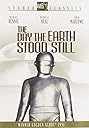
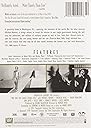
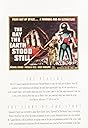
The Day The Earth Stood Still depicts the arrival of an alien dignitary, Klaatu (Michael Rennie), who has come to earth with his deadly robot, Gort (Lock Martin), to deliver the message that earthlings must stop warring among themselves--or else. After being shot at by military guards, Klaatu is brought to a Washington, D.C. hospital, where he begs a sympathetic but frank Major White (Robert Osterloh) to gather all the world's leaders so he can tell them more specifically what he has come to warn them about. Losing patience, Klaatu slips into the human world, adapting a false identity and living at a boarding house where he meets a smart woman with a conscience and her inquisitive son. Both mother and son soon find themselves embroiled in the complex mystery of Klaatu, his message and the government's witch hunt for the alien. DISC INFORMATION It is a double-sided disc: Side 1: *Commentary by Robert Wise and Nicolas Meyer *Movie Tone news of the premiere events of 1951 *Theatrical trailer Side 2: *Making The Earth Stand Still documentary *Restoration comparison *6 Still galleries *Trailers: Journey to the Center of the Earth, & One Million Years B.C. Review: Classic Greatness Sci Fi. Better acting with less special effects used than todays movies for a great movie - I've watched the original The Day The Earth Stood Still at least 20 times. The relative unknown to US audiences British actor Michael Rennie played Klaatu( the spaceman in the silver suit from the flying saucer) and the known movie star Patricia Neal played Helen. Gort the huge robot was played by Lock Martin who was 7ft 7in tall. The movie is in B/W and the sound is very good. To me the movie being B/W was not a subtraction. Almost all the actors/actresses are now dead so this movie is also of historical significance. I love quality Science Fiction and have read hundreds of Sci Fi books and watched dozens and dozens of Sci Fi movies. INMO the original The Day The Earth Stood Still is in the top 5 Sci Fi movies of ALL time. The plot and acting were superb! There is some limited special effects but nowhere near the amount of special effects in today sci fi movies. To create this QUALITY Sci Fi movie great acting was needed and Michael Rennie playing Klaatu, Patricia Neal playing Bobbie's mother and Sam Jaffe playing Professor Barhardt were superb. These INMO was the highlight of the movie...the superb plot and great acting. The special effects were first class for 1950ish technology but were secondary. This movie was put out during the height of the cold war when many people were watching the sky and afraid of a nuclear exchange between the US and the USSR. There is even a talk in the movie of the spacecraft being from the soviets by the actress who played Aunt Bea in the Andy Griffin television series. I wont ruin the movie for you. A flying saucer type spacecraft lands near the White House and Michael Rennie comes out of the ship holding a gift to view life on other worlds for the President but is shot by a soldier and the gift destroyed. Out of the ship comes the giant robot Gort to save Klaatu. Gort disintegrates some soldiers guns, tanks and artillery. Klaatu deactivates Gort before he can disintegrate all the soldiers. Klaatu is taken to an army hospital,the bullet is removed and his wound dressed ; and he escapes. He makes friends with a boy named Bobbie and his mother Helen played by Patricia Neal. Klaatu helps Professor Barnhardt with advanced propulsion equations and shows the world leaders the power he commands ...Klaatu zaps the world for 1/2 hour. No electricity world wide except emergency life sustaining power...the Earth stands still. Later Klaatu and Helen try to get to the ship for a meeting with the worlds scientists via taxicab. Klaatu is hunted by the military, gunned down and killed , but he is brought back to the ship and brought back life for an unknown limited time by the robot Gort. Helen must stop Gort before he destroys the Earth. Klaatu gives the assembled scientists the ultimate ultimatum; that if the world ....I won't ruin the great ending. This is some of the best ever Science Fiction. A true ultimate classic. If you like quality Sci Fi this DVD of the original The Day the Earth stood Still is a must have to add to your collection. Our family viewed the new The Day the Earth Stood Still with the flying nanobots eating everything and killing people. The special effects were better but the acting and plot were nowhere as good as the original. Just look at the hundreds of other 5 star reviews by other reviewers! The original the Day the Earth stood still on DVD rated 5 stars plus. Review: Gorth, Klaatu... Barada Nikto! Barada Nikto! Truly Mr. Carpenter... - Who does not remember these words? True Mumbo-Jumbo, but what flair... I usually do not buy Full-Screen DVDs of old movies, since it is not vital to have them, if you own their VHS counterpart. Sometimes, the old transfers are even better than the newly, so-called restored versions. But in this case I made an exception and was truly impressed by the difference. Much clearer sound (true Digital Stero), excellent Contrast resolution of the Black & White tones. A Masterpiece. Bravo! This tiny Sci-Fi picture of 1951, starring a then unknown actor, Michael Rennie, Patricia Neal and Sam Jaffe is more a metaphor and an answer to the anti-communist "witch-hunt" and cold war ambience in which the U.S. Government had thrown the Nation. Partly borrowing from the Bible, the Hero, the visiting Alien (Michael Rennie) appropriately calls himself "Mr. Carpenter", and as in the Bible, he comes to bring peace to a world gone mad. Mind you, I am not a believer, but having been raised Catholic, its part of my heavy burden, hence I know about such things. Now, back to the movie and its value. To express it in just a few words, one can only say that it is a small Gem of a picture. Never boring, always entertaining, and with a message of all things! Even the primitive special effects of the day are forgivable, considering the smooth, perfect and natural acting of all involved. Sam Jaffe, one of the best character actors of those years is simply perfect as the scientist meeting Mr. Carpenter. It is evident that an allusion to Albert Einstein was made there. Patricia Neal, is yes, the "weak" link of the movie, having to play the mother and housewife figure, but in the end, isn't she who helps the Alien to make contact with the "minds" of the planet? Think about it, we are in the midst of the Korean War, at the beginning of the Cold War, in which housewise usually did not go roaming around in worldwide adventures, limiting themselves to cook, clean and keep husbands and children happy. No, in this movie, in 1951, we see a conventional woman, who overcomes her fears and actually helps our hero complete his mission. Anti-conventional you say? You bet! The entire move is weaved with care and is well told. Oh, and ah yes, storytelling. Talking about storytelling, this is one example in which storytelling is truly everything. Consider the fact that this movie is just about 90 minutes in length. Nowadays, if they were to remake it (let's hope not!), it would go overboard into a full-fledged 2 hours and 20 minutes long movie. Boring! Sometimes I ask myself what writers had back then, that they don't have anymore. Creativity? You bet! Originality? You got it! Imagination? Well said! Writers in those days (and mind you, in those days, writers had a far harder life than today, especially with all those darned censorship limitations, not forgetting the McCarthy's blacklist), still knew how to KISS (short for: keep it short stupid) and still keep the audience gripped and glued to their seats. Today, unless you have a Circus for a movie (meaning tons of sex and special effects) you wouldn't keep a horse awake. My passionate feeling is to suggest to you to buy it. You won't be sorry, even if you, and I would expect such argument, are not a sci-fi aficionado or fan. This is one of those movies that speaks to one's humanity and most hidden, inner feelings. And still, in its simplicity, it is also a spectacular picture that I am sure, will be remembered and mentioned in schools in decades to come, as what it is: a tiny Gem. An ideal precursor to Star Trek...
| Customer Reviews | 4.8 out of 5 stars 7,564 Reviews |
T**N
Classic Greatness Sci Fi. Better acting with less special effects used than todays movies for a great movie
I've watched the original The Day The Earth Stood Still at least 20 times. The relative unknown to US audiences British actor Michael Rennie played Klaatu( the spaceman in the silver suit from the flying saucer) and the known movie star Patricia Neal played Helen. Gort the huge robot was played by Lock Martin who was 7ft 7in tall. The movie is in B/W and the sound is very good. To me the movie being B/W was not a subtraction. Almost all the actors/actresses are now dead so this movie is also of historical significance. I love quality Science Fiction and have read hundreds of Sci Fi books and watched dozens and dozens of Sci Fi movies. INMO the original The Day The Earth Stood Still is in the top 5 Sci Fi movies of ALL time. The plot and acting were superb! There is some limited special effects but nowhere near the amount of special effects in today sci fi movies. To create this QUALITY Sci Fi movie great acting was needed and Michael Rennie playing Klaatu, Patricia Neal playing Bobbie's mother and Sam Jaffe playing Professor Barhardt were superb. These INMO was the highlight of the movie...the superb plot and great acting. The special effects were first class for 1950ish technology but were secondary. This movie was put out during the height of the cold war when many people were watching the sky and afraid of a nuclear exchange between the US and the USSR. There is even a talk in the movie of the spacecraft being from the soviets by the actress who played Aunt Bea in the Andy Griffin television series. I wont ruin the movie for you. A flying saucer type spacecraft lands near the White House and Michael Rennie comes out of the ship holding a gift to view life on other worlds for the President but is shot by a soldier and the gift destroyed. Out of the ship comes the giant robot Gort to save Klaatu. Gort disintegrates some soldiers guns, tanks and artillery. Klaatu deactivates Gort before he can disintegrate all the soldiers. Klaatu is taken to an army hospital,the bullet is removed and his wound dressed ; and he escapes. He makes friends with a boy named Bobbie and his mother Helen played by Patricia Neal. Klaatu helps Professor Barnhardt with advanced propulsion equations and shows the world leaders the power he commands ...Klaatu zaps the world for 1/2 hour. No electricity world wide except emergency life sustaining power...the Earth stands still. Later Klaatu and Helen try to get to the ship for a meeting with the worlds scientists via taxicab. Klaatu is hunted by the military, gunned down and killed , but he is brought back to the ship and brought back life for an unknown limited time by the robot Gort. Helen must stop Gort before he destroys the Earth. Klaatu gives the assembled scientists the ultimate ultimatum; that if the world ....I won't ruin the great ending. This is some of the best ever Science Fiction. A true ultimate classic. If you like quality Sci Fi this DVD of the original The Day the Earth stood Still is a must have to add to your collection. Our family viewed the new The Day the Earth Stood Still with the flying nanobots eating everything and killing people. The special effects were better but the acting and plot were nowhere as good as the original. Just look at the hundreds of other 5 star reviews by other reviewers! The original the Day the Earth stood still on DVD rated 5 stars plus.
P**Y
Gorth, Klaatu... Barada Nikto! Barada Nikto! Truly Mr. Carpenter...
Who does not remember these words? True Mumbo-Jumbo, but what flair... I usually do not buy Full-Screen DVDs of old movies, since it is not vital to have them, if you own their VHS counterpart. Sometimes, the old transfers are even better than the newly, so-called restored versions. But in this case I made an exception and was truly impressed by the difference. Much clearer sound (true Digital Stero), excellent Contrast resolution of the Black & White tones. A Masterpiece. Bravo! This tiny Sci-Fi picture of 1951, starring a then unknown actor, Michael Rennie, Patricia Neal and Sam Jaffe is more a metaphor and an answer to the anti-communist "witch-hunt" and cold war ambience in which the U.S. Government had thrown the Nation. Partly borrowing from the Bible, the Hero, the visiting Alien (Michael Rennie) appropriately calls himself "Mr. Carpenter", and as in the Bible, he comes to bring peace to a world gone mad. Mind you, I am not a believer, but having been raised Catholic, its part of my heavy burden, hence I know about such things. Now, back to the movie and its value. To express it in just a few words, one can only say that it is a small Gem of a picture. Never boring, always entertaining, and with a message of all things! Even the primitive special effects of the day are forgivable, considering the smooth, perfect and natural acting of all involved. Sam Jaffe, one of the best character actors of those years is simply perfect as the scientist meeting Mr. Carpenter. It is evident that an allusion to Albert Einstein was made there. Patricia Neal, is yes, the "weak" link of the movie, having to play the mother and housewife figure, but in the end, isn't she who helps the Alien to make contact with the "minds" of the planet? Think about it, we are in the midst of the Korean War, at the beginning of the Cold War, in which housewise usually did not go roaming around in worldwide adventures, limiting themselves to cook, clean and keep husbands and children happy. No, in this movie, in 1951, we see a conventional woman, who overcomes her fears and actually helps our hero complete his mission. Anti-conventional you say? You bet! The entire move is weaved with care and is well told. Oh, and ah yes, storytelling. Talking about storytelling, this is one example in which storytelling is truly everything. Consider the fact that this movie is just about 90 minutes in length. Nowadays, if they were to remake it (let's hope not!), it would go overboard into a full-fledged 2 hours and 20 minutes long movie. Boring! Sometimes I ask myself what writers had back then, that they don't have anymore. Creativity? You bet! Originality? You got it! Imagination? Well said! Writers in those days (and mind you, in those days, writers had a far harder life than today, especially with all those darned censorship limitations, not forgetting the McCarthy's blacklist), still knew how to KISS (short for: keep it short stupid) and still keep the audience gripped and glued to their seats. Today, unless you have a Circus for a movie (meaning tons of sex and special effects) you wouldn't keep a horse awake. My passionate feeling is to suggest to you to buy it. You won't be sorry, even if you, and I would expect such argument, are not a sci-fi aficionado or fan. This is one of those movies that speaks to one's humanity and most hidden, inner feelings. And still, in its simplicity, it is also a spectacular picture that I am sure, will be remembered and mentioned in schools in decades to come, as what it is: a tiny Gem. An ideal precursor to Star Trek...
H**!
Gort� Klaatu barada nikto�
To those of us of a "certain" age, those words will surely resonate far more strongly than "Use the Force, Luke," or even "Beam me up, Scotty!" (Hey, I know the Trek line is a misquote, but you know what I mean!) "The Day The Earth Stood Still" is THE seminal Sci Fi film of the 50's, the film that finally treated extraterrestrials as something more than bug-eyed monsters intent on taking over the World, stealing our beer, and our girlfriends, for no other reason than that they could! The film hits the ground running, through a documentary style montage, we see worldwide reaction to the news that a strange craft is orbiting the Earth at incredible speed. Cut to Washington DC, and said craft, a beautifully classic "saucer," lands in a park, scattering picnickers and baseball players like confetti. The next thing we know, the Military are on hand ASAP to deal with the "threat;" the saucer opens, and out steps Klaatu, an emissary from a "Federation of Planets" type body. They have been observing us with increasing worry; at our endless propensity for self-destruction, our development of nuclear weapons, but more importantly, our first, faltering steps into space. Klaatu holds out with a gift for the President, and is immediately shot by a trigger-happy GI, thinking the device is an alien "death-ray..." not a particularly good start to interstellar relationships! As Klaatu writhes on the ground, from out of the ship steps the "iron fist" within Klaatu's "velvet glove;" an 8ft tall, indestructible robot named Gort. Now Gort HAS a death-ray, and he unleashes it in short order, not indiscriminately against the troops and civilians, but with precision, as he zaps rifles, artillery pieces, and finally a couple of tanks, into oblivion! When you think about it, this is an incredibly original, and thoughtful, scene. In just about every film of this kind that had come before - and more than a few that have come since! - this kind of action would have resulted in wholesale destruction...Anyway, Gort's reaction to the attack on Klaatu betrays a superior intelligence at work: a measured response to a threat situation, instead of just nuking the planet to dust and ashes! Klaatu is taken to hospital for treatment. But frustrated at "our" inability to come together and heed his "message," he transforms himself, with the help of a freshly dry-cleaned suit, and a monogrammed briefcase, into "Mr Carpenter," so he can lose himself within human society, all the better to study us. It is in this part of the film that the 1950's "Reds under the bed" paranoia really comes into focus. Mr Carpenter befriends a mother, "Helen," wonderfully played by Patricia Neal, and her young son "Bobby" played by Billy Gray. And I think it's this casting, plus the characterization, that does so much to make the film work. The main casting coup was getting Michael Rennie in the role of Klaatu. At the time, Rennie was a stage actor working in Britain, he'd never been seen in the US, so when he walks out of the saucer, he really is, to all intents and purposes, an "alien," unknown and unfamiliar. Tall, almost painfully slim, aesthetic in appearance, urbane in his manner, he really was as far removed from the "alien invader" look and persona as it was possible to get! Patricia Neal's "Helen" is a single mother, an unusual lead role in 50's cinema, and she imparts her character with a great deal of self-sufficiency and "grit." Again, not the usual running/screaming/fainting leading lady. Billy Gray is a joy to watch, he portrays "Bobby" with that breathless wide-eyed innocence - "...can we go see the spaceship mister, can we, huh , can we please mister?!?!?!" - that really only existed, if ever, in 50's America. Luminous black and white photography, a solid story, a tight, pared-to-the-bone script, naturalistic(!) performances, integral "news broadcasts" and "interviews," plus a gorgeous soundtrack, all come together to tell the fantastical tale of TDTESS in an almost documentary style. This was one of the first films I looked for on Amazon when I got my hands on a new shiny-disc player last year, and having watched this wonderful film on TV and video over the years, I can say that this DVD release was well worth the wait! The restoration is superb - never having owned a Laser Disc system I can't comment on those versions - and is light years ahead of the last video version I purchased back in the 90's. My one regret is that while restoring the film they didn't take out the "wires" and the "lacing," on Gort's suite, that can be momentarily seen in one pivotal sequence. But that is a minor gripe; this is a superb, intelligent Sci Fi film, fully deserving of its "classic" status, and a must-have for any serious lover of the genre!
B**.
A timeless sci-fi classic that still delivers without the Hollywood flash.
I added this movie to my collection and man, what a great movie. It’s one of those classics that holds up without needing a massive budget or over-the-top special effects. The story is strong, the message still hits, and it’s just got that old-school sci-fi charm that modern movies can’t really replicate. If you’re into thoughtful, well-paced sci-fi with a bit of mystery and meaning behind it, this is one of the greats. Simple, smart, and totally worth watching again and again.
S**A
Classic movie
This is one of the favorite movies we have. I am so glad to have found it. DVD in good condition.
D**2
Don't Miss This One
"The Day The Earth Stood Still" was released in 1951. It was based on a 1940 novelette by Harry Bates titled "Farewell To The Master". While the novelette and the movie share several common elements, they are really two different stories. The movie has a clear message of peace during a time period after World War II, and during the U.S. involvement in Korea. The next paragraph discusses the plot of the movie, so if you want to avoid spoilers please skip it. In the movie an alien called Klaatu (Michael Rennie) comes to Earth to deliver a warning to all the nations. He is accompanied by an indestructible robot called Gort (Lock Martin), who takes action whenever violence is directed at Klaatu. Klaatu tries political channels to deliver his message, but when that doesn't work he escapes into the general population to learn about Earth's people. He then decides that the scientific community is the best way to deliver his message, and arranges for such a meeting. The Army manages to track him down before the meeting though, and he provides Helen (Patricia Neal) with the famous command "Klaatu Barada Nikto" to use on Gort if he (Klaatu) should be harmed. There is an underlying Christ story which goes through the film, and which becomes a bit more apparent at the end where Gort recovers Klaatu's body and resurrects him. Unlike the science fiction movies of today, this is not an action movie. The special effects in this film clearly reflect the time in which it was made, and today's audiences will probably not be impressed by them. The strength of this movie is the story, which is still mesmerizing today. While the 50's is certainly known as a decade when many low-budget science fiction movies were made, it really is not a fair categorization of this particular movie. The restoration of this film is wonderful, it looks much better than when I first saw it in the late 70's. There are also several special features, some on the other side of the DVD. On the film side, there is an audio commentary by the Robert Wise (the director) and Nicolas Meyer; it is dry in spots, but for the most part is pretty interesting. On the humorous side, it is clear from the commentary that Nicolas Meyer does not care for Hugh Marlowe as an actor, either in this movie or any other. The other features on this side are a Movietone Newsreel from 1951, and the theatrical trailer for the film. On the other side of the DVD, there is an interesting documentary called "Making the Earth Stand Still" which has many interviews with people involved in the making of the movie and it also has a section with fans that have collected memorabilia from the movie. There is a restoration comparison showing the before and after, but this has been done with so many of the older films, I don't think it is of much interest. The next special feature is the `Still Galleries' which includes production photos, scene and set photos, the shooting script, construction blue prints for the ship, the American and British pressbooks, and posters, lobby cards, the spaceship model and Gort. Lastly, there are a couple of trailers for two other movies: "One Million Years B.C.", and "Journey To The Center Of The Earth".
L**A
An old but effective classic
Even though this film was released in 1951 it's been one of my top all-time favorites. I actually like this better than the more recent redo of the classic story about a visitor from a planet in our solar system, who has come to warn earth's inhabitants that there will be dire consequences for any of our aggressive behavior extended beyond our own planet now that we have nuclear weapons. The book was a very advanced and pertinent sci-fi drama that was superbly written and had a message that had great relevance then and does now. Robert Wise directed the screen adaptation extremely well keeping the intrigue and suspense high through-out. Special effects were quite limited at the time, but, he managed to carry out a huge feat in that he told the story in a very human and visceral manner by using fuller character development and interaction while toning down on over the top visual concoctions or devices, that we have all grown too used to seeing in today's computer generated artificial and thusly more fake depictions leaving behind the good story in the process. The newer version with Keanu Reeves does that in spades, which really bored me with all its grandiose special effects and gibberish for dialog. I was hoping they would attempt to remake the original film true to the basics of story and character and just make for a more exact space ship and robot leading to a more polished-up version. That would have been much more impressive to me if they had, rather than the hack job they did depending more on computer special effects and one dimensional characters' who I didn't have any feeling for let alone to be moved by! They even had to tie in the usual PC nonsense in an attempt to make the story more current. They would have served the story well if they had made the newer version as if set during the late 40's or early 50's at the dawn of the atomic age like the original to really connect all the dots in a suitable fashion. After all that was the main thrust of the story, how we had just started development of atomic weapons and may at some future point in time try to extend our capabilities of aggression and nuclear power beyond our own troubled planet, which would not be tolerated! But they just went for the cheap shot and fast buck to capitalize on a true classic story and film to serve some board room executives, resulting in a botched-up film that may have made some bucks but never got off the ground and had no heart! To awe and inspire by getting the viewer to really think would have been a more noteworthy endevour, but, sadly today most decisions always come down to just the money, when in fact both demands can be met with the proper team of talented artisans who follow closely to the authors intent, as was the case in this original sci-fi masterpiece. The casting was perfect and the directing superb, while staying on target to the stories theme and author's intent. Anyone who might never have seen either of the films or anyone who has only seen the new version will do themselves a great service to make sure they watch the original version and just enjoy it for what it is and when it was made! Maybe someday someone will do another remake and do the story justice, but, until then I'm only going to watch this 1951 version! The DVD comes with some very interesting extras which are entertaining in themselves and Bernard Herrmann's musical score makes the movie spring to life albeit simple black and white low tech film making by today's standards. This to me is true Iconic Film Making at its best!
D**S
Love this movie
A great sifi movie
H**Z
un super film
un film a avoir belle realisation pour l'epoque
R**K
Sehr gutes Stück Filmgeschichte
Es ist ein schöner, sonniger Tag als in Washington D.C. ein Raumschiff landet. Ihm entsteigt der Außerirdische Klaatu (Michael Rennie). Als er aus seiner Tasche ein Geschenk für den Präsidenten nehmen möchte, wird er von einem übereifrigen Soldaten angeschossen. Klaatu wird ins Krankenhaus gebracht. Dort redet er mit einem Sekretär des US-Präsidenten und spricht von einer Botschaft, welche er allen Staatschefs zur gleichen Zeit mitteilen möchte. Ein solches Treffen kommt, wie zu erwarten, nicht zustande. Klaatu verschwindet aus dem Krankenhaus und mietet sich unter dem Namen Mr. Carpenter in der Pension von Helen Benson (Patricia Neal) ein. Dort freundet er sich mit deren Sohn Bobby (Billy Grey) an, und lässt sich von ihm die Stadt zeigen. Dabei stellt er fest, dass es Menschen gibt, die gewillt sind, ihm zuzuhören. Dem Physiker Professor Barnhardt (Sam Jaffe) gibt er sich zu erkennen und teilt ihm mit, dass die Menschheit von den Außerirdischen in der Galaxis beobachtet wird und dass der Menschheit nicht erlaubt werden kann, Atomkraft für die Raumfahrt zu nutzen, da die Außerirdischen dadurch eine Bedrohung des Friedens im Universum sehen. Barnhardt schlägt vor ein Treffen mit den internationalen Wissenschaftlern zu vereinbaren, welche Klaatus Raumschiff untersuchen. Ferner schlägt Barnhardt vor, dass Klaatu der Menschheit eine eindrucksvolle Demonstration seiner Macht geben soll. Folglich sorgt Klaatu dafür, dass am nächsten Tag um 12 Uhr Mittags kein elektrisches Gerät mehr für eine halbe Stunde über Strom verfügt. Lediglich Krankenhäuser, gestartete Flugzeuge und ähnliches verfügen über Elektrizität, so dass keine Menschen zu Schaden kommen. Leider ist der Verlobte von Helen Benson, Tom Stevens (Hugh Marlowe) misstrauisch gegenüber Mr. Carpenter und findet heraus, dass er der gesuchte Außerirdische ist, und verpfeift ihn bei den Streitkräften. Klaatu wird daraufhin verfolgt und erschossen. Er schickt Helen zum Raumschiff, wo sie dem Roboter Gort (Lock Martin) die Worte 'Klaatu Barada Nikto' sagen soll, damit Gort nicht seine Programmierung befolgt, welche besagt, dass er die Erde vernichten soll, sollte Klaatu etwas zustoßen. Helen befolgt seine Anweisung und sagt Gort die Worte, worauf Gort sich auf den Weg macht, und Klaatus Leiche ins Raumschiff bringt. Dort wird er wieder zum Leben erweckt und spricht zu den Wissenschaftlern. Er erzählt, dass er Vertreter einer Gemeinschaft von Planeten ist, welche Roboter wie Gort erschaffen haben, um die Planeten im Universum zu überwachen und jeden Aggressor zu vernichten, welcher einen anderen Planeten angreift. So wird im Universum der Frieden bewahrt. Die Menschheit weiß nun was ihr bevorsteht, wenn sie ihre Aggressionen in den Weltraum tragen. Klaatu hat seinen Auftrag erfüllt, die Warnung ist verkündet, er verlässt die Erde wieder. Die Umsetzung: Seit dem 11. Dezember läuft die Neuverfilmung mit Keanu Reeves in den Lichtspielhäusern und da dachte ich mir, ich könnte mir mal das Original von 1951 vorknöpfen. Wenn man sich den Film vor dem Hintergrund der Zeit anschaut, in der er gedreht worden ist, dann erkennt man die brillante Botschaft des Films. Denn in einer Zeit, in welcher der Zweite Weltkrieg gerade erst vorbei ist und die Sowjetunion jetzt auch über die Atombombe verfügt, dann erscheint die friedfertige Botschaft des Films nicht nur revolutionär, sondern auch mutig. Doch nicht nur die Botschaft des Films ist friedfertig, sondern auch die Machart. Der Film wird sehr ruhig und gemächlich erzählt, und nimmt dabei den Zuschauer doch gefangen. Das hat mir sehr gut gefallen. Die gut aufspielenden Akteure und die niemals billig wirkenden Spezialeffekte tragen sehr zur Unterhaltung bei und sorgen dafür, dass der Film auch heute noch zu gefallen weiß. Nicht umsonst ist 'Der Tag, an dem die Erde still stand' einer der Klassiker des Science-Fiction-Kinos. Auch sollte man nicht vergessen, dass es 57 Jahre dauerte, bis er neu verfilmt wurde, während irgendwelche Blobs, Fliegen und Dinger aus anderen Welten grade mal ca. 30 Jahre schafften. All dies spricht für die Nachhaltigkeit des Films. Was mich ein wenig verwundert, ist die Tatsache, dass dieser kongeniale Film nur sehr, sehr selten im Fernsehen läuft. Das ist unverdient. Zum Glück gibt es diesen Klassiker auf DVD. Was mich noch mehr wunderte, ist die Fehlinterpretierbarkeit des Titels. Bis neulich, als ich den Film zum ersten Mal sah (den fehlenden Fernsehausstrahlungen sei Dank), dachte ich es ginge darum, dass die Rotation der Erde gestoppt wird. Hmmmm. Das passiert in dem Film nicht. Die Filmemacher dachten wohl, dass eine halbe Stunde weltweiter Stromausfall, oder das Erscheinen eines Außerirdischen genug Stillstand bedeutet. Das kommt so nicht rüber und hat mich als Zuschauer nicht befriedigt. Aber ansonsten ist der Film schon stark. Die DVD: Es gibt den Film in drei Versionen auf dem Markt. Da gibt es die Veröffentlichung im Rahmen der FOX-Reihe 'Große-Film-Klassiker' als Single-Disc im schicken Pappschuber und 16-seitigem Booklet, sowie eine Veröffentlichung im Rahmen der 'Cinema Premium'-Reihe mit toll ausgestatteter Bonus-Disc. Die getestete Version ist die 'normale' Single-Disc-Edition in Amaray-Hülle. Technisch sind alle Versionen gleich. Das heißt, der Film hat ein sehr gutes Bild und lediglich die Tatsache das der Film in Schwarz/Weiss gefilmt wurde, lässt aus technischer Hinsicht das Alter des Films erahnen. Den Ton gibt es in Stereo auf Englisch, sowie auf Deutsch, Französisch, Italienisch und Spanisch in Mono. Zur visuellen Unterstützung gibt es eine ordentliche Anzahl an Untertiteln. An Bonus-Material weisen die Single-Discs einen Audiokommentar mit Filmregisseur Robert Wise und Regisseur Nicholas Meyer, einen Wochenschaubericht über den Film und andere Ereignisse im Jahre 1951. Ferner gibt es einen Vergleich des Filmmaterials vor und nach der Restauration und den Kinotrailer. Die 'Cinema Premium'-Fassung hat eine prall gefüllte Bonus Disc mit einem 80minütigem Making-Of, einer viertelstündigen Featurette 'Warnung und Ultimatum', Trailern, Fotogalerien, zwölf Seiten Booklet und vier Postkarten. Fazit: Es ist gewiss interessant im Rahmen der Neuverfilmung das Original zu schauen und evtl. neu zu entdecken. Er ist es wert.
J**T
We have been warned
Both sci-fi film classic and Cold War document, the film was made in 1951 when the battle lines between the United States and Soviet Union were being drawn. Nuclear battle lines, that is. We still live with the spectre of such menace today even if the the old U.S.S.R. has dissolved, as there are over 15,000 nuclear weapons in the world, 90% of them in the U.S. and Russia, two gangs in a turf war with the world held hostage to it. What a way to live! So I thought I’d write about this classic film now, as important today as it was when made over 60 years ago. A UFO is detected in the atmosphere surrounding Earth. U.S. radar and tracking stations around the world are tracing its movements. As it draws closer to the surface many other people around the world are increasingly tense and worried. What is it? Where has it come from? Why is it visiting? What do its inhabitants want? In due course these questions will be answered, but for now anxiety reigns. The terrible Second World War was one thing. So is this ghastly Cold War, a stalemate between superpowers with nuclear weapons in their arsenal. But this is something beyond those crises, something intergalactic and unknown. The film is clever. It keeps us guessing and wondering for as long as possible, just as it does with persons on Earth in the film. The spacecraft circles the globe, surveying terrain for its best landing site. The Siberian tundra is clearly out. Instead, it lands in Washington, D.C. in the U.S., setting down on several baseball fields in a public park. The spaceship is metallic silver and huge, a saucer-shaped craft the size of Wembley Stadium’s football pitch. It was patient and silent as it moved through Earth’s atmosphere. It remains silent and patient now as it rests in the park. The U.S. army has surrounded it with armed soldiers, tanks, howitzers and grenade launchers. The D.C. police are out in force as well to keep curious onlookers at bay beyond the protective cordon. The craft landed in the afternoon. Radio and television broadcasts around the world — in French, Russian, Hindustani and scores of other languages — are covering the event. Two hours pass. Nothing, silence. Then, before dusk, something begins to stir. A faint hum is heard. Cracks in the spacecraft appear. A ramp opens up. Then a door. The crowd is aghast, all eyes on the door. From it an 8-foot metallic robot emerges. He is massive. His name is Gort. The crowd shudders. Gort stands on the ramp, impassive, immobile. Then Klaatu emerges, a thin being with skinny arms and legs (two each). He wears a space helmet, his face obscured. He walks down the ramp and stands on the grass, the first alien being (presumably) to ever set foot on our planet. He removes his helmet. He looks like a man, a human being. But his voice is flat and monotonal, free of inflexion. He says he has come bearing a message. He intends it to be heard by all people on Earth. He states he wants the heads of all states to assemble to hear him speak. As a token of goodwill and peace he removes an object from his breast pocket, holding it in his hand. But he does not tell the jittery soldiers what it is. Suddenly the object springs open and makes a noise. A nervous soldier fires. Klaatu drops to the ground, bleeding. Thus his first encounter with mankind is violent. He may have come in peace, but he is gunned down before he can bring it. Klaatu delivers a command to Gort. The robot’s visor opens. A powerful laser from Gort destroys the army’s violent weapons: its rifles, tanks, artillery. The display is awesome, unbelievable. Gort is ready to destroy more, but Klaatu commands him to stop. Thereafter Klaatu is taken to Walter Reed General Hospital in Washington for examination and treatment. The doctors are amazed to see how similar his anatomy is to that of humans. The X-rays reveal few anomalies. A bullet is removed from his shoulder. He’s in bed a day or two. But after this, astonishingly, his wound completely heals. How? Klaatu has brought his own medicine, in this case a salve with miraculous healing properties. Gort stands inert, harmless. The spacecraft is sealed tight again. Engineers examining its design and texture can find no seams in the surface of the craft. They are baffled. They cannot explain the ramp and door openings. Chemists on the scene are also startled by the composition of Gort’s outer layer, a metal alloy so strong it seems completely impenetrable. No metal found on Earth is comparable. An assistant to the U.S. President, Secretary Harley, visits Klaatu in hospital. Harley asks him the standard questions posed in paragraph 2 above. Klaatu says he can say nothing at this point. What he has to say cannot be shared with any individual. He must speak to all residents on Earth. Harley says it will be difficult, if not impossible. Tensions are high on Earth, the political situation unstable. It’s unlikely the nations of the world will agree to come together quickly and peacefully for talks. Impatient with Harley, Klaatu says: “I won’t speak to any one nation or group of nations. I don’t intend to add my contribution to your childish jealousies.” Harley tells him to be patient. Klaatu replies: “I’m impatient with stupidity. My people have learned to live without it.” Security at Walter Reed is not as tight as it should be. Klaatu vanishes. How he escaped nobody knows, but he’s gone, at large. The media discovers this. Radio and television broadcast horror stories of an alien monster on the loose. Newspapers carry caricatures of Klaatu, none of them accurate, the head and eyes too large. Where is he? The manhunt is coming up empty. Klaatu has gone undercover. A dry-cleaning tag on the arm of a blazer he has stolen and wears says, “Carpenter”. So this becomes his name: Mr. Carpenter. Room for Rent says the sign on a quiet suburban house in Washington. Klaatu as Mr. Carpenter investigates. Mrs. Benson is a war widow. Her husband died at Anzio and is buried at Arlington National Cemetery in Washington. She has a 10-year-old son named Bobby, named after his father Robert. Carpenter takes the room. Bobby is precocious, inquisitive, curious. Carpenter recognises his young intelligence. They become fast friends. Carpenter seems to be a New Englander, and he confesses to Mrs. Benson and others who visit the Benson household that he doesn’t know Washington well. On a Saturday Bobby offers to show Carpenter the local sights. They visit Arlington, the Lincoln Memorial and of course the alien spacecraft. A large crowd is still gathered behind a cordon of police and military personnel that surrounds the spacecraft. Gort has stood motionless outside the craft for two days now. Bobby is a little puzzled by Carpenter. The stranger knows a lot about science, physics and mathematics, but little about anything else. Carpenter wonders if all those buried at Arlington were soldiers and he doesn’t know who Abraham Lincoln was. He also has no money and has never seen a movie. But he does have diamonds in his pocket, although Bobby fails to understand why this should be so even when Carpenter tells him they are a means of universal exchange. Bobby begins to wonder if Mr. Carpenter is a bank robber, jewel thief or spy. Carpenter wants to meet Professor Barnhardt, a local physicist and mathematician. The actor Sam Jaffe plays him. In those days he was old and lined and had long frizzy hair like Albert Einstein. The casting was unmistakable, and indeed Barnhardt seems to be as intelligent as Einstein. But not quite. Bobby and Carpenter visit the Barnhardt home. He isn’t in. Through a large window on the terrace they gaze into his study. In it they see a big blackboard with equations scattered across it. The door is locked and Bobby walks away. But when he turns he sees Carpenter entering the room, the door now mysteriously unlocked. Bobby watches him as Carpenter goes over the equations, chalking a check mark against those that are correct. Then Carpenter adds a few equations of his own. A lady servant of Dr. Barnhardt arrives, finding Bobby and Carpenter in the professor’s study. She is irate and says she’ll call the police. Carpenter advises against it. He also tells her it would be unwise to erase anything he has written on the blackboard. The new equations are meant to help the professor, not hinder him. Carpenter writes down the Benson home address and invites the professor to contact him. He does. Actually, someone from the government fetches him and brings him to the professor. Barnhardt is astounded by Carpenter’s intelligence. The professor had laboured for months over the equations. But now the solutions look so simple. How had he not grasped the way forward before? Carpenter explains where he went wrong. Barnhardt thanks him but concedes his ideas are only theoretical. Carpenter confirms they are correct. Barnhardt: “How can you be so sure? Have you tested this theory?” Carpenter: “I find it works well enough to get me from one planet to another.” Barnhardt’s eyes widen. He looks breathless. Carpenter (smiling): “I am Klaatu.” Barnhardt takes the lead in contacting the government, urgently requesting a meeting of all heads of state on Earth. Only he knows what Klaatu means to say to his fellow inhabitants of Earth. But how can Klaatu convince them that total earthly cooperation is needed? His answer: He will make Earth stand still. At precisely noon the following day electricity and other energies will cease to function for 30 minutes. The demonstration is carried out. Almost everything comes to a stop: transportation, printing presses, broadcasts, home appliances. A complete, worldwide brownout. Clearly, the power at Klaatu’s disposal is immense. This should be self-evident now. But fear still reigns, not reason. Even so, the meeting is duly arranged. It will be held in Washington tomorrow night. Yet through a series of events Klaatu’s cover as Carpenter is blown. The army, placed on full alert, is ready to recapture him. The following night a taxi is headed downtown. In it Carpenter and Mrs. Benson are seated. They are going to the meeting together. She knows who he is now. Yesterday he was forced by circumstances to tell her the truth. She knows it was he who made the earth stand still. As they head downtown they notice a build-up of army personnel along the route. The taxi driver does too and is nervous. Klaatu tells Mrs. Benson he’s worried about Gort. Only Klaatu knows Gort’s destructive powers. He knows what Gort will do if anything happens to Klaatu. And so he teaches Mrs. Benson perhaps the most famous alien words in the history of sci-fi cinema: “Gort, Klaatu barada nikto.” She repeats the words to herself, committing them to memory. They are intercepted. Klaatu runs from the vehicle. The army opens fire. He is shot and killed. Mrs. Benson hurries to the spacecraft. Gort has already killed the army guards standing duty. He will try to kill her now too. But as his visor opens she utters the fateful words to him: “Klaatu barada nikto.” His visor closes. He picks her up and carries her into the spacecraft. Then he departs. Implausible though it may be, he then finds the body of Klaatu and carries it back to the ship. Thereafter follows the famous Christ-like resurrection scene where Gort places Klaatu on a machine that restores him to life, however temporary it will be. The meeting that was to be held downtown is shifted to the foot of the spacecraft now. Dr. Barnhardt is at the podium and means to address the assembled foreign dignitaries. But he barely has a chance to speak as the ramp of the ship slides down and the door opens. Gort emerges first, then Mrs. Benson with Klaatu. Gasps from the crowd. Klaatu lives! He was dead. He’s eternal, or seems to be. Christ-like indeed. The whole point of the film is summed up in the long, eloquent speech Klaatu makes to the crowd at the end. It’s long but had to be for him to say everything worth saying. He solemnly says: “I am leaving soon, and you will forgive me if I speak bluntly. The universe grows smaller every day, and the threat of aggression by any group anywhere can no longer be tolerated. There must be security for all or no one is secure. This does not mean giving up any freedom, except the freedom to act irresponsibly. Your ancestors knew this when they made laws to govern themselves and hired policemen to enforce them. We of the other planets have long accepted this principle. We have an organisation for the mutual protection of all planets, and for the complete elimination of aggression. The test of any such higher authority is of course the police force that supports it. For our policemen we created a race of robots. Their function is to patrol the planets in spaceships like this one and preserve the peace. In matters of aggression we have given them absolute power over us. This power cannot be revoked. At the first sign of violence they act automatically against the aggressor. The penalty for provoking this action it too terrible to risk. The result is, we live in peace, without arms or armies, secure in the knowledge that we are free from aggression and war, free to pursue more profitable enterprises. We do not pretend to have achieved perfection, but we do have a system, and it works. I came here to give you these facts. It is no concern of ours how you run your own planet. But if you threaten to extend your violence, this Earth of yours will be reduced to a burned-out cinder. Your choice is simple. Join us and live in peace, or pursue your present course and face obliteration. We shall be waiting for your answer. The decision rests with you.” So, the age-old question: Does the world end in fire or ice, in the heat of a runaway greenhouse climate (as on Venus) or in the deep-freeze of nuclear winter? Choices remain open for us, but for how long? We have been warned.
M**O
Un clásico a buen precio
Adoro esta película desde niña. La tenía en video y se me estropeo.. Para los fans como yo, no hay que perderla Se ve muy bien, V.O. con subtítulos en español y como no, también la puedes oír en español. No esperen por supuesto, para aquellos que no la hayan visto, nada espectacular, pero la película es atrapadora desde el principio. Claro que no tiene los efectos especiales de la de Keanu Reeves, pero me gusta más este clásico.
C**S
A cult classic SF movie from the 50s
Item as described, on time delivery that went with no problems.
Trustpilot
2 weeks ago
1 month ago