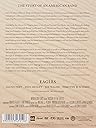
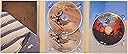


History of the Eagles • 3 Disc DVD in 5.1 Surround Sound and Stereo • Packaged in a six-panel digipak with accompanying photo booklet. • 4 hours of never before seen material from the past 40 years. • Disc One: Part One explores the creation and rise to fame in the 1970’s through their breakup in 1980. • Disc Two: Part Two details the band’s reunion in 1994 through the Hell Freezes Over tour to present day. • Bonus Disc: Exclusive concert, Eagles Live at the Capital Centre March 1977. • Directed by Alison Ellwood, along with Producer and Academy Award-winning documentarian, Alex Gibney. Review: Always Interesting and Strikingly Honest - This is a superb rockumentary. It begins at the beginning, with Frey’s association with Bob Seger in Detroit and his living arrangement with Jackson Browne in Echo Park. Price point is the essential element in their decision to share a rental, but in listening to Browne’s endless repetition of the same riffs and melodies Frey learns how to write music—essentially by working very, very hard. Frey and Henley are hired to back up Linda Ronstadt and they eventually form their own band. Leadon leaves because he wants more country and less rock (he is an excellent banjo player); Randy Meisner leaves and we get the longstanding lineup with Schmit, Felder, Walsh, Henley and Frey. Henley acknowledges that it is Frey’s band and we see him play a strong leadership role. What we do not see are examples of Henley’s perfectionism, the endless practices and rehearsals fueled by controlled substances. We see many segments of the band in performance, with clips that are just long enough to be satisfying without taking our attention from the documentary narrative. The most noteworthy aspect of the three-hour story is its honesty. Frey’s altercation with Felder at the Alan Cranston benefit performance is depicted at length and in depth. We hear the threats; we see Felder destroy one of his acoustic guitars (the ‘cheapest’, Frey informs us) and we await the post-performance violence which Felder manages to elude. We hear at length of Joe Walsh’s alcoholism and cocaine abuse. We see him high; we see the ravaged face and the halting speech and then we hear him sing and play after he’s clean. Frey comments as the story evolves. We also hear Frey’s comments on Felder’s affection for cash and Frey and Henley’s plan to change the financial model after the band is reunited. They write the songs, for the most part. They are the founding members of the band. They are the leadership; this is not a democracy. Democracies don’t work in bands. Hence they want a larger share of the take. Schmit and Walsh are OK with that; Felder is reluctant. Eventually Felder is fired. We also hear about their disagreements with David Geffen and how they began with Asylum and left and how Henley eventually signed with Geffen again, and then left. There is talk of lawsuits and out of court settlements. As other reviewers have noted, we hear virtually nothing concerning their wives, lovers and families, though there is a brief segment concerning the importance of family and a glimpse, e.g., of Joe Walsh’s daughter. For those whose principal interest is in the music, there is music aplenty, including the backstory on some of the songs (‘Life in the Fast Lane’: a statement made by a heavy duty, carrying drug dealer, flying across the L.A. freeways with an apprehensive Frey sitting at his side). For those who want the inside scoop on the band’s dynamics, chemistry and methods, there is a great deal of information. An additional disc contains material from a 1977 concert at the Capital Centre in suburban Washington, D.C. In general, the narrative is always interesting, sometimes riveting. You learn far more than you usually do in these sorts of stories (e.g., the bands with whom Schmit performed during the 14-year hiatus, some very surprising). Frey handled the editing of the music for the three hours and, as expected, it is exquisite. Review: Road driving memories - In Australia parts 1 & 2 were screened on the MTV channel a week ago but I only caught part of it. As the DVD was also released a week ago I bought it yesterday. Disappointed that it came without the third "concert" disc I have ordered another through desertcart. The Eagles have always been my favourite band and their music along with Bob Seger, Fleetwood Mac, America and a number of others through that era did paint the pictures and memories that Glen Frey describes in the documentary. But probably none more so than the Eagles with the harmonies that are such an integral part of their songs they linger longest. Their songbook is filled with so many masterpieces that many don't get mentioned. Notably the "Last Resort" that in my opinion could be the theme song for all environment campaigns. Written when young men and before the issue became.... let's say trendy. As Don Henley once said they wrote above their age and the lyrics in most of their songs show it even in the lesser played "Best of my love" "Thrill is gone" and those others off the Long Run Album "The sad cafe" and "King of Hollywood" The harmonies in two of the more mellow Joe Walsh leads "Pretty Maids All In A Row" , "Help Me Through The Night" along with "Tequila Sunrise", "Desperado", "Lyin Eyes" and so many others is the ingredient that lifts their great song writing even higher. If we ask ourselves how many bands can boast as many lead singers and songwriters as the Eagles have and with each able to play more than just one instrument including acoustic how many come close? The most successful incarnation of that other great super group Fleetwood Mac had three and Stevie didn't play. The older visual appearance of the original members Randy Meisner and Bernie Leadon comes as quite a shock. Age has not been kind to the once good looking Randy and to see a bulked up shaven headed Bernie you would not recognise either without forewarning. Not to be critical of Timothy B Schmit but to me Randy was the biggest loss of all the former Eagles. It's a pity his "Hearts on Fire" wasn't in their songbook it would have been a great fit. Poached from Poco before Timothy I'm sure if they had a spot for Paul Cotton they would have grabbed him too. "Take it to the Limit" was their first number one hit single and relating to Randy we get some other visual with "Certain Kind of Fool" and some sound snippets in the background of "Try to Love Again". Don Felder? It appears he now has a lot of regrets. Many people I think feel that Glen Frey particularly was dictatorial but as Joe Walsh confirms it was always about what was good for the Eagles. Glen Frey was/is undeniably the main driving force in the band and conceded himself to singing less in favour of Don Henley. Felder for all his talent as a guitar player was not a great singer and his biggest contribution came in Hotel California. As for the "Victim of Love" song he felt was his? To me that was one of their weakest with no flow. Their reunion work and the later solo inclusions by Henley, Frey and Walsh were still first class although now the creative collaboration has almost disappeared. "How Long" being dragged out of an old closet is an example the newer material doesn't have the same magic. Listening to the new stuff as you drive down the open highway won't evoke memories like their old songs of the past. At this stage of their careers for the sake of all that appreciated their older stuff perhaps they could do covers of other Eagles like material such as "Ventura Highway".



| ASIN | B00BSBUZPK |
| Actors | Eagles |
| Best Sellers Rank | #40,360 in Movies & TV ( See Top 100 in Movies & TV ) #25,279 in DVD |
| Customer Reviews | 4.8 4.8 out of 5 stars (3,819) |
| Is Discontinued By Manufacturer | No |
| MPAA rating | NR (Not Rated) |
| Media Format | Color, Multiple Formats, NTSC |
| Number of discs | 3 |
| Product Dimensions | 0.69 x 7.55 x 5.58 inches; 1.1 ounces |
| Release date | April 30, 2013 |
| Run time | 2 hours and 34 minutes |
| Studio | Jigsaw Productions |
R**Z
Always Interesting and Strikingly Honest
This is a superb rockumentary. It begins at the beginning, with Frey’s association with Bob Seger in Detroit and his living arrangement with Jackson Browne in Echo Park. Price point is the essential element in their decision to share a rental, but in listening to Browne’s endless repetition of the same riffs and melodies Frey learns how to write music—essentially by working very, very hard. Frey and Henley are hired to back up Linda Ronstadt and they eventually form their own band. Leadon leaves because he wants more country and less rock (he is an excellent banjo player); Randy Meisner leaves and we get the longstanding lineup with Schmit, Felder, Walsh, Henley and Frey. Henley acknowledges that it is Frey’s band and we see him play a strong leadership role. What we do not see are examples of Henley’s perfectionism, the endless practices and rehearsals fueled by controlled substances. We see many segments of the band in performance, with clips that are just long enough to be satisfying without taking our attention from the documentary narrative. The most noteworthy aspect of the three-hour story is its honesty. Frey’s altercation with Felder at the Alan Cranston benefit performance is depicted at length and in depth. We hear the threats; we see Felder destroy one of his acoustic guitars (the ‘cheapest’, Frey informs us) and we await the post-performance violence which Felder manages to elude. We hear at length of Joe Walsh’s alcoholism and cocaine abuse. We see him high; we see the ravaged face and the halting speech and then we hear him sing and play after he’s clean. Frey comments as the story evolves. We also hear Frey’s comments on Felder’s affection for cash and Frey and Henley’s plan to change the financial model after the band is reunited. They write the songs, for the most part. They are the founding members of the band. They are the leadership; this is not a democracy. Democracies don’t work in bands. Hence they want a larger share of the take. Schmit and Walsh are OK with that; Felder is reluctant. Eventually Felder is fired. We also hear about their disagreements with David Geffen and how they began with Asylum and left and how Henley eventually signed with Geffen again, and then left. There is talk of lawsuits and out of court settlements. As other reviewers have noted, we hear virtually nothing concerning their wives, lovers and families, though there is a brief segment concerning the importance of family and a glimpse, e.g., of Joe Walsh’s daughter. For those whose principal interest is in the music, there is music aplenty, including the backstory on some of the songs (‘Life in the Fast Lane’: a statement made by a heavy duty, carrying drug dealer, flying across the L.A. freeways with an apprehensive Frey sitting at his side). For those who want the inside scoop on the band’s dynamics, chemistry and methods, there is a great deal of information. An additional disc contains material from a 1977 concert at the Capital Centre in suburban Washington, D.C. In general, the narrative is always interesting, sometimes riveting. You learn far more than you usually do in these sorts of stories (e.g., the bands with whom Schmit performed during the 14-year hiatus, some very surprising). Frey handled the editing of the music for the three hours and, as expected, it is exquisite.
W**P
Road driving memories
In Australia parts 1 & 2 were screened on the MTV channel a week ago but I only caught part of it. As the DVD was also released a week ago I bought it yesterday. Disappointed that it came without the third "concert" disc I have ordered another through Amazon. The Eagles have always been my favourite band and their music along with Bob Seger, Fleetwood Mac, America and a number of others through that era did paint the pictures and memories that Glen Frey describes in the documentary. But probably none more so than the Eagles with the harmonies that are such an integral part of their songs they linger longest. Their songbook is filled with so many masterpieces that many don't get mentioned. Notably the "Last Resort" that in my opinion could be the theme song for all environment campaigns. Written when young men and before the issue became.... let's say trendy. As Don Henley once said they wrote above their age and the lyrics in most of their songs show it even in the lesser played "Best of my love" "Thrill is gone" and those others off the Long Run Album "The sad cafe" and "King of Hollywood" The harmonies in two of the more mellow Joe Walsh leads "Pretty Maids All In A Row" , "Help Me Through The Night" along with "Tequila Sunrise", "Desperado", "Lyin Eyes" and so many others is the ingredient that lifts their great song writing even higher. If we ask ourselves how many bands can boast as many lead singers and songwriters as the Eagles have and with each able to play more than just one instrument including acoustic how many come close? The most successful incarnation of that other great super group Fleetwood Mac had three and Stevie didn't play. The older visual appearance of the original members Randy Meisner and Bernie Leadon comes as quite a shock. Age has not been kind to the once good looking Randy and to see a bulked up shaven headed Bernie you would not recognise either without forewarning. Not to be critical of Timothy B Schmit but to me Randy was the biggest loss of all the former Eagles. It's a pity his "Hearts on Fire" wasn't in their songbook it would have been a great fit. Poached from Poco before Timothy I'm sure if they had a spot for Paul Cotton they would have grabbed him too. "Take it to the Limit" was their first number one hit single and relating to Randy we get some other visual with "Certain Kind of Fool" and some sound snippets in the background of "Try to Love Again". Don Felder? It appears he now has a lot of regrets. Many people I think feel that Glen Frey particularly was dictatorial but as Joe Walsh confirms it was always about what was good for the Eagles. Glen Frey was/is undeniably the main driving force in the band and conceded himself to singing less in favour of Don Henley. Felder for all his talent as a guitar player was not a great singer and his biggest contribution came in Hotel California. As for the "Victim of Love" song he felt was his? To me that was one of their weakest with no flow. Their reunion work and the later solo inclusions by Henley, Frey and Walsh were still first class although now the creative collaboration has almost disappeared. "How Long" being dragged out of an old closet is an example the newer material doesn't have the same magic. Listening to the new stuff as you drive down the open highway won't evoke memories like their old songs of the past. At this stage of their careers for the sake of all that appreciated their older stuff perhaps they could do covers of other Eagles like material such as "Ventura Highway".
A**X
Si te interesa saber cosas poco comunes de este grupo, entonces no lo dudes. La calidad de vídeo es muy buena y por si tenías la duda, trae subtítulos en español. Sí bien hay muchas cosas cargadas hacia alguno de los narradores, finalmente es la versión de cada uno. Sí, es una historia fuerte, con verdades que a veces lastiman pero que finalmente nos da una perspectiva que tal vez nunca pensamos, sobre todo si crees que Hotel California es todo lo que hicieron. También hay mucho ego y seguramente habrá un momento en el que exclamarás alguna maldición en contra de más de uno. De verdad que sí te gusta el grupo y te interesa conocer otra parte de su carrera, no lo dudes, sobre todo porque cada vez se vuelve más difícil encontrarlo
C**K
Excellent documentary! Very informative and engaging. The only downside is if you have to stop the dvd to take a break, when you hit play again, it goes back to the beginning. Then you have to go through the chapters to find where you left off. It seems like a marketing ploy to get you to watch the whole disc in one sitting. If you can do it without stopping I recommend it because once you start, you really don't want to stop. It's that good. I really love the film footage on the first part giving you an inside look into their world. It's like stepping back in time to the 1970's. The bonus disc is a real treat, a concert from 1977 showing the band in their prime, all that long hair included. A good time reliving those glory days of the 70's!
L**N
Plenty of content, and behind the scenes footage. Well presented and good context.
A**F
Im ersten Teil erfährt man viel über die Entstehungsgeschichte und über Personen, die am Anfang der Eagles indirekt mit beteiligt waren, z.B. Linda Ronstadt, J. D. Souther, Jackson Browne. Auch, wie manche Lieder entstanden sind und über die Aufnahmen im Studio - man kann es fast als Anleitung (Tips & Tricks) auffassen. Man merkt, wie die Band zum Megastar aufsteigt und wie damit die Belastung auf die Bandmitglieder steigt. Man erfährt durch die Interviews mit den Bandmitgliedern, wie und warum einzelne Mitglieder ausgeschieden sind. Der beste Deal war wohl für die Band Joe Walsh, als er zu den Eagles geholt wurde (oder hat er sich die Eagles geholt?), er ist ein instrumentales Multitalent, komponiert auch (wir haben ihm einige der genialsten Gitarrenriffs zu verdanken: Life In The Fast Lane, Rocky Mountain Way, Life's Been Good, ...), ist ein echtes Ass an der Gitarre und in den Liveshows ein echter Gewinn - er ist einfach urkomisch. Wie sich der Stil mit jedem Album wandelte - das war der Grund für den Ausstieg von Bernie Leadon. Wie es zu Streitigkeiten in der Band kam, vor allem zwischen Don Felder und Glenn Frey. Über die Probleme mit Alk und Drogen. Und wie es zur Auflösung der Band 1980 kam. So oder so ähnlich muß es in anderen Bands wohl auch zugegangen sein (z.B. Beatles). Im zweiten Teil geht es um den langsamen Neubeginn in den 1990er Jahren, Joe's Alkoholproblem, den erneute Ausstieg von Felder und die Entstehung von "Long Road.." im Jahr 2007. Eine tolle Doku, beachtlich ist auch die Bildqualität in den alten Aufnahmen auf der BluRay.
そ**ん
音楽的にはもう間違いないし、当時の人間関係まで見える内容です。イーグルスファンは絶体買うべきです。
Trustpilot
1 month ago
3 weeks ago