
Buy anything from 5,000+ international stores. One checkout price. No surprise fees. Join 2M+ shoppers on Desertcart.
Desertcart purchases this item on your behalf and handles shipping, customs, and support to Israel.
🔥 Dive into Dante’s Inferno like never before! 📖
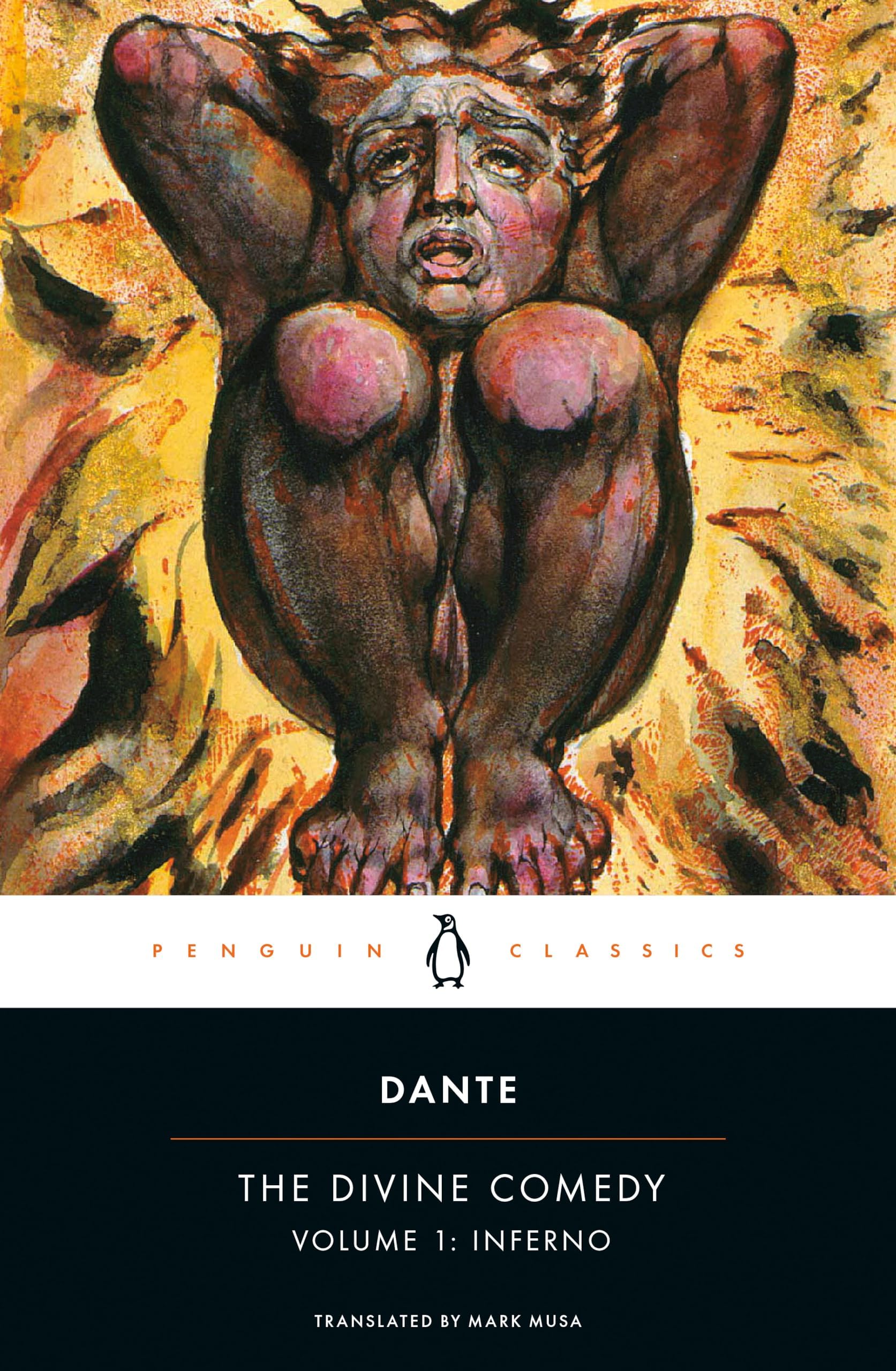
The Divine Comedy: Volume 1: Inferno, translated by Mark Musa, offers a fresh, accessible take on Dante’s classic epic. Featuring clear previews and detailed notes for each Canto, this edition bridges medieval literature and modern readability, making it a must-have for both new readers and literary enthusiasts.

| Best Sellers Rank | #14,653 in Books ( See Top 100 in Books ) #39 in Epic Poetry (Books) #534 in Classic Literature & Fiction #1,396 in Literary Fiction (Books) |
| Customer Reviews | 4.7 out of 5 stars 559 Reviews |
S**I
Good book
Excellent translation for a novice reader.
J**.
Best Translation for first time readers
If this is your first introduction to the Divine Comedy then this is the translation you should get. Very readable with an excellent introduction and notes explaining everything you need to know to enjoy this great poem.
M**K
Excellent Translation
The Divine Comedy has long been on my bucket list of books to read and I am very happy that I chose to buy Musa's translation of the first volume, The Inferno. In short, Mark Musa makes The Inferno very accessible to the everyday reader. His introduction before the text provides some historical background of the time and religious/political situation in which Dante lived and wrote and this helps the reader understand a bit about life in Renaissance Italy. He then follows up with his translator's notes, in which Musa spells out his intentions and methods in translating the text. Good stuff to know and very helpful for understanding the context of the story. The most helpful part of Musa's translation was that before each Canto, he would give a brief preview summary of what happens in that particular Canto. Then at the end of each Canto, he has a section of notes that explain things in the text that might not be clear to everyone, such as the backstories of the shades that he encounters and references to other texts and works of literature. Having the summary and notes bookending each Canto made them extremely easy to follow and understand. His translation abandons the rhyme of the original in favor of conveying the narrative. This might bother some purists but not having to force rhymes at the end of every line leaves the translator a lot of room to make sure that the reader can follow what is going on in the story. I couldn't believe it, but I read through this centuries old work of Medieval literature just as quickly and easily as I would any modern novel. Musa's translation made that possible.
C**S
Forget Virgil or Beatrice ... I'll take Mark Musa!
Virgil and Beatrice are Dante's primary guides through the Divine Comedy, but I thank the heavens that I chose Mark Musa as my companion through this journey, as I could hope for no more faithful and illuminating guide through Dante's thought-provoking, fascinating, but often difficult masterpiece. About the Comedy, I can say little more than what others have already said better than I could anyway. I personally found the Inferno and Purgatory to be the more interesting books, both in terms of the surface-level action as well as the higher-level ideas and allegories ... Paradise was a little more of a challenge to get through--after graduating from the Earthly Paradise, I felt like I pretty much "got it" already ... Paradise felt a little superfluous, if I may dare to criticize a classic--but after journeying that far, one must go all the way. I just can't say enough about Musa's clear translation and very helpful notes, which helped me through more than a few impenetrable lines, stanzas, and entire cantos along the way. The Comedy is a masterpiece of world literature, a work that should be read by all, but one that I had put off for quite some time due to the intimidating nature of its length and subject matter--worried, perhaps, that the famous "Abandon all hope, ye who enter here" warning applied as much to the general reader of Dante as to the souls of the damned. Yet, thanks to Musa's help, I found the Comedy to be a pleasantly entertaining and enlightening work, and perhaps even more surprisingly, an exciting "page turner" as the classics go.
T**A
Amazing Poet, Amazing Translator!
Absolutely amazing work by a brilliant poet, translated by an equally amazing translator! I've read a couple different translations of The Inferno, but this translation by far was superior to the others. The Inferno, and the Divine Comedy as a whole, can be a notoriously hard read, as it was not only written in the 14th century, 700 years ago, but also written in Italian, a form of language that was still being developed at the time of The Inferno. Mark Musa has done an excellent job of translating The Inferno into a language that we can understand, while doing his best to not lose the original meaning of Dante's words. Some things, of course, cannot be accurately translated over, but even then Musa tells the reader of these instances so that we may better understand the brilliance of Dante's work. He also includes several, very helpful diagrams of the different circles of hell and their accompanying rings/malebolgia, if applicable. True to the term "confusing as Hell," you can easily get lost in Dante's Inferno and/or not understand how Hell is laid out. This is especially true after the fifth circle, when suddenly next four circles have different rings, malebolgia, or areas within them that can get to be quite expansive. I would definitely recommend that anybody looking to read The Inferno, but concerned over if they could understand the language and the constant references Dante makes to people and landscapes, should most certainly read Mark Musa's translation of the classic Inferno.
X**A
Of course Dante gets a good review
Hey, it's fricken Dante Alighieri! Who could give him a bad review? It'd be akin to giving William Shakespeare a bad review. I thoroughly enjoyed this book because of the fabulous pictures he creates when describing the circles of hell. He does it in such a way that I felt as if I was with the main character, visiting each sect of hell, and viewing the horrors within for myself. He does it in such a poetic way (well..it IS an epic poem) that it's as if each stanza is an orange, which you're squeezing into your mouth to get the juices. Indeed, a weird way to describe it, but the artistic and beautiful way in which this is written makes me imagine just that. If you want to learn what each circle of hell is, have an adventure with the main character through each, and mentally experience each torture inflicted on the victims, get this book. It may be difficult for some, but it's well worth the effort.
A**A
A Riveting Journey Through Hell
The translation maintains much of the original's poetic nuance, bringing to life the grotesque imagery and moral complexities of this iconic journey. The flow of the narrative can sometimes be disrupted by the dense references and the challenging structure of the verse.
C**D
A stunning study of corruption and other vices in thirteenth century Florence, as well an key insight into the medieval mind
The excellence of Mark Musa's readable translation of the Inferno makes all the difference between struggling with this work and being eager to find out what happens to those consigned to the Inferno's lower levels. When I read this edition, I suddenly realized for the first time that the characters in the inferno were real people whom Dante had known prior to his exile from Florence. At the time there were major political tensions in the Florentine Republic, and Dante's work amounts to an eye-witness account of influential people so much in denial and so corrupt that they end up in hell, often without realizing why they are there. Without the excellent end notes and longer explanatory passages, it would be easy to underrate the multifaceted value of Dante's work. This edition should be of interest not only to those interested in literature but those interested in the history of the period as well.
O**S
The Divine Comedy: Inferno v. 1 (Penguin Classics)
Having wanted to read this book for a while but being put off by the seemingly endless number of translations available, after not much research I finally plumped for this version by almost picking it at random. Generally, I didn't have any problems with the translations and it all seemed to flow quite nicely. Admittedly, I haven't read any other versions so have nothing to compare it to, but suffice to say I didn't struggle with this book one bit. Onto the actual story that Dante tells, I actually really enjoyed it. Despite being hundreds of years old, the story seems very timeless. Although it does seem like a medieval way of name dropping; with a constant barrage of people who were then famous (or infamous, I suppose) but without the notes, I'd have had no idea who they were or their significance. There's so many layers to each Canto that you don't even realise are there until you read the notes. It's quite brilliant, in a way, and another reason why I enjoyed this version of the book. The "comedy" part of it is, as you would imagine, rather dark at times. For example, two blokes are stuck in a frozen lake in Hell with only their heads above the ice, with one guy eating the other guys brains. Turns out that the person eating the head was forced to eat his own children/grandchildren after the other guy locked them in a room and starved them to death. Hilarious stuff, I'm sure you'll agree. Although I did laugh out loud at one or two phrases, like the devils that were blowing raspberries at each other, with the other devil "saluting them with his bugle of an a--hole"! It's an easy to read book, considering how old it is, and it is really worth what little effort it takes to get through. A great book and a very nice translation.
M**H
Perfect 👌🏼
I wouldn't be so presumptuous as to rate Dante himself, nor Musa's translation; but I was so impressed with the packaging of the book and the delivery. Not a single scratch on it, bubble wrapped and perfectly protected. 10/10
D**N
Great, easy to read translation.
Epic poetry at its finest!
A**R
Wow!
Introduction to a great trilogy. Monumental literature, if your at all contemplative and interested.
T**Y
Inferno
Inspired by Dan Brown's Inferno. Was difficult to choose from the different English translations. Author insists rhymed translations are a flop, but his explanations frequently refer to Book II & Book III and Dante's other pieces, making it all the more difficult to understand. A rhymed version may have been better, at least it would have rhythm
Trustpilot
1 week ago
4 days ago