
Desertcart purchases this item on your behalf and handles shipping, customs, and support to Israel.
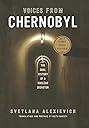
An account of the worst nuclear reactor accident in history from the 2015 winner of the Nobel Prize in Literature On April 26, 1986, the Chernobyl nuclear reactor accident contaminated as much as three quarters of Europe. Voices from Chernobyl is the first book to present personal accounts of the tragedy. Journalist Svetlana Alexievich interviewed hundreds of people affected by the meltdown—from innocent citizens to firefighters to those called in to clean up the disaster—and their stories reveal the fear, anger, and uncertainty with which they still live. Composed of interviews in monologue form, Voices from Chernobyl is a crucially important work of immense force, unforgettable in its emotional power and honesty and a National Book Critics Circle Award winner. Review: Harrowing & Unique Account of Chernobyl - I'll readily admit that I was not familiar with Svetlana Alexievich until she was named the 2015 Nobel Prize recipient for Literature. After reading about her, I was intrigued by her approach of extensively interviewing people and using their verbatims to create a coherent account about a specific subject. I had yet to read something of any length that employed such an approach and was eager to see how effective and engaging this method of storytelling could be. I was 16 at the time of Chernobyl and remember it as one of those defining Cold War moments of my youth like the 1980 US-USSR hockey game, the downing of KAL 007 or Reagan's speech at the Berlin Wall. As with many in the West, my perspective was garnered from how it was covered in the West, much of the information at the time limited given how carefully choreographed information from the USSR was and limited Western access to people closest to the disaster. A few years ago, I revisited the topic by reading a kindle single "The Chernobyl Nuclear Accident" put out by the NYT which contained all of its main coverage of the accident. The opportunity to "witness" the disaster from the inside, no less through Alexievich's unique approach, was enough to make me pick up this book. Reading "Voices of Chernobyl" is an eerie and unnerving experience. The magnitude of the Chernobyl accident is almost unfathomable and reading first person accounts about the untold physical, emotional and psychological damage is quite harrowing. Of course, the accounts of the physical suffering are almost too shocking to digest and will leave anyone's stomach turning. However, it is the massive state apparatus that covered up the real danger and sacrificed tens of thousands of its own people to the unspeakable levels of radioactive emissions, told through disillusioned, angry, devastated individuals that makes for a remarkable read. "Voices of Chernobyl" works so well because of the Alexievich's deep research and brilliant ability to piece together the right first person accounts in such a compelling narrative. I became convinced by the time I finished this book that the raw and unique emotional power "Voices of Chernobyl" could not have been achieved through a more traditional journalist account. Review: Madness - I'm speechless. Heart-breaking. Disturbing. Yet oh so important for everyone to read. I strongly believe that this book is telling us about the future. It's no secret I don't support nuclear energy - it's pretty hard to after reading this book. The Fukushima accident now shares Chernobyl in being one of only two nuclear disasters to rank as a 7 on the International Nuclear Event Scale, yet Chernobyl could have easily been a hundred times worse than what it was, so therefore, the scale is incomplete. Chernobyl was kept very quiet. Terrible things happened there and continue to literally ruin the lives of people in Belarus and Northern Ukraine. It's no doubt Fukushima is being kept quiet too. And so will the next disaster, and the next, until there is no hiding from it anymore. I bought a dosimeter after reading this book, because it clearly tells us the population cannot trust the government. The only ones who learned the secret before other countries let the cat out of the bag were those who worked at nearby nuclear power stations, because their dosimeters were going haywire. This book is something that NEEDS to be read, for it concerns all of humanity. Yet it's kept quiet. I'm an American and most people my age don't even know what Chernobyl is - or if they do, they know it through a game. This is such a fail. It's like the rest of the world thinks this book doesn't concern them because it only concerns those damn Belarussians on the other side of the globe. But it DOES concern us all. Just wait until something like this happens in your own backyard. Then the whole world will wish they had listened to Chernobyl.
| Best Sellers Rank | #57,348 in Books ( See Top 100 in Books ) #4 in Nuclear Engineering (Books) #39 in Disaster Relief (Books) #89 in Russian History (Books) |
| Customer Reviews | 4.6 out of 5 stars 2,808 Reviews |
W**O
Harrowing & Unique Account of Chernobyl
I'll readily admit that I was not familiar with Svetlana Alexievich until she was named the 2015 Nobel Prize recipient for Literature. After reading about her, I was intrigued by her approach of extensively interviewing people and using their verbatims to create a coherent account about a specific subject. I had yet to read something of any length that employed such an approach and was eager to see how effective and engaging this method of storytelling could be. I was 16 at the time of Chernobyl and remember it as one of those defining Cold War moments of my youth like the 1980 US-USSR hockey game, the downing of KAL 007 or Reagan's speech at the Berlin Wall. As with many in the West, my perspective was garnered from how it was covered in the West, much of the information at the time limited given how carefully choreographed information from the USSR was and limited Western access to people closest to the disaster. A few years ago, I revisited the topic by reading a kindle single "The Chernobyl Nuclear Accident" put out by the NYT which contained all of its main coverage of the accident. The opportunity to "witness" the disaster from the inside, no less through Alexievich's unique approach, was enough to make me pick up this book. Reading "Voices of Chernobyl" is an eerie and unnerving experience. The magnitude of the Chernobyl accident is almost unfathomable and reading first person accounts about the untold physical, emotional and psychological damage is quite harrowing. Of course, the accounts of the physical suffering are almost too shocking to digest and will leave anyone's stomach turning. However, it is the massive state apparatus that covered up the real danger and sacrificed tens of thousands of its own people to the unspeakable levels of radioactive emissions, told through disillusioned, angry, devastated individuals that makes for a remarkable read. "Voices of Chernobyl" works so well because of the Alexievich's deep research and brilliant ability to piece together the right first person accounts in such a compelling narrative. I became convinced by the time I finished this book that the raw and unique emotional power "Voices of Chernobyl" could not have been achieved through a more traditional journalist account.
M**Y
Madness
I'm speechless. Heart-breaking. Disturbing. Yet oh so important for everyone to read. I strongly believe that this book is telling us about the future. It's no secret I don't support nuclear energy - it's pretty hard to after reading this book. The Fukushima accident now shares Chernobyl in being one of only two nuclear disasters to rank as a 7 on the International Nuclear Event Scale, yet Chernobyl could have easily been a hundred times worse than what it was, so therefore, the scale is incomplete. Chernobyl was kept very quiet. Terrible things happened there and continue to literally ruin the lives of people in Belarus and Northern Ukraine. It's no doubt Fukushima is being kept quiet too. And so will the next disaster, and the next, until there is no hiding from it anymore. I bought a dosimeter after reading this book, because it clearly tells us the population cannot trust the government. The only ones who learned the secret before other countries let the cat out of the bag were those who worked at nearby nuclear power stations, because their dosimeters were going haywire. This book is something that NEEDS to be read, for it concerns all of humanity. Yet it's kept quiet. I'm an American and most people my age don't even know what Chernobyl is - or if they do, they know it through a game. This is such a fail. It's like the rest of the world thinks this book doesn't concern them because it only concerns those damn Belarussians on the other side of the globe. But it DOES concern us all. Just wait until something like this happens in your own backyard. Then the whole world will wish they had listened to Chernobyl.
R**E
Raw
-- I'll get down on my knees to beg you--please, find our Anna Sushko. She lived in our village. In Kozhushki. Her name is Anna Sushko. I'll tell you how she looked, and you'll type it up. She has a hump, and she was mute from birth. She lived by herself. She was sixty. During the time of the transfer they put her in an ambulance and drove her off somewhere. She never learned to read, so we never got any letters from her. The lonely and the sick were put in special places. They hid them. But no one knows where…. The whole village took care of her, like she was a little girl. Unlike most recent Nobel Prize winners, Svetlana Alexievich writes simply and directly, without any tricks of style, and the emotion she distills is heartbreaking. For these words are not her own, but those of survivors of the 1986 disaster at the Chernobyl nuclear reactor, faithfully transcribed by her down to the silences, tears, and hesitations, and lucidly translated by Keith Gessen. Start at the beginning, or open to any page, and you will find yourself drawn into these poor people's lives: townspeople who go out on their balconies to watch the unusual colors of the reactor fire, farmers forced to leave their crops and cattle, soldiers and firemen drafted in with inadequate protection to clean up the mess. It is very easy to read, and unbearably human. Or starkly human and eventually unbearable to read, because the stories of stolen lives are told in their raw form and never let up. The book is framed by two longish sections headed "A Solitary Human Voice," the accounts of widows, newlyweds and very much in love, seeing their husbands come back and basically rot before their eyes. It continues with monologues, dialogues, choruses, the voices of soldiers, resettlers, children, all meticulously attributed with their real names. There is tragedy, of course, and even more pathos. One returning soldier burns all his clothing except for his army cap which is coveted by his little boy; two years later, the child is dead of a brain tumor. One woman smuggles out her radioactive cat in a suitcase. Another goes to see her doctor: -- "Sweety," I say, "my legs don't move. The joints hurt." "You need to give up your cow, grandma. The milk's poisoned." "Oh, no," I say, "my legs hurt, my knees hurt, but I won't give up the cow. She feeds me." There is rumor and superstition here, but much genuine faith; ignorance and a strange kind of poetry. Bewilderment is only the other side of the coin to a previous belief in the stability of the simple life; sorrow is the obverse of love. The light of the disaster illuminates the lives of ordinary people; I could well believe that this is a better portrait of the Russian soul than any number of novels. There are even touches of characteristic black humor: -- There was a Ukrainian woman at the market selling big red apples. "Come get your apples! Chernobyl apples!" Someone told her not to advertise that, no one will buy them. "Don't worry," she says. "They buy them anyway. Some need them for their mother-in-law, some for their boss." One man tried to write about his experiences. "I sent the story to a journal. They wrote back saying that this wasn't a work of literature, but the description of a nightmare." Which makes me ask the question of Alexievich herself: a nighmare certainly, but is this literature as we know it? It felt more like the raw materials waiting to be made into literature by someone else. Being a theatrical person myself, I kept on wondering how I might select from those monologues and choruses to put them on the stage, set them to music perhaps, at any rate do something to give them shape and overall meaning. The author divides her book into three major sections: The Land of the Dead, The Land of the Living, and Amazed by Sadness. But the texture of the narratives is much the same in each; there is no obvious structural arc, no particular reason why you should continue to subject yourself to such a succession of tales of woe. But perhaps I would be wrong to try to force these stories into a shape that has some meaning. They HAVE no meaning, no larger redemptive purpose. And that is her point. Keith Gessen, the translator, opens with an introduction giving some of the facts and dates of the disaster. But with the exception of a brief preface, Alexievich herself does not. In her equally brief closing section, In Place of an Epilogue, she explains why, and also why she feels the subject is so urgent: because living in a country with 350 atomic bombs, the threat of nuclear holocaust is all too real. Let me end my review, therefore, with her own voice after reading so many others: -- I often thought that the simple fact, the mechanical fact, is no closer to the truth than a vague feeling, rumor, vision. Why repeat the facts--they cover up our feelings. The development of these feelings, the spilling of these feelings past the facts, is what fascinated me. I try to find them, collect them, protect them. These people had already seen what for everyone else is still unknown. I felt like I was recording the future.
V**K
Profoundly Sad
The stories that make up this book are the actual words of the survivors of the Chernobyl nuclear disaster of 1986. Those were the last days of the Soviet system of government. And in that system the reader sees the stoic Russian persona, acting as "we" rather than "I". The deprivation, death, victory and sadness of the WW II experience still permeates their hopes and expectations and outlook even three generations later. Ten years after the radiation leak and they remain stunned in surprise at the way the accident, the "clean-up" and their subsequent treatment turn out. From the preface, "...the Soviet system had taken a poorly designed reactor and then staffed it with a group of incompetents. It then proceeded, as the interviews in this book attest, to lie about the disaster in the most criminal way." But it's not about the defeat or triumph of political systems - it's about the lives of the proud, the scared, the confused, the heroic, the loving, all of whom die very, very sadly. For the most part these are "common" people - a PhD or two - but for the most part the people who lived there, or were sent there were perfectly naive about strontium, cesium, tritium, alpha particles, beta particles or gamma rays, and yet sophisticated about their own culture, history, and literature. Pushkin, Tolstoy, Chekhov, Solesinitsen are part of the makeup of even the "common" people, and in an odd way this horror is another volume of the suffering of the people long documented in Russian literature. Easily 5-Stars because of its insight, relevance, readability and lessons!
G**E
I Wouldn't Wish that on My Worst Enemy
“… Just thinking of all your days to come, the bitterness, the life that rough mankind will thrust upon you. Where are the public gatherings you can join, the banquets of the clans? Home you’ll come, in tears, cut off from the sight of it all, the brilliant rites unfinished. And when you reach perfection, ripe for marriage, who will he be, my dear ones? Risking all to shoulder the curse that weighs down my parents, yes and you too - that wounds us all together.” - Oedipus in Oedipus Rex by Sophocles I was a freshman in college when Chernobyl disaster occurred on April 26, 1986. I vaguely remember being terrified about the scope of the incident; however, the Soviets were our enemies, so except for being concerned for how it would impact my life, I gave it little thought. When Svetlana Alexievich won the Nobel Prize in Literature last year, Chernobyl was brought back into my life. And for that I will forever be grateful. Ms. Alexievich’s Voices from Chernobyl: The Oral History of a Nuclear Disaster is one of the hardest books I’ve read due to the graphic descriptions of the impact on human life, but it is a book that must be read due to the immense amount of truth it contains. By truth, I don’t mean that it correctly represents the events of the disaster and its aftermath, which it does, but rather, that in the book’s monologues, we as readers are exposed to many of life’s truths. For example: “Only in evil is man clever and refined. But how simple and sympathetic he is when speaking honest words of love. Even when the philosophers use words they are only approximations of the thoughts they have felt” (66). And “… That all our humanistic ideas are relative. In an extreme situation, people don’t behave the way you read about in books. Sooner the other way around. People aren’t heroes” (111). It goes on and on. There is much more to this book than an oral history or a glimpse into the worst industrial disaster of our time. I thought when I read the book, I would be horrified by the accounts of the survivors, but I was more horrified at how I saw in these stories the cost of human behavior and ideologies. Lest you think, however, that these behaviors and ideologies are exclusive to the Soviets, and that their kind have faded into history, think again, as there are many moments in the work that reminded me of current arguments, events, and propaganda in our own time and country. After reading the book, one also must admire the courage of the author! Ms. Alexievich’s work on this project itself was an act of heroism, as she was interviewing people that oftentimes didn’t wish to speak, in a country that still was trying to cover-up what had occurred. Written ten years after the event, Ms. Alexievich solicits the personal reflections of a wide range of those that were witnesses to Chernobyl - villagers, soldiers, scientists, liquidators (those responsible for the clean up), Communist Party officials, mothers, children, widows, and re-settlers. The words in the book are those of the interviewed, but the organization of these “monologues” into a coherent whole is what makes the book much more than a telling of the event and its aftermath. It is this organization and focus that Ms. Alexievich provides, which takes the project to the realm of truth. For me, the moment that I’ll never forget is when I realized how those that survived, whether or not they became sick and died, would never be the same. And I don’t mean they are forever haunted by the events, as no doubt they are, but rather that they could never truly return to society. They were shunned, set apart, and labeled: “I got home, I’d go dancing. I’d meet a girl I liked and say, ‘Let’s get to know one another.’ ‘What for? You’re a Chernobylite now. I’d be scared to have your kids.’” - Soldier stationed at Chernobyl (46). “Now I look at my kids: wherever they go, they’ll feel like strangers. My daughter spent a summer at pioneer camp, the other kids were afraid to touch her. ‘She’s a Chernobyl rabbit. She glows in the dark.’ They made her to into the yard at night so they could see if she was glowing” - resident of the village of Khoyniki (195). It was this last excerpt that made me think of Oedipus’ speech to his children. Even those that survive will pay for the disaster that was Chernobyl until their deaths. People often say, “I wouldn’t wish that on my worst enemy,” and now that I think about my reaction to Chernobyl all those years ago, I feel ashamed. For even though the Cold War was still a reality in 1986, making the Soviets our enemies, this devastation is exactly that … something I wouldn’t wish on my worst enemy. All of this might tend to push you away from reading the book, but I promise you that there is much more here than shame, horror, and tragedy. For this book, more than any other I’ve read recently, made me think more about “truth” and how I live my own life each and every day. For more of my reviews, visit https://readingwritingreacting.wordpress.com
A**N
one child born with no means to excrete waste from its body - no anus
From my perspective, the most significant message in Ms Alexievichs book, "Chernobyl," is that its aftermath exposed so many of the moral dilemma's that people are faced with on so many different levels. Some examples: - How can any society expect first-responders - in this case, fireman - to face certain death in attempting to contain a nuclear disaster of this magnitude. Some died almost instantly as they literally tramped on the burning nuclear embers. Others died excruciating deaths that for some lingered for years, their bodies literally exploding from exposure to intense radiation. - Reading this book SHOULD forever silence those opposed to abortion under any circumstances. The birth defects that fetuses developed from exposure to nuclear radiation are horrendously described, one child born with no means to excrete waste from its body - no anus, no penis or vagina, no eyes, no ears. Although born alive, the infant died only after an heroic effort on the part of the mother to keep it alive. Another child born with a mouth extending from ear to ear, but with no eyes at all. Numerous stillborn births, again, with horrendous defects. Over 200,000 women have aborted their fetuses as a result of this nuclear disaster. Numberless others have committed to never conceiving a child. If anything, Chernobyl has made the case that the anti-abortion movement has been exploited as a political issue, not one of a moral nature at all. - The firefighters who gave their lives in attempting to contain the disaster saw themselves as sacrificing their individual lives for the welfare of their neighbors and friends, not for some abstract "god," Christian or otherwise. - And "love" is such the paramount message of the book. The love the wives of the dying fireman undergoing the most grotesque forms of death is unforgettable. Ms Alexievich joins the list of those Russian authors who have best described the essence of true love. Read the book - read the book - read the book.
S**I
Chilling accounts
A must read. This is a collection of accounts of people (some of them are the survived spouses) who loved through the Chernobyl nightmare. People's accounts give grave details in simple terms that were otherwise not known or published at that time and even since then. Two of the accounts are from those times top positions at the Belarussian Academy of Sciences. One of the accounts is from a surviving wife of a local firefighter who was a first responder to the fire, and how he was called, him and his brigade, and then came back and treated at a local hospital and then flown to Moscow and treated there for the remaining several weeks from a lethal dose of radiation. Accounts of other liquidators then and later and even much later. Accounts of people who fled, and then some who came back later, and some who never fled, and some who fled from other conflict zones and ended up settling there. Chilling, just chilling. Bad decisions that regular people were making because of lack of information, and bad decisions that the people in charge were making because they were afraid to make a decision and be liable for it, and then lack of judgement of the part of experts who had the information and should have known better but were still unprepared and not fully comprehending. Details on how safety instruction were routinely disregarded, dosage norms were being changed, what was done as part of the cleanup effort, for example how while people were being relocated, the fields were still used for crops and then the crops were still used locally and for export, how the machinery that was used in the cleanup effort was supposed to forever stay there but has been stolen later for individual resale at other regions. All paid with lives, sometimes years later.
F**3
Compelling, but jumbled
The monologues themselves were fabulous, but (and this is the only time I have ever said this about a book) -- it needs more of an editorial voice. Some stories would have made a lot more sense if we'd been given a date. An age. There were terms sprinkled throughout that I had to Google and still couldn't find a good explanation for. Some chapters included discrete monologues from lots of people, but they don't clearly separate them from each other - so you'd be confused as to whether this was a new story or just a single disjointed story. It was poorly organized in that respect. And the thing that kills me is there'd be editorial interjections at places that were completely unnecessary! Like "(here she spreads the photographs out on the table)" -- ok? That wasn't very important to my understanding of what they're saying. What would be helpful is if you could explain the term "second group invalid" or the various acronyms used. Basically, the people did a great job in responding to interviews. The author/editors did a terrible job putting them together.
C**N
Un libro doloroso, que remueve, pero necesario (Hurful, moving, necessary)
A book to be read calmly, without hurries. Some things exceed mere data or facts, it is necessary to listen to real people who lived through them, and this is what the author provides us with in this book. I really appreciate having read it.
I**T
Now I know
I am a big fan of Svetlana and this book just made me realize one more time how important it is to learn from our history. All the pain, all the lies and all the love described so intimate in this book. I highly recommend it to everyone!
E**N
Such an astonishing story
Amazing Book
M**A
Very good book
My daughter asked for this book as it’s a very famous book and everyone who is interested in history should read this.
I**A
Ottima lettura per approfondire il tema
Lettura scorrevole con tante testimonianze ed interviste di chi ha subito l'evento e le conseguenze a posteriori. Lo consiglio soprattutto a chi é appassionato sull'argomento per approfondire diversi aspetti che normalmente non vengono trattati nei libri di storia.
Trustpilot
3 weeks ago
1 week ago