
Desertcart purchases this item on your behalf and handles shipping, customs, and support to Israel.
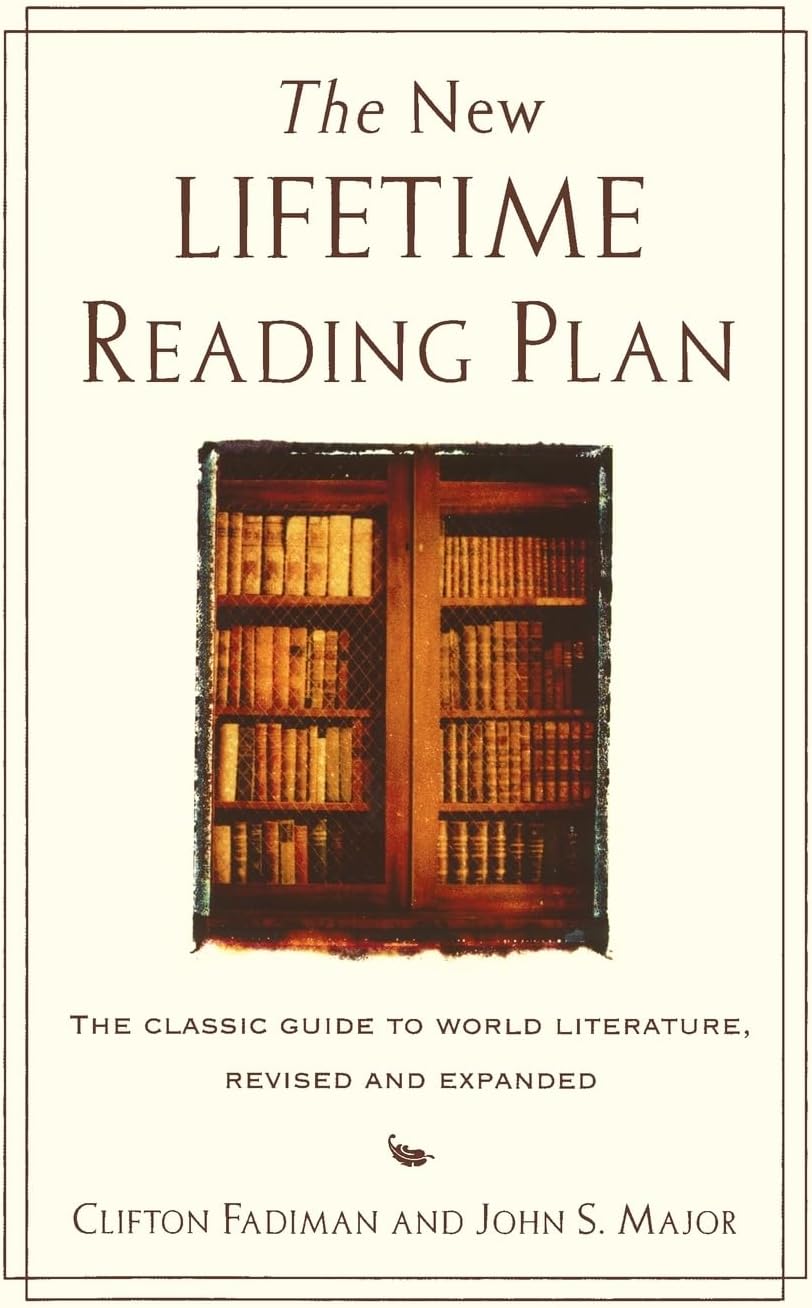
Now in print for the first time in almost 40 years, The New Lifetime Reading Plan provides readers with brief, informative and entertaining introductions to more than 130 classics of world literature. From Homer to Hawthorne, Plato to Pascal, and Shakespeare to Solzhenitsyn, the great writers of Western civilization can be found in its pages. In addition, this new edition offers a much broader representation of women authors, such as Charlotte Bront%, Emily Dickinson and Edith Wharton, as well as non-Western writers such as Confucius, Sun-Tzu, Chinua Achebe, Mishima Yukio and many others. This fourth edition also features a simpler format that arranges the works chronologically in five sections (The Ancient World; 300-1600; 1600-1800; and The 20th Century), making them easier to look up than ever before. It deserves a place in the libraries of all lovers of literature. Review: Broadening yourself through an exploration of the classics of literature - Anyone considering this book is likely to be interested in some guidance in "what to read", or perhaps more specifically "where to start" for the purpose of undertaking an exploration of "classics" and literature beyond today's best-sellers and the like. I grew up reading mostly science fiction and other popular literature, and obtained plenty of formal education, but all of it was focused on the sciences and technology. I did not avail myself of the opportunity to use my university days to broaden my humanities education beyond what minimal requirements there were for graduation. Shame on me, and now I am making the effort to fill in those gaps. So the question for me at least is whether or not this particular book is useful in the above sense, because there are a number of volumes that provide similar advice. I have two of them (the other being Great Books ), and I selected these two books after doing a fair amount of research, on desertcart and elsewhere, and concluding that for my purposes they would be the best. (And I don't rule out getting another if I really get into this Classics thing). The New Lifetime Reading Plan is the fourth edition of a book originally published in 1960. The author, Clifton Fadiman, is a member of the Board of Editors of the Encyclopedia Britannica and the editorial board of the Book-of-the-Month Club. I have to admit that my first reaction to reading those qualifications was to be skeptical; after all, isn't BOMC a bit on the other end of the spectrum from Sophocles, Euripides, Aeschylus, and the like? (OK, I'm a snob, but we are talking about reading "the Classics", after all, and isn't that almost by definition "snobbish"?). He is joined in this fourth edition by John Major, PhD from Harvard (now we're talking), and Senior Editor of BOMC (one step forward, one step back). In this book you will find coverage of 133 authors, averaging just over 2 pages for each, providing a nice albeit brief outline of each author's life and works, and giving one or more recommended books for each. The authors are divided into 5 sections, covering broad chronological periods. It also includes an additional 133 authors in a supplement at the end, under "Going Further", all from the 20th century, with much shorter write-ups only covering recommended books for each. It is therefore much more than simply a list of what to read, and that where it has great value. For some authors I feel this book provides insufficient guidance - for example, for Shakespeare the recommendation is to read his entire works (!!), and if you can't find the energy to read all 37 plays, plus the sonnets, then they do deign to provide a list of 12 (only!) as "minimum reading". OK, I am going to accept putting Hamlet , King Lear , and Othello on my "to read" list, but isn't that enough? For Dickens, seven of his works are recommended. (Again, this is why you need more than one list to give you guidance). One thing that this book does not provide is sufficient guidance regarding which translation is best if there is more than one available (for works translated into English). So you will need to do the checking yourself if you want to attempt to get the version considered to be the truest to the author's intent in their own language. (And it is always less clear than I would like. Does it have to be so difficult? I guess it does). With those comments, my opinion of this book, after owning it for enough time to have read a number of the recommendations, is that it is provides very good information on all of the authors and books covered. It includes a very broad range of authors and books (both chronologically, and otherwise). The articles on each author are long enough to give some very good and interesting information on them. It comes very close to providing exactly what I want, in both coverage and content. On balance I recommend it and consider it a good investment to make if you are intending to explore to any great extend the works that are covered (if possible in combination with at least one other similar reference). Review: Essential Book - This book is essential. It is opinionated and selective. It promises nothing but the considered opinion of two people that have been significantly involved with reading and thinking about literature throughout much of their lives. Many of the comments made by different reviewers at this site are addressed in the book itself. It explains why the Bible is not included. It explains why significant scientific works are excluded. Even within the strict realm of literature, they also explain that people might argue with their choices. In fact, this is part of the point. This is not the last word on literature. It is a starting place that provides a number of excellent points of departure. It invites you to look at and think about the authors, the books it recommends and ask some basic questions: Is the author described interesting enough to read? If so, which book? Once finished with a book, do I agree with the comments made? Why or why not? The authors provide a good summary - some have honestly brought tears to my eyes I thought they were that good - and some pointers for background information, literary criticism, anthologies, suggested translations and other information. You may find that Thucydides is "charmless" as Clifton claims. I didn't. You may find that Finnegan's Wake is worth your time. Clifton recommends avoiding it - which I find I agree after several attempts to read it. Most importantly to me, it is with the suggestions of this book that I was able to tackle works like Joyce's Ulysess and Mann's Magic Mountain that would have been impossible to do without the very helpful suggestions it contains. This book should be owned by anyone with even a passing interest in literature. It needs to be approached as you would a respected friend with a different outlook on life. Take the suggestions you find useful and explore what you like. It is a guide, and used appropriately, it will help you make good choices in deciding what to read (what, which translation) and help you get the tools you may want to understand it better (historical context, explanations). Buy it, and read it!


| Best Sellers Rank | #93,793 in Books ( See Top 100 in Books ) #15 in History of Books #32 in Comparative Literature #35 in Bibliography & Index Reference |
| Customer Reviews | 4.5 out of 5 stars 135 Reviews |
P**A
Broadening yourself through an exploration of the classics of literature
Anyone considering this book is likely to be interested in some guidance in "what to read", or perhaps more specifically "where to start" for the purpose of undertaking an exploration of "classics" and literature beyond today's best-sellers and the like. I grew up reading mostly science fiction and other popular literature, and obtained plenty of formal education, but all of it was focused on the sciences and technology. I did not avail myself of the opportunity to use my university days to broaden my humanities education beyond what minimal requirements there were for graduation. Shame on me, and now I am making the effort to fill in those gaps. So the question for me at least is whether or not this particular book is useful in the above sense, because there are a number of volumes that provide similar advice. I have two of them (the other being Great Books ), and I selected these two books after doing a fair amount of research, on Amazon and elsewhere, and concluding that for my purposes they would be the best. (And I don't rule out getting another if I really get into this Classics thing). The New Lifetime Reading Plan is the fourth edition of a book originally published in 1960. The author, Clifton Fadiman, is a member of the Board of Editors of the Encyclopedia Britannica and the editorial board of the Book-of-the-Month Club. I have to admit that my first reaction to reading those qualifications was to be skeptical; after all, isn't BOMC a bit on the other end of the spectrum from Sophocles, Euripides, Aeschylus, and the like? (OK, I'm a snob, but we are talking about reading "the Classics", after all, and isn't that almost by definition "snobbish"?). He is joined in this fourth edition by John Major, PhD from Harvard (now we're talking), and Senior Editor of BOMC (one step forward, one step back). In this book you will find coverage of 133 authors, averaging just over 2 pages for each, providing a nice albeit brief outline of each author's life and works, and giving one or more recommended books for each. The authors are divided into 5 sections, covering broad chronological periods. It also includes an additional 133 authors in a supplement at the end, under "Going Further", all from the 20th century, with much shorter write-ups only covering recommended books for each. It is therefore much more than simply a list of what to read, and that where it has great value. For some authors I feel this book provides insufficient guidance - for example, for Shakespeare the recommendation is to read his entire works (!!), and if you can't find the energy to read all 37 plays, plus the sonnets, then they do deign to provide a list of 12 (only!) as "minimum reading". OK, I am going to accept putting Hamlet , King Lear , and Othello on my "to read" list, but isn't that enough? For Dickens, seven of his works are recommended. (Again, this is why you need more than one list to give you guidance). One thing that this book does not provide is sufficient guidance regarding which translation is best if there is more than one available (for works translated into English). So you will need to do the checking yourself if you want to attempt to get the version considered to be the truest to the author's intent in their own language. (And it is always less clear than I would like. Does it have to be so difficult? I guess it does). With those comments, my opinion of this book, after owning it for enough time to have read a number of the recommendations, is that it is provides very good information on all of the authors and books covered. It includes a very broad range of authors and books (both chronologically, and otherwise). The articles on each author are long enough to give some very good and interesting information on them. It comes very close to providing exactly what I want, in both coverage and content. On balance I recommend it and consider it a good investment to make if you are intending to explore to any great extend the works that are covered (if possible in combination with at least one other similar reference).
S**S
Essential Book
This book is essential. It is opinionated and selective. It promises nothing but the considered opinion of two people that have been significantly involved with reading and thinking about literature throughout much of their lives. Many of the comments made by different reviewers at this site are addressed in the book itself. It explains why the Bible is not included. It explains why significant scientific works are excluded. Even within the strict realm of literature, they also explain that people might argue with their choices. In fact, this is part of the point. This is not the last word on literature. It is a starting place that provides a number of excellent points of departure. It invites you to look at and think about the authors, the books it recommends and ask some basic questions: Is the author described interesting enough to read? If so, which book? Once finished with a book, do I agree with the comments made? Why or why not? The authors provide a good summary - some have honestly brought tears to my eyes I thought they were that good - and some pointers for background information, literary criticism, anthologies, suggested translations and other information. You may find that Thucydides is "charmless" as Clifton claims. I didn't. You may find that Finnegan's Wake is worth your time. Clifton recommends avoiding it - which I find I agree after several attempts to read it. Most importantly to me, it is with the suggestions of this book that I was able to tackle works like Joyce's Ulysess and Mann's Magic Mountain that would have been impossible to do without the very helpful suggestions it contains. This book should be owned by anyone with even a passing interest in literature. It needs to be approached as you would a respected friend with a different outlook on life. Take the suggestions you find useful and explore what you like. It is a guide, and used appropriately, it will help you make good choices in deciding what to read (what, which translation) and help you get the tools you may want to understand it better (historical context, explanations). Buy it, and read it!
C**S
Ramblings of an English major...
I purchased this book during my senior year in high school (2003-2004). Being a voracious reader since my youth, I was always trying to find lists of "great" books to read. I would peruse Amazon, Google, and whatever else in an attempt to find good advice on what to read. That fateful day, I stumbled across this book while browsing Amazon. It doesn't take a literary genius to know to read the Iliad and the Odyssey, but I would never have stumbled across Voltaire, Sophocles, Marcus Aurelius, Huxley, or Dante while in high school were it not for this book. It was invaluable to my reading until I could get to college and be guided by intelligent English professors. I plan to use this book to continue my literary education when I graduate this May. Furthermore, the book itself is very well written. Fadiman and Major are excellent writers who are informative and amusing. The information they give on each of the authors and their works is excellent. The reason I am writing this review is that I saw The New Lifetime Reading Plan sitting on my desk in my dorm room; I honestly love it. I have used it as a reference for when I stumble across a literary name I do not know, and I occasionally browse through it for sheer enjoyment. I imagine that when I'm old and gray, this book will still be sitting on my desk: guiding, directing, and amusing.
U**I
An excellent list...
This book is readable and pleasantly snooty. I may not agree with every choice they made, but anyone who manages to read every book on this list will have a pretty good grasp on the world's great literature.
N**G
Happy book owner
Nicely, packaged and arrived on time. Trust this seller.
D**K
Great and Not-so-great Books
This book is an anthology of summaries of the better books written since the time of the scroll and stylus. Unlike its predecessor, the Great Books of Western Civilization, this compendium broadens its horizons to include Eastern literature as well as Western. There's no question that many of the books recommended one read over the course of one's lifetime are truly meritorious, but there have crept in a few books which are interesting only because they appeal to a non-Western reader. Fair enough, but it tends to reduce the important works of civilization to a lower common denominator. Also, there are some serious omissions, as most of the attention is devoted to "literature," and not to works in philosophy, praxelogy, axiology, social and scientific history, and political, economic, and scientific breakthroughs. If one desires a list of the great books in all fields of endeavor, this is NOT the book. Too many books are omitted for that kind of enterprise. Indeed, looking at the Great Books website will provide a better list of books that really deserve our attention, and make our devotion to reading them perennially valuable. However, if literature is one's only interest, then this can be a helpful overview.
R**W
This is a great reading guide that has been updated over the years
This is a great reading guide that has been updated over the years. You may not read all the books in this plan, but you will have enough reading to keep you busy and educated for the rest of your life. I feel that classical education is important for understanding the human race and how we got to where we are today. This guide gives us a selection of so-called great books which everyone should or know about to be truly educated. this guide has an undated list of contemporary books to read providing us with a balanced reading list from the past and the present. One thing I like about this book are the short summaries of recommended reading, so we can decided what we want to read, without being overwhelmed with trying to read every book on the list. I wish there were an Kindle version of this book, and I wish that this book were available to people in poor countries who have an e-reader or smart phone, so they can enjoy our rich global literary tradition. Richard Shaw is the author of reading as consolation Audible.Com
M**S
I love this book
I love this book. I do a personal reading plan about every 5 years. I've been using Clifton Fediman's last book for my past plans. This one is updated with a larger variety of authors and styles and types of books. Enjoying it a lot. Again doing my new reading plan and this book really helps. Recommended if you want a good source to learn about a lot of authors and their writing. Recommended.
P**H
Five Stars
Great little reference book, highly recommended!
S**S
Indispensable!
If you cant do without books then you cant do without this book. Its holistic, its indispensable, its essential. It will give you a short and very informative primer to the great books of the world and help to select the ones you choose to keep in your reading plan. It is also a great book in itself and reading it is like spending time with a very good friend who shares your taste for books. I enjoyed every minute of its company and was a bit disappointed to finish it. And i wish to go back to it again and again for advice, guidance and good company.
N**O
A++++
A++++
S**O
Super
Super
B**L
Light hearted reviews.
Well written.Good coverage.Light hearted reviews on all that heavy classics stuff!
Trustpilot
1 month ago
2 months ago