We remain fully operational. Our teams are working around the clock to ensure your deliveries continue safely.

قم بتنزيل التطبيق


معلومات عنا
حقوق الطبع والنشر © 2024 Desertcart Holdings Limited
قم بتنزيل التطبيق
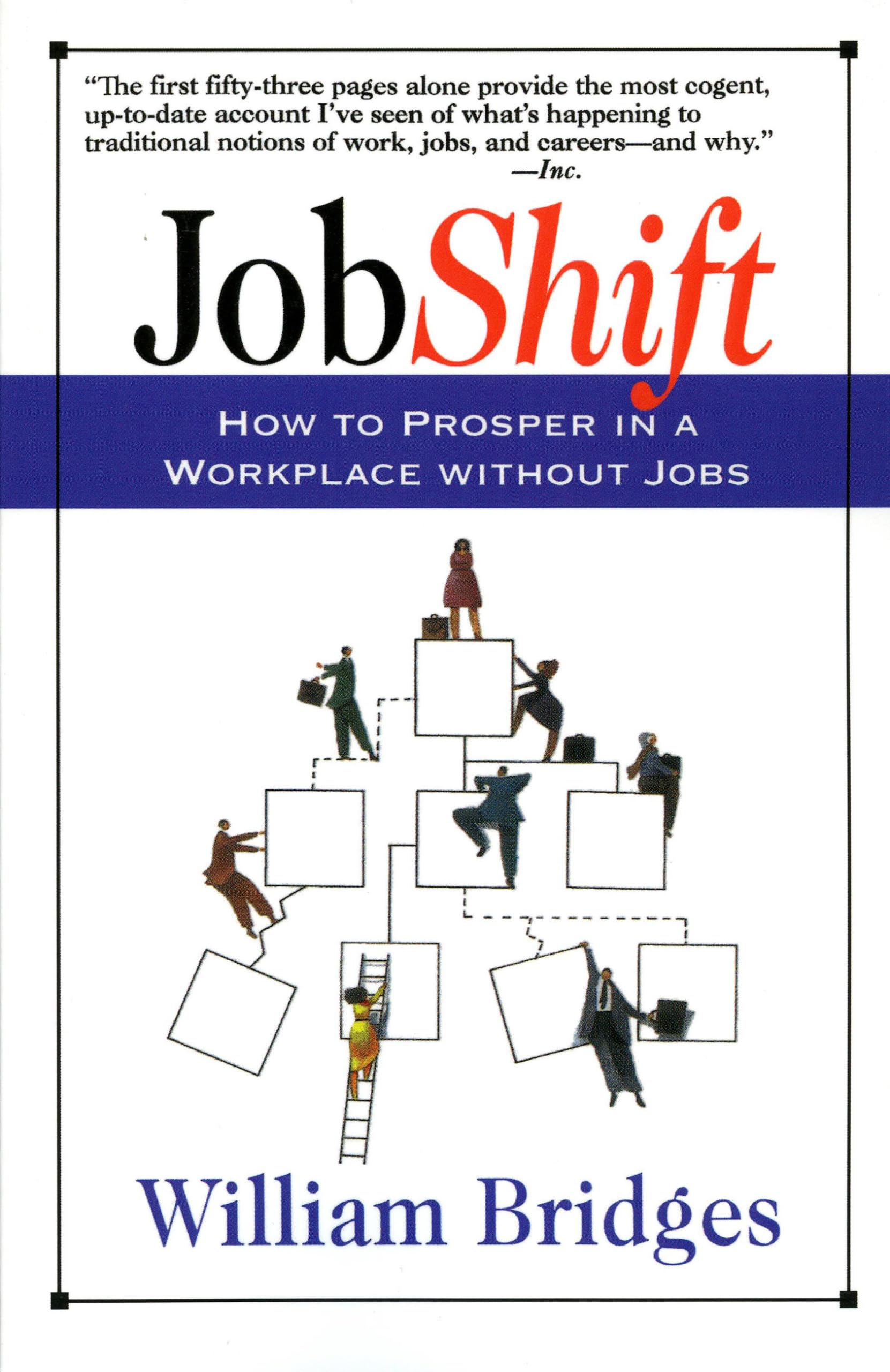
Jobshift: How To Prosper In A Workplace Without Jobs [Bridges, William] on desertcart.com. *FREE* shipping on qualifying offers. Jobshift: How To Prosper In A Workplace Without Jobs Review: A timeless classic - A timeless classic, which every single professional should own. I highly recommend it. Review: Yesterday never really mattered tomorrow never really came - I first read this book some seven years ago as a text for a class intended to help graduating students prepare themselves for the world of work. Interestingly one of those graduates was intending to work in a start up business with digital cameras which he believed would emerge as the dominant force in the picture business. Probably telling the future is not a good business to be in. Here in Northern New Jersey everyone knew, and still knows, all about downsizing and organizational flattening and outsourcing. Since the collapse of the tech-bubble, many of those independent contractors are now looking for work and escaping the computer field alltogether in the face of falling wage rates, excess supply and new entrants from college who expect a lot less! Revisiting this book gives one the opportunity to rexamine it's claims and, not surprisingly, finds them lacking. To be fair, much of what the originator describes has come to pass but not in the way that he suggests. The main lesson that I come away with from this book is that markets are so powerful that the competitive environment determines the shape of the organization. Obviously, some would say but this is only half of the story. Combine the power of markets which is, after all, only the result of individuals exercising choices, with a proactive government and you get a pretty unstoppable force. If the dollar is high then imports are [inexpensive] as compared to domestic goods which puts intense competitive pressure on companies who then must cut costs. Add to the mix a policy of a free trade area as NAFTA and a competitive labor market and there is even more pressure on costs. Finally have a boyant stock market and increased wealth and you have lots of venture capital looking for profit. The result, falling unemployment with little inflation and downward intense pressure on costs leading to more business. The picture is muddied somewhat by rising benefits costs but they become a force against rising costs too, What I am describing is the pressure on business to focus on their core activities and float off internal activities which can be done by service companies contracted for the purpose. Wage bill too high - make workers contractors who then have to pay for their own benefits or better still get the states to introduce basic minimum health care schemes. This nirvana of the dejobbed economy never really existed. Sure there are more small businesses and self-employed, sure there is more flexibility among the workforce but there is also compulsion, workfare, for the unemployed as well as the requirement for many families to work two, three or more jobs to make ends meet. Hayek the Nobel prizewinner foresaw the person described in this book many years ago as did his mentor Mises. To be successful they argued the individual must market themselves as a self-entrepreneur. Very true. This book is an excellent description of a possible future in the light of developments in business at the time. The author is to be commended for the clarity of his thought and exposition. However, he ignores the bigger picture and the implications of a global economy and powerful, interventionist governments. Perhaps he would like to write an update to this book in the light of the events of the last seven years.
| Best Sellers Rank | #1,462,186 in Books ( See Top 100 in Books ) #35 in Unemployment #2,554 in Job Hunting & Career Guides #6,590 in Entrepreneurship (Books) |
| Customer Reviews | 4.1 4.1 out of 5 stars (18) |
| Dimensions | 8.5 x 5.6 x 0.68 inches |
| Edition | Revised ed. |
| ISBN-10 | 0201489333 |
| ISBN-13 | 978-0201489330 |
| Item Weight | 10.4 ounces |
| Language | English |
| Print length | 272 pages |
| Publication date | October 16, 1995 |
| Publisher | Balance |
A**N
A timeless classic
A timeless classic, which every single professional should own. I highly recommend it.
J**S
Yesterday never really mattered tomorrow never really came
I first read this book some seven years ago as a text for a class intended to help graduating students prepare themselves for the world of work. Interestingly one of those graduates was intending to work in a start up business with digital cameras which he believed would emerge as the dominant force in the picture business. Probably telling the future is not a good business to be in. Here in Northern New Jersey everyone knew, and still knows, all about downsizing and organizational flattening and outsourcing. Since the collapse of the tech-bubble, many of those independent contractors are now looking for work and escaping the computer field alltogether in the face of falling wage rates, excess supply and new entrants from college who expect a lot less! Revisiting this book gives one the opportunity to rexamine it's claims and, not surprisingly, finds them lacking. To be fair, much of what the originator describes has come to pass but not in the way that he suggests. The main lesson that I come away with from this book is that markets are so powerful that the competitive environment determines the shape of the organization. Obviously, some would say but this is only half of the story. Combine the power of markets which is, after all, only the result of individuals exercising choices, with a proactive government and you get a pretty unstoppable force. If the dollar is high then imports are [inexpensive] as compared to domestic goods which puts intense competitive pressure on companies who then must cut costs. Add to the mix a policy of a free trade area as NAFTA and a competitive labor market and there is even more pressure on costs. Finally have a boyant stock market and increased wealth and you have lots of venture capital looking for profit. The result, falling unemployment with little inflation and downward intense pressure on costs leading to more business. The picture is muddied somewhat by rising benefits costs but they become a force against rising costs too, What I am describing is the pressure on business to focus on their core activities and float off internal activities which can be done by service companies contracted for the purpose. Wage bill too high - make workers contractors who then have to pay for their own benefits or better still get the states to introduce basic minimum health care schemes. This nirvana of the dejobbed economy never really existed. Sure there are more small businesses and self-employed, sure there is more flexibility among the workforce but there is also compulsion, workfare, for the unemployed as well as the requirement for many families to work two, three or more jobs to make ends meet. Hayek the Nobel prizewinner foresaw the person described in this book many years ago as did his mentor Mises. To be successful they argued the individual must market themselves as a self-entrepreneur. Very true. This book is an excellent description of a possible future in the light of developments in business at the time. The author is to be commended for the clarity of his thought and exposition. However, he ignores the bigger picture and the implications of a global economy and powerful, interventionist governments. Perhaps he would like to write an update to this book in the light of the events of the last seven years.
C**K
Very easy read
I got the book for information on how to manage in a world where jobs are disappearing. While the author discusses the job landscape that was taking form almost 20 years ago, the discussion is still valid today. Most importantly, the author describes how people can best manage the transition period between losing a job and finding another which is as relevant today as it ever was.
D**N
More essential than ever in the 21st century
This book should be read by everyone in government and anyone connected with making job policies. Bridges was ahead of his time when he wrote this book. He pointed out that the old way of working - mostly for large corporations - doesn't work. He was among the first to realize that job security is an illusory goal and he suggested realistic solutions. As we are in the early stages of the 21st century, this book seems more relevant than ever. Corporations create wellness programs that actually intrude on the personal lives of employees. They make hiring decisions based on an employee's impact on health care costs, not necessarily on productivity. Losing a job has huge consequences because we still tie health benefits to jobs - even with Obamacare. Bridges addresses these issues by proposing new ways to organize, such as guilds resembling craft guilds from earlier centuries.
P**R
A stimulating glimpse of the future
In the era of downsizing and mergers, one hears far too many people bewailing what we've "lost": job security, well-defined career paths, companies that feel responsible for the people who work for them, employee loyalty. Bridges offers a more positive perspective: "work" as we conceive of it was an artifact of the Industrial Revolution, with its view of workers as cogs in a machine; and, as that rigid structure gradually disappears, so will our present concept of "jobs" and "careers." This was one of the first ripples in what has become a massive wave of books on the changing business world, including recent examples like "Blur" -- but it's refreshing, easy to read, and can change your whole view of what "work" entails. I think it's especially important for young people still in school to read it: don't waste your efforts preparing for a traditional "career" that may not be there five years after you graduate; focus on developing your talents, your skills, and your entrepreneurial spirit instead, because those are what will be worth the most to you in the future.
ترست بايلوت
منذ 3 أسابيع
منذ شهر