We remain fully operational. Our teams are working around the clock to ensure your deliveries continue safely.

قم بتنزيل التطبيق


معلومات عنا
حقوق الطبع والنشر © 2024 Desertcart Holdings Limited
قم بتنزيل التطبيق
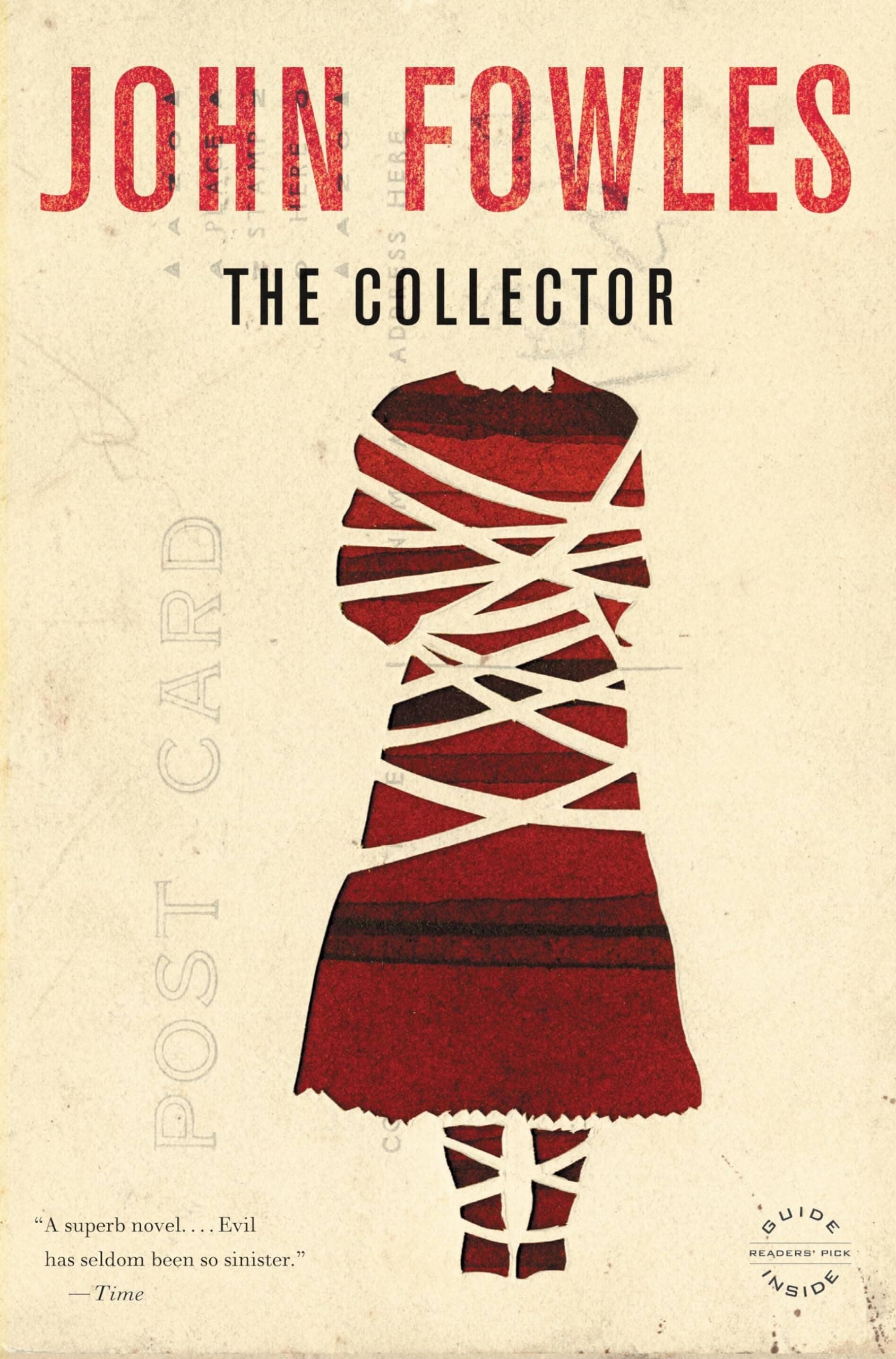
The Collector (Back Bay Books) [Fowles, John] on desertcart.com. *FREE* shipping on qualifying offers. The Collector (Back Bay Books) Review: The Collector: A Psychological Masterpiece With a Commentary on Class Culture - The Collector is a novel by British writer John Fowles. It tells the story of Ferdinand Clegg, a civil servant who lives with his aunt and cousin. When he wins a football pool, he buys a home in a secluded rural location in England, and realizes his desire to meet young art student Miranda. While his aunt and cousin are in Australia visiting relatives, Ferdinand, an avid butterfly collector, adds another beautiful specimen to his collection--by kidnapping Miranda and taking her to his 17th century house. There he will keep her, feed her, battle with her, and finally lose her. The story is cleverly told in three parts. First, we are told the story from Ferdinand's point of view, in retrospect, through paraphrased conversations. In the second part, we read Miranda's diary and discover many things about her personal life, including loves, her feelings about art, relationships and her politics. Finally, we return to Ferdinand, who adds more insight into his relationship with Miranda--its tensions and occasional swings to civility on the young artist's part. The Collector is not just a psychological tale, although that is the overlying characteristic Fowles puts forth through it. It also addresses the clash between classes, through Ferdinand's obstinance and Miranda's frustration--and occasional snobbery towards her captor, whom she nickname's Caliban after the misshapen character from Shakespeare's The Tempest. Furthermore, while we are at times horrified at what Ferdinand ultimately puts Miranda through--the confinement, the forced erotic photos she becomes the subject of, we also find that Miranda too can be cruel and ultimately condescending to Ferdinand. Herein lies the novel's brilliance: a kidnapping and tragedy, but also a multi-dimensional look at the complexity of the human condition and also class divisions--which were a stinging indictment of Britain's social failings at the time. The Collector is an engaging read--at times sensitive and yet ultimately disturbing, but certainly thought-provoking. In so many ways Ferdinand does not seem to be such a horrible man, yet his actions are clearly shocking, and the results simply sad. Having lost his beloved Miranda, he then sets his sights on another young woman. That story remains untold, but clearly adds a bit of a chill to the conclusion. Made into a film in 1965, The Collector remains a great read, even though much of depth of the text is left out by director William Wyler, whose otherwise competent work makes it more than watchable. Still, as always, it's the book that really deserves primary attention, and it works wonderfully on so many levels. For fans of this sort of thickly layered British novel, The Collector is highly recommended. Review: Psychological Thriller - 'The Collector' is about a socially awkward and insecure loner who collects butterflies. He also watches a young college student and becomes fascinated by her. Eventually he abducts her and keeps her locked in his basement. What I found interesting is that the author is VERY good at hinting at The Collector's mental abnormalities. For instance: The Collector sets up the basement to 'pretend' what it would be like if the college student did live down there. (No one having a fantasy is going to build an entire prison cell and go out and spend a lot of money to furnish it - unless he is serious about making that fantasy a reality Yet the character does not even believe that he will actually go through with it). He sits in a van watching her, with chloroform in his pocket, but thinks to himself that he has no plan to actually abduct the girl. The Collector says he 'has' to do things' or that he 'had' to do things; this demonstrates his sickness because there is no need for someone to 'have to' abduct a young woman. He's old-fashioned in some ways and a sadist in others, but he truly believes he is a good person with high morals. The irony! The book has four chapters - alternately narrated by the Collector and then in journal/diary form by his prisoner, Miranda. I found that the chapters narrated by The Collector were fascinating in a disturbing sort of way. The ones narrated by her were drawn out and seem to have a lot of impertinent information - until you realize that the act of journaling is her escape from reality & that she will think and write about anything and anyone to pass the time; then it is brilliant. This was an interesting read, a classic psychological thriller with an ending even more worrisome that the plot itself.
| Best Sellers Rank | #65,643 in Books ( See Top 100 in Books ) #1,605 in Classic Literature & Fiction #3,136 in Psychological Thrillers (Books) #4,893 in Literary Fiction (Books) |
| Customer Reviews | 4.0 out of 5 stars 4,029 Reviews |
T**N
The Collector: A Psychological Masterpiece With a Commentary on Class Culture
The Collector is a novel by British writer John Fowles. It tells the story of Ferdinand Clegg, a civil servant who lives with his aunt and cousin. When he wins a football pool, he buys a home in a secluded rural location in England, and realizes his desire to meet young art student Miranda. While his aunt and cousin are in Australia visiting relatives, Ferdinand, an avid butterfly collector, adds another beautiful specimen to his collection--by kidnapping Miranda and taking her to his 17th century house. There he will keep her, feed her, battle with her, and finally lose her. The story is cleverly told in three parts. First, we are told the story from Ferdinand's point of view, in retrospect, through paraphrased conversations. In the second part, we read Miranda's diary and discover many things about her personal life, including loves, her feelings about art, relationships and her politics. Finally, we return to Ferdinand, who adds more insight into his relationship with Miranda--its tensions and occasional swings to civility on the young artist's part. The Collector is not just a psychological tale, although that is the overlying characteristic Fowles puts forth through it. It also addresses the clash between classes, through Ferdinand's obstinance and Miranda's frustration--and occasional snobbery towards her captor, whom she nickname's Caliban after the misshapen character from Shakespeare's The Tempest. Furthermore, while we are at times horrified at what Ferdinand ultimately puts Miranda through--the confinement, the forced erotic photos she becomes the subject of, we also find that Miranda too can be cruel and ultimately condescending to Ferdinand. Herein lies the novel's brilliance: a kidnapping and tragedy, but also a multi-dimensional look at the complexity of the human condition and also class divisions--which were a stinging indictment of Britain's social failings at the time. The Collector is an engaging read--at times sensitive and yet ultimately disturbing, but certainly thought-provoking. In so many ways Ferdinand does not seem to be such a horrible man, yet his actions are clearly shocking, and the results simply sad. Having lost his beloved Miranda, he then sets his sights on another young woman. That story remains untold, but clearly adds a bit of a chill to the conclusion. Made into a film in 1965, The Collector remains a great read, even though much of depth of the text is left out by director William Wyler, whose otherwise competent work makes it more than watchable. Still, as always, it's the book that really deserves primary attention, and it works wonderfully on so many levels. For fans of this sort of thickly layered British novel, The Collector is highly recommended.
S**S
Psychological Thriller
'The Collector' is about a socially awkward and insecure loner who collects butterflies. He also watches a young college student and becomes fascinated by her. Eventually he abducts her and keeps her locked in his basement. What I found interesting is that the author is VERY good at hinting at The Collector's mental abnormalities. For instance: The Collector sets up the basement to 'pretend' what it would be like if the college student did live down there. (No one having a fantasy is going to build an entire prison cell and go out and spend a lot of money to furnish it - unless he is serious about making that fantasy a reality Yet the character does not even believe that he will actually go through with it). He sits in a van watching her, with chloroform in his pocket, but thinks to himself that he has no plan to actually abduct the girl. The Collector says he 'has' to do things' or that he 'had' to do things; this demonstrates his sickness because there is no need for someone to 'have to' abduct a young woman. He's old-fashioned in some ways and a sadist in others, but he truly believes he is a good person with high morals. The irony! The book has four chapters - alternately narrated by the Collector and then in journal/diary form by his prisoner, Miranda. I found that the chapters narrated by The Collector were fascinating in a disturbing sort of way. The ones narrated by her were drawn out and seem to have a lot of impertinent information - until you realize that the act of journaling is her escape from reality & that she will think and write about anything and anyone to pass the time; then it is brilliant. This was an interesting read, a classic psychological thriller with an ending even more worrisome that the plot itself.
R**G
Fascinating themes, unlikable characters
A rather horrifying story that I found both intriguing and boring. This book follows the story of a young man named Frederick who becomes obsessed with an art student named Miranda and decides to kidnap her in hopes that she would end up falling in love with him. I loved all of the themes in books and I enjoyed how this was written in two different perspectives, which I was not expecting. As I was reading Frederick’s POV, I was immediately reminded of many men that I have encountered in my life, which is a rather frightening prospective. His way of thinking is vile and deplorable in a way that isn’t obscene. His perspective is like looking into the mind of someone who victim blames and harms other people, but finds no fault in his actions because “she asked for it, there was nothing else I could do.”. In reading his thoughts, I felt that this was a book that all people should read, so that as a society, we can understand the depravities of humankind. However, I realized that many people who are similar to Frederick may see his point of view as validation of their actions and feel that they are more in the right than ever before. I really liked how this narrative was written in a sort of stream of consciousness style, in which his dialogue is never put into quotations, make it difficult to separate his inner thoughts from what he speaks out loud. I also liked that his narrative wasn't entirely linear and he skips around based on where his conversational narrative leads him to remember. His way of speaking reminded me a lot of the main character of Lolita where is recalling this situation from the past leading up the present, which made me interested to see what it was going to lead to. After discovering that we also get Miranda’s point of view in journal entries, I was very excited to see how she felt on her side. However, I quickly found that I was bored of her perspective as a lot of it was on her life prior to the kidnapping and her own views on society and politics. I understand that her narrative is used to show her personality and expands it beyond frighted-girl-kept-in-captivity and it did work. However, I really did not like her as a person and found her to be extremely hypocritical and judgmental. I did enjoyed looking back and forth between their two perspectives regarding the same events and how differently they viewed it. However, I did feel that Miranda was very similar to Frederick in ways that she could not possibly have understood due to her dislike for him. When reading Frederick’s’ POV, I definitely felt sorry for her, but while reading her perspective, I felt that she was rather naive in a way where she doesn’t know that she is naive. The most interesting aspect to me was their own preconceived ideas on how to approach the other and who the other person was. Due to this, they never fully understood the other person and tried to humor the other person based on what they believed the other person wanted or how they felt the other person would be placated. The ending was the most gripping and horrifying part of the whole book, and more like what I wish the whole book was like.
E**H
A novel you will want to read more than once.
The Collector is a novel about a repressed and self conscious clerk named Frederick Clegg. Frederick collects butterflies for their beauty, but he soon redirects his hobby to admiring the beauty of Miranda Grey, a beautiful upperclass art student he begins stalking. At first, Frederick does not even know his victim's name. He simply calls her "X". The first time he learns her name and hears her voice, he considers it a milestone in their relationship. When Frederick wins quite a bit of money in the British football pools, he uses the money to buy a secluded cottage. Frederick seems unimpressed with the seventeenth-century cottage at first, but when he learns that the cottage contains a cellar, his imagination runs way with him. He purchases the cottage with the intention of making the cellar Miranda's new home. The Collector is a very strange but fascinating story of abduction. The first half of the book is the story of how the kidnapping transpired according to Frederick Clegg. The second half of the book is the story from the victim's point of view. This kidnapping of Miranda Grey is very unique because with the exception of not being able to leave the Clegg's cottage, Miranda is calling all the shots. Frederick Clegg geniunely believes himself in love with the pretty blonde and believes if he plays his cards right, she just might love him in return. When Miranda says jump, Frederick jumps. The prisoner has her abductor running from shop to shop trying to find expensive foods, books, and art, his prisoner demands. Miranda realizes Frederick will give her anything her heart desires, except her freedom. I found Miranda's half of the book especially fascinating, not because it contained her version of the kidnapping, but because of what it revealed about her life before her abduction. Her friendship with an artist she calls GP, forever changed her view of life. While in seclusion, Miranda begins to reevaluate her relationship with GP and her feelings for him and how he changed her. The Collector is not the type of novel you only read once. I found myself re-reading certain pages even before I finished the book. Miranda's version of the events are not just the account of a young girl held against her will, it is a profound view of life and the desire to live life to the fullest. This novel will move you, disturb you, and haunt you all at once. It is one of the best novels I have ever read.
L**T
Had to read after watching a true crime doc
I was watching a story about a couple guys who built a bunker and kidnapped and kept women for sex slaves. In the doc the guy had this book on his nightstand. So awful they went much further than the sadist in the book did. Did this really give them the idea? Scary thought. About the book itself tho I could have done with much less of her pov because I don't think it was all necessary in the telling of the story. I like the switch of pov but since I don't meet those characters except thru her brief recollections I could have gone without so many of them included. Stange to even rate a book that inspired such evilness too. Sad.
N**.
My new favorite book!
When I bought this book, I expected It to be good, but nothing to rave about. I just knew several serial killer/serial killer duos had referenced their adoration for it, and so I got it, expecting it to be as annoying as Catcher in the Rye, another commonly sited book within true crime. However, I couldn’t have been more wrong. This book is my all time favorite book now, and I would read it 100 more times if I could experience it through fresh eyes each time. The book is phenomenally written, and keeps you guessing the whole time. Even though you know what is going to happen, Fowles does an amazing job at hinting and teasing at the events to come without dragging out a point. I was on the edge of my seat the whole time, and had to read through the whole book in one sitting—something I haven’t done since middle school. I was so disappointed to find out it doesn’t have a sequel, but even without one, the ending is absolutely perfect. Fowles is a master of cliffhangers. 10/10 book. And a cool looking cover!
C**C
he finds the monetary means and fortification to execute his dream of securing a companion – a beautiful young woman he’s admired for years
Frederick Clegg is a simple man who led a lonely life. Working as a town clerk, Frederick tries to make friends, but his oddities prevent any real connections. Self-conscience about his social class and education, Frederick believes his luck will change now that he’s won the pools. With his winnings, he finds the monetary means and fortification to execute his dream of securing a companion – a beautiful young woman he’s admired for years, but rather than woo her, Frederick plans her capture. Miranda Grey is a vibrant twenty year-old art student from an affluent middle class family. Her life seems to be bright and full of potential until she encounters Frederick. Waking bound and gagged in a cellar, her life drastically changes. To her credit, Miranda is determined to take steps necessary to survive. Told in four parts, the book begins in Frederick’s POV where he explains his thoughts and justifications for his actions. Quickly, it becomes clear that Frederick isn’t treated well by many, even Miranda issues demands to him, and this causes a bit of a sympathetic view. However, his need to keep Miranda overrides any sense of morals as he provides everything she wants given she remains his possession. With a shift to Miranda’s perspective, the tone dramatically changes and creates an alternate view of her belief system, hopes, and how she tries to survive captivity. At first, she seems snobbish and demanding, and in some ways she is, but she is resolute about doing what she must to ultimately escape. Reading about her coping mechanisms is compelling, along with her ideas of beauty, love, violence and art which make broader statements about the state of society at that time yet still relevant today. The way Frederick treats Miranda is perverse in certain ways, being a butterfly collector by hobby, she becomes his prized aberrational specimen. Though he believes he wants unconditional acceptance, it becomes clear what Frederick wants. Additionally, his own behavior is contradictory in that he has become what he’s always looked upon with disdain. Ultimately, the truth about Frederick is revealed leaving a lasting impression. In this novel, the dynamic between captor and captive is deeply complex. While misguided love seems to be Frederick’s motivation, obsessive qualities soon appear. The dichotomy between creating worlds to justify reality was also fascinating and the author used these elements with exacting precision. And, the character references to The Tempest are skillfully apt. The Collector is a book that resonates long after reading the last word. A psychological thriller in genre, and perhaps one of the earliest of its kind, it delves into the minds of its characters and offers brutal honesty even when the reader is hoping for an alternative reality. I highly recommend!
A**R
Critical Review: The book is a let-down.
I don't understand all the rave for The Collector. It wasn't thrilling... at all, and there was not any psychological thrills by any means. The antagonist kidnapped a girl and the first part of the book details his lame day-to-day interactions and the 2nd part is of her point-of-view. She gets bored and day dreams a lot.
ترست بايلوت
منذ أسبوعين
منذ 3 أسابيع