
Buy anything from 5,000+ international stores. One checkout price. No surprise fees. Join 2M+ shoppers on Desertcart.
Desertcart purchases this item on your behalf and handles shipping, customs, and support to Israel.
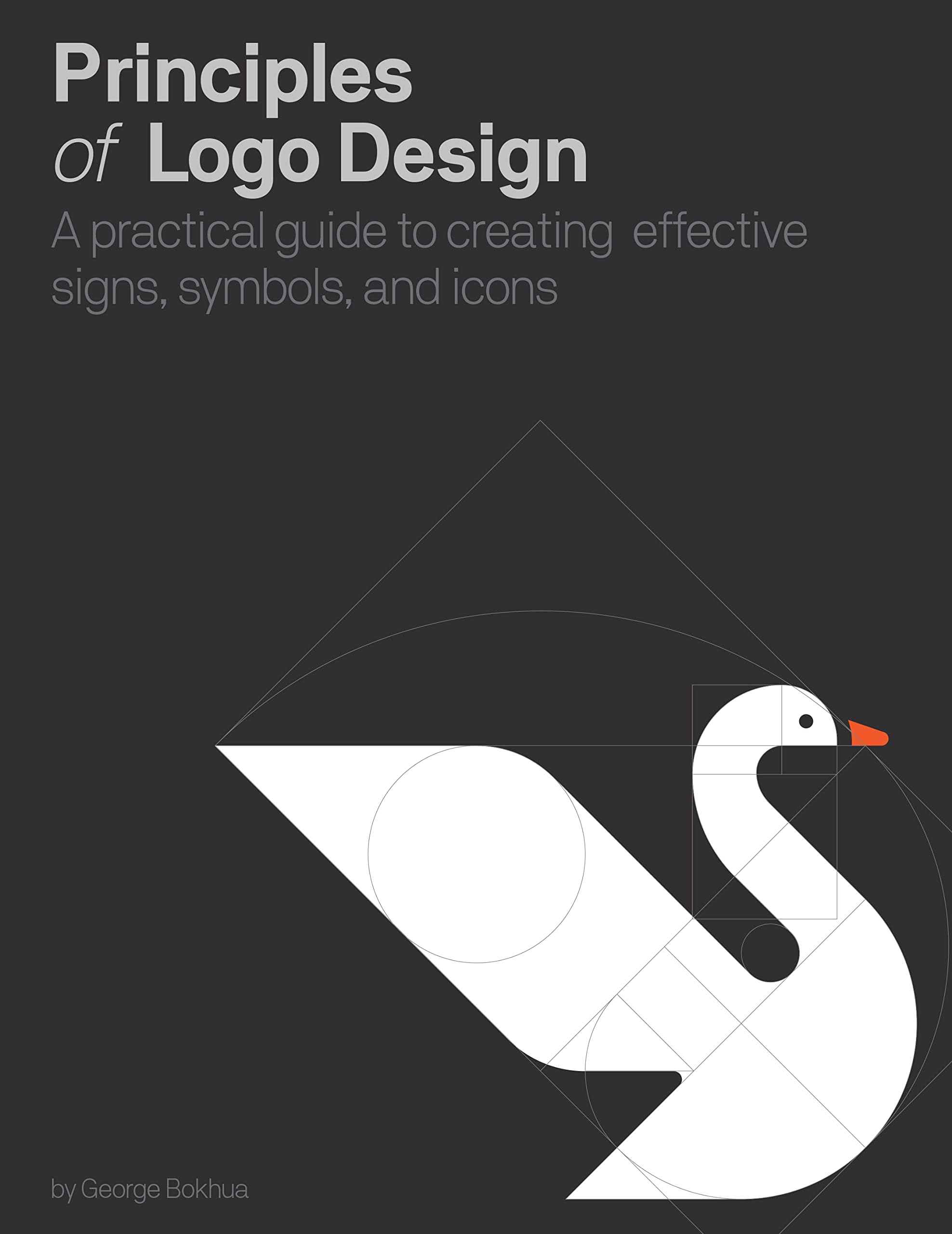
Learn to design simple, powerful, and timeless logos. *Winner of the 2022 American Graphic Design Award for Book Design from Graphic Design USA* When you think of a brand, often the first thing that comes to mind is the logo, the visual representation of that product, place, thing, or business. The power of simplicity for these marks can never be underestimated—a logo that comprises simple shapes can communicate a stronger message than a complex one, leaving a lasting impression in a viewer’s mind. In Principles of Logo Design , noted logo designer George Bokhua shares his process for creating logotypes that will stand the test of time . Applying the enduring principles of classic texts on grid systems by Josef Muller-Brockmann and on form and design by Wucius Wong, Bokhua elaborates on his popular online classes, demonstrating in detail how to maximize communication with minimal information to create logos using, simple, monochromatic shapes. This comprehensive volume includes: How to apply a strong, simple, and minimal design aesthetic to logo design Why gridding is important, and understanding the golden ratio and when to use it How to sketch and refine logos through tracing, then grid and execute a mark in Adobe Illustrator Fine-tuning techniques to ensure visual integrity Knowing how to design a great logo is a core skill for any graphic designer. Principles of Logo Design helps designers at all levels of skill and experience conceive, develop, and create logos that are not only pleasing to the eye but evoke a sense of perfection. Review: Insightful & Refreshingly Minimal — A Designer’s Fresh Perspective - As a designer with over eight years of experience—primarily focused on social media visuals, layouts, and campaigns—I approached Principles of Logo Design by George Bokhua expecting a solid refresher. What I encountered instead was a profound, eye-opening guide that fundamentally reshaped my understanding of visual identity. First Impressions From the outset, Bokhua's philosophy is clear: less is more. Through clean, monochromatic shapes and smart use of geometric foundations, the book showcases how logos achieve memorability through simplicity and structure. The emphasis on grid systems—particularly the golden ratio and classic teachings from Muller-Brockmann and Wucius Wong—felt like a design mantra I’d vaguely known, now explained with clarity and intention. What I Learned That Was New Precision through Grids & Golden Ratios: While I’d informally used alignment and spacing, Bokhua’s deeply methodical breakdown of how to launch a logo from grid to form was entirely new territory. Sketch-Trace-Refine Technique: The step-by-step approach—from freehand sketching to tracing, refining within grids, and then executing the mark in Illustrator—is a workflow I now can’t go without. Visual Integrity & Execution: Fine-tuning shapes to achieve perfect visual balance—even at small scales—was a detail I’d often overlooked in favor of speed. Understanding this as a core principle elevated my design thinking. Why It Resonated Although social media design thrives on vibrancy, motion, and often trend-driven aesthetics, this book reminded me of the foundational power of simplicity. A logo’s permanence lies in its purity—and Bokhua teaches that with elegance and depth. Final Thoughts If you're a designer already comfortable with color themes, Photoshop workflows, or branding for digital platforms, this is not just another strategy book—it’s a masterclass in timeless visual thinking. Bokhua’s approachable, well-structured narrative makes complex theories feel intuitive. For anyone attempting to go deeper into identity design—whether you come from UI, social media, or general graphic backgrounds—this volume is a revelation. It’s one of those rare books that expands both your mindset and your toolset. Highly recommended. Review: blend of artistic and systematic approach towards logo design - Very useful one, worth the money. Explained everything in simple language. Useful for designers who love to create icons and logos Especially. Blend of artistic and systematic approach towards logo designing.


| Best Sellers Rank | #25,655 in Books ( See Top 100 in Books ) #32 in Design #112 in Design & Fashion (Books) |
| Customer Reviews | 4.6 out of 5 stars 330 Reviews |
M**A
Insightful & Refreshingly Minimal — A Designer’s Fresh Perspective
As a designer with over eight years of experience—primarily focused on social media visuals, layouts, and campaigns—I approached Principles of Logo Design by George Bokhua expecting a solid refresher. What I encountered instead was a profound, eye-opening guide that fundamentally reshaped my understanding of visual identity. First Impressions From the outset, Bokhua's philosophy is clear: less is more. Through clean, monochromatic shapes and smart use of geometric foundations, the book showcases how logos achieve memorability through simplicity and structure. The emphasis on grid systems—particularly the golden ratio and classic teachings from Muller-Brockmann and Wucius Wong—felt like a design mantra I’d vaguely known, now explained with clarity and intention. What I Learned That Was New Precision through Grids & Golden Ratios: While I’d informally used alignment and spacing, Bokhua’s deeply methodical breakdown of how to launch a logo from grid to form was entirely new territory. Sketch-Trace-Refine Technique: The step-by-step approach—from freehand sketching to tracing, refining within grids, and then executing the mark in Illustrator—is a workflow I now can’t go without. Visual Integrity & Execution: Fine-tuning shapes to achieve perfect visual balance—even at small scales—was a detail I’d often overlooked in favor of speed. Understanding this as a core principle elevated my design thinking. Why It Resonated Although social media design thrives on vibrancy, motion, and often trend-driven aesthetics, this book reminded me of the foundational power of simplicity. A logo’s permanence lies in its purity—and Bokhua teaches that with elegance and depth. Final Thoughts If you're a designer already comfortable with color themes, Photoshop workflows, or branding for digital platforms, this is not just another strategy book—it’s a masterclass in timeless visual thinking. Bokhua’s approachable, well-structured narrative makes complex theories feel intuitive. For anyone attempting to go deeper into identity design—whether you come from UI, social media, or general graphic backgrounds—this volume is a revelation. It’s one of those rare books that expands both your mindset and your toolset. Highly recommended.
J**N
blend of artistic and systematic approach towards logo design
Very useful one, worth the money. Explained everything in simple language. Useful for designers who love to create icons and logos Especially. Blend of artistic and systematic approach towards logo designing.
R**L
Principal of logo design
Best rbook book logo design
T**E
Good paper quality
Paper quality is good overall liked it haven’t read it yet but satisfied on the quality part.
A**R
Must have for any Logo Designer
George Bokuah shares top-notch advice from his long experience in the field in this book. This is an excellent resource for anyone who wants to thoroughly learn and understand the intricacies and nuances of graphic & logo design. An asset for any symbol or logo designer.
A**E
Excellent book
Must buy book for both rookie and pro logo designers. A layman can also enjoy reading it.
J**S
Great book. Great design
Beatifully diagrammed & designed. Gorgeus paper.
J**S
Superb book by a pro!
Amazing understanding of this type of graphic design. Well recommended.
S**G
the best book you should have as a designer
love every page of this master pice
V**.
Great
Just as described, very usefull and sturdy hard covered book. Love it.
H**R
Disappointing
Both the content and format were disappointing. I found it strange to place logos at the center of a 2 page spread in a bound book.
Trustpilot
2 months ago
2 weeks ago