
قم بتنزيل التطبيق


معلومات عنا
حقوق الطبع والنشر © 2024 Desertcart Holdings Limited
قم بتنزيل التطبيق

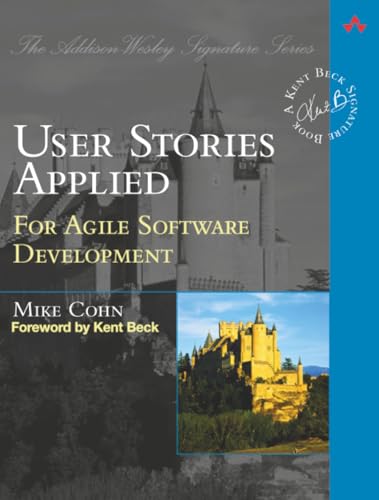
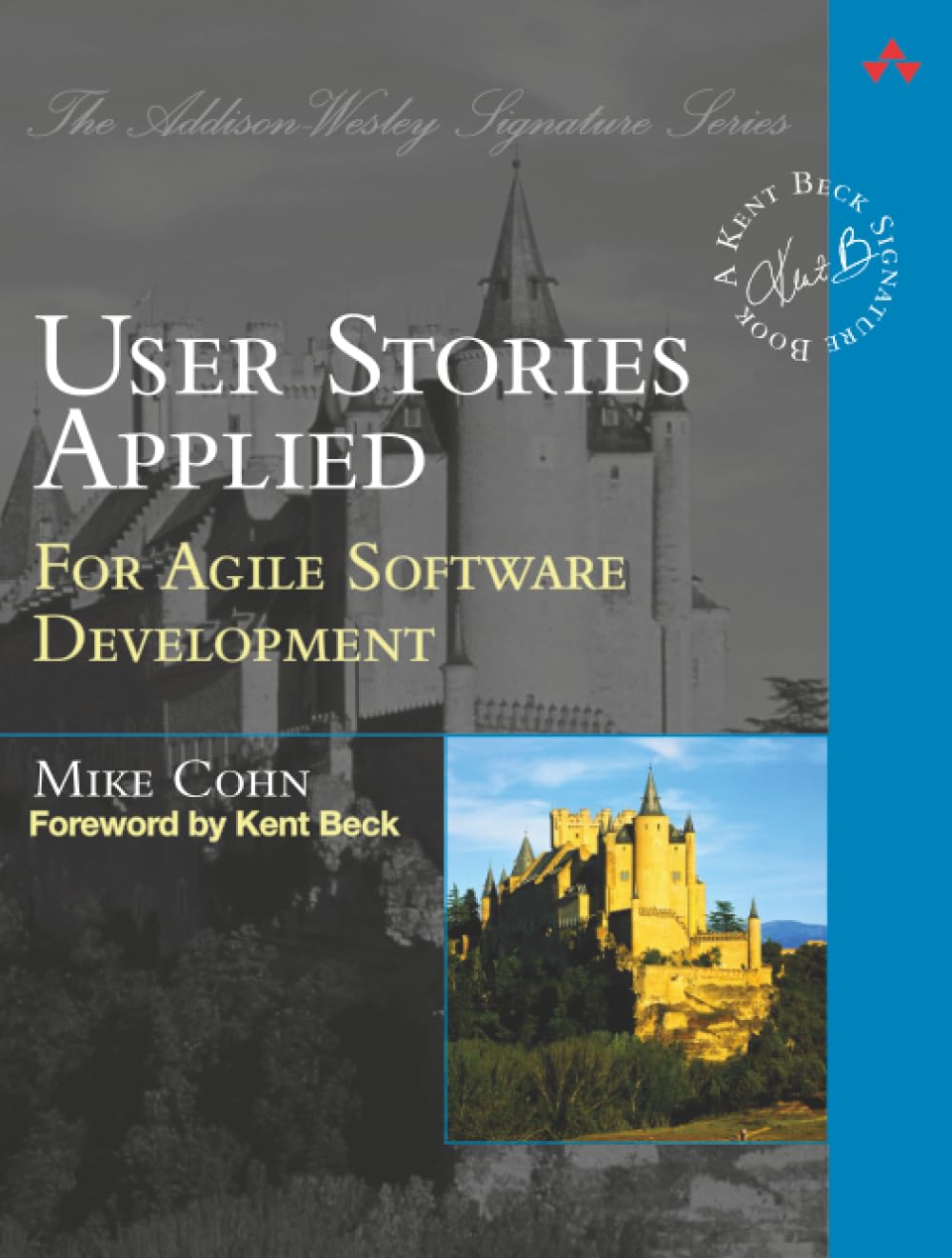
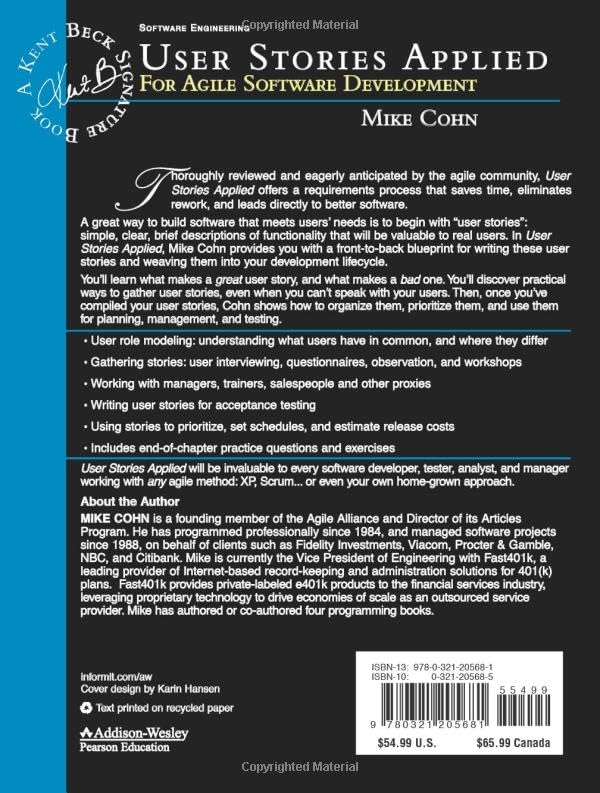
User Stories Applied: For Agile Software Development [Cohn, Mike] on desertcart.com. *FREE* shipping on qualifying offers. User Stories Applied: For Agile Software Development Review: Finally! Practical advice on writing user stories, and more - This excellent book is a must-have for anyone on an agile team - developers, testers, business experts, analysts - and for anyone who struggles with requirements, planning, or estimating on any software project. User Stories Applied is easy to read and digest. As the title suggests, its techniques are easy to apply and deliver huge value. Each chapter summarizes developer and customer responsibilities, and has questions whose answers are provided in an appendix. The book is full of real-life, concrete examples, allowing you to learn from the successes and failures of others. This book will give you many tools to help your projects succeed. Just a few of the most valuable topics: When are user stories too big, too small, too detailed, too general, too open ended, when are they not user stories, and how to correct all these. Why use user stories. How to handle requirements for infrastructure, performance, qualitative aspects, UI. How to ask questions to elicit requirements. How to cope when you don't have `on-site customers'. Practical ways to estimate stories. Monitoring velocity and progress. When to keep and when to discard artifacts. Mike explores the differences between stories and other techniques for delivering requirements: IEEE 380, use cases, scenarios. He points out many positive side effects of user stories, such as encouraging participatory design and tacit knowledge accumulation. I particularly like that the book emphasizes the team's responsibility to successfully complete each iteration. I enjoy Mike's illuminating bits of wisdom, such as the "everything takes 4 hours" example. I love the comprehensive example in Part IV. No matter what your level of experience, you'll put the ideas in this book to immediate and productive use. Review: Outstanding text that is easy to read and understand. - Mike Cohn's clear and digestible writing style makes him my favorite Agile author. This book continues that tradition. Of all the risks in any software development project, the most dangerous (possibly fatal) risk is not bad code or incomplete tests - it is getting the requirements wrong. The impact can be anywhere from highly dissatisfied clients to unemployed development teams. One of biggest advantages of Agile development is that it directly addresses the reality of changing system requirements and how to keep a project aimed directly for the key business goal even in such a fluid environment. User Stories, and how they are used in an Agile Project Management context, are a key tool in ensuring project success (AKA client satisfaction). Project Managers, Scrum Masters, Lead Developers, QA and Test Leads, Product Owners as well as Business Analysts should read this text. So much of software development process thinking has to do with "doing the thing, in right manner" (AKA good system-building technique). This book covers "doing the right thing" (AKA building the right product).


| Best Sellers Rank | #150,055 in Books ( See Top 100 in Books ) #25 in Software Design & Engineering #99 in Software Development (Books) #357 in Computer Software (Books) |
| Customer Reviews | 4.6 4.6 out of 5 stars (589) |
| Dimensions | 7 x 0.67 x 9.25 inches |
| Edition | 1st |
| ISBN-10 | 0321205685 |
| ISBN-13 | 978-0321205681 |
| Item Weight | 1.1 pounds |
| Language | English |
| Part of series | Addison-Wesley Signature Series (Beck) |
| Print length | 296 pages |
| Publication date | March 1, 2004 |
| Publisher | Addison-Wesley Professional |
L**N
Finally! Practical advice on writing user stories, and more
This excellent book is a must-have for anyone on an agile team - developers, testers, business experts, analysts - and for anyone who struggles with requirements, planning, or estimating on any software project. User Stories Applied is easy to read and digest. As the title suggests, its techniques are easy to apply and deliver huge value. Each chapter summarizes developer and customer responsibilities, and has questions whose answers are provided in an appendix. The book is full of real-life, concrete examples, allowing you to learn from the successes and failures of others. This book will give you many tools to help your projects succeed. Just a few of the most valuable topics: When are user stories too big, too small, too detailed, too general, too open ended, when are they not user stories, and how to correct all these. Why use user stories. How to handle requirements for infrastructure, performance, qualitative aspects, UI. How to ask questions to elicit requirements. How to cope when you don't have `on-site customers'. Practical ways to estimate stories. Monitoring velocity and progress. When to keep and when to discard artifacts. Mike explores the differences between stories and other techniques for delivering requirements: IEEE 380, use cases, scenarios. He points out many positive side effects of user stories, such as encouraging participatory design and tacit knowledge accumulation. I particularly like that the book emphasizes the team's responsibility to successfully complete each iteration. I enjoy Mike's illuminating bits of wisdom, such as the "everything takes 4 hours" example. I love the comprehensive example in Part IV. No matter what your level of experience, you'll put the ideas in this book to immediate and productive use.
A**R
Outstanding text that is easy to read and understand.
Mike Cohn's clear and digestible writing style makes him my favorite Agile author. This book continues that tradition. Of all the risks in any software development project, the most dangerous (possibly fatal) risk is not bad code or incomplete tests - it is getting the requirements wrong. The impact can be anywhere from highly dissatisfied clients to unemployed development teams. One of biggest advantages of Agile development is that it directly addresses the reality of changing system requirements and how to keep a project aimed directly for the key business goal even in such a fluid environment. User Stories, and how they are used in an Agile Project Management context, are a key tool in ensuring project success (AKA client satisfaction). Project Managers, Scrum Masters, Lead Developers, QA and Test Leads, Product Owners as well as Business Analysts should read this text. So much of software development process thinking has to do with "doing the thing, in right manner" (AKA good system-building technique). This book covers "doing the right thing" (AKA building the right product).
B**E
The definitive reference on User Stories
User stories are a method of capturing requirements which was originally introduced in the extreme programming method. User stories are commonly described as "a promiss for a conversation" and are often recorded on index cards (at least, originally). Mike Cohn's book takes the user story practice out of Extreme Programming and shows how it can be used in general in different methods. The key-idea of user stories is that conversations and understanding via documentation is often wasteful and inefficient. User Stories describes a requirement in such a way that we can remember it in the future. At the time the requirement is ready to be implemented, we'll discuss the requirement in more detail. That way we can delay some of the requirement analysis and move it closer to when we implement it. This reduces "requirement inventory" and can lead to less waste in the development process. Whether and how to use user stories in your project depends on many different variables and user stories explained will explain the details of user stories, the different types of user stories and give plenty of examples. All this is needed for a better understanding and for deciding how user stories can help you on your project. The book is well written, though personally I found that it contained too much text. There was quite much repetition and that made the book slightly boring after a 100 pages. It could have been written with less text, in my opinion. Another drawback of the book was that the examples given didn't feel real enough. It would have been nice to cover some larger projects and also discuss how user stories would work on these. In conclusion, User Stories Applied is the definitive and only reference on user stories and when interested in user stories or when working with user stories, this is an absolute must!
C**N
Coté contenu du livre : Le livre est extra. Il m'apporte pas d'éclaircissements sur les users stories et me permet de gagner en efficacité sur ce domaine. Coté état su livre : Une trace de cutter de 5 cm sur le livre. heureusement que le coup de cutter n'a pas été trop loin. Dommage. je fais donc attention pour ne pas provoquer la déchirure mais je garde le livre. J'ai mis un bout de scotch qui fait l'affaire.
N**N
I read it multiple times over the past ten years as this book has standardised most of the Agile ways of working. The book is relevant to all Agile practitioners irrespective of the framework they use even after 16 years of its publication!!! You will learn all about user stories, how to split them, guidelines and bad smells of user stories. You will understand user roles vs personas and so on. The author also talked about Agile estimating and planning. However, I would strongly recommend that you read the other book on Agile estimating and planning by the same author. The author walks us through a hypothetical website creation for us to better understand. All the chapters are like "short" night time stories. And the examples stick to your mind.
S**F
Pure Gold! The first chapter will convince you why User stories are orders of magnitude better than the use cases you know and love. Each of the subsequent short chapters is tightly focused and covers a key aspect of user stories (e.g. writing good stories, user profile mapping. using stories in planning and estimating etc.). As you go through the book, you can see how the different pieces of user stories fit together and how user stories themselves fit into a software development process. (The book itself leans heavily towards an agile process such as Scrum or XP although the exact process does not really matter) Despite its directness and succinctness, it is a very engaging and thought-provoking book. If you want to understand behaviour-driven development, specification-by-example or user story mapping (each of which is adequately in a book by a key populariser/practitioner of the respective technique) you should really read this book first. And even if you never practice any of those techniques, you should still read this book if you want to learn how to capture software requirements effectively in the modern, agile, test-driven world. It is one of that crop of brilliantly written, painstakingly edited software engineering books written by luminaries in their fields, that were published by Addison-Wesley in the 2000s: Refactoring by Fowler, Test-Driven Deveopment by Beck, this book, Pattern-oriented software architecture I and II, Patterns of Enterprise Software Integration (Fowler et. al.) and many others. They remain as relevant and thought-provoking today as when they were first written.
C**N
Altro autore di riferimento per l'agile. Da leggere se interessa la metodologia. Linea guida semplice e di buon senso. Da studiare
S**P
Very well written book. It explains everything you need to understand Agile (a collaborative process involving customer and developers) and use it to deliver software that meets user expectations in an incremental way that allows for changes along the way, and achieve greater customer satisfaction, based on a more realistic approach for planning and estimating. The book is filled with clear examples. Most chapters end with a summary, questions (answered in an Appendix), customer and developer responsibilities. There is a whole process case study in an Appendix.
ترست بايلوت
منذ شهرين
منذ 3 أسابيع