We remain fully operational. Our teams are working around the clock to ensure your deliveries continue safely.
قم بتنزيل التطبيق


معلومات عنا
حقوق الطبع والنشر © 2024 Desertcart Holdings Limited
قم بتنزيل التطبيق
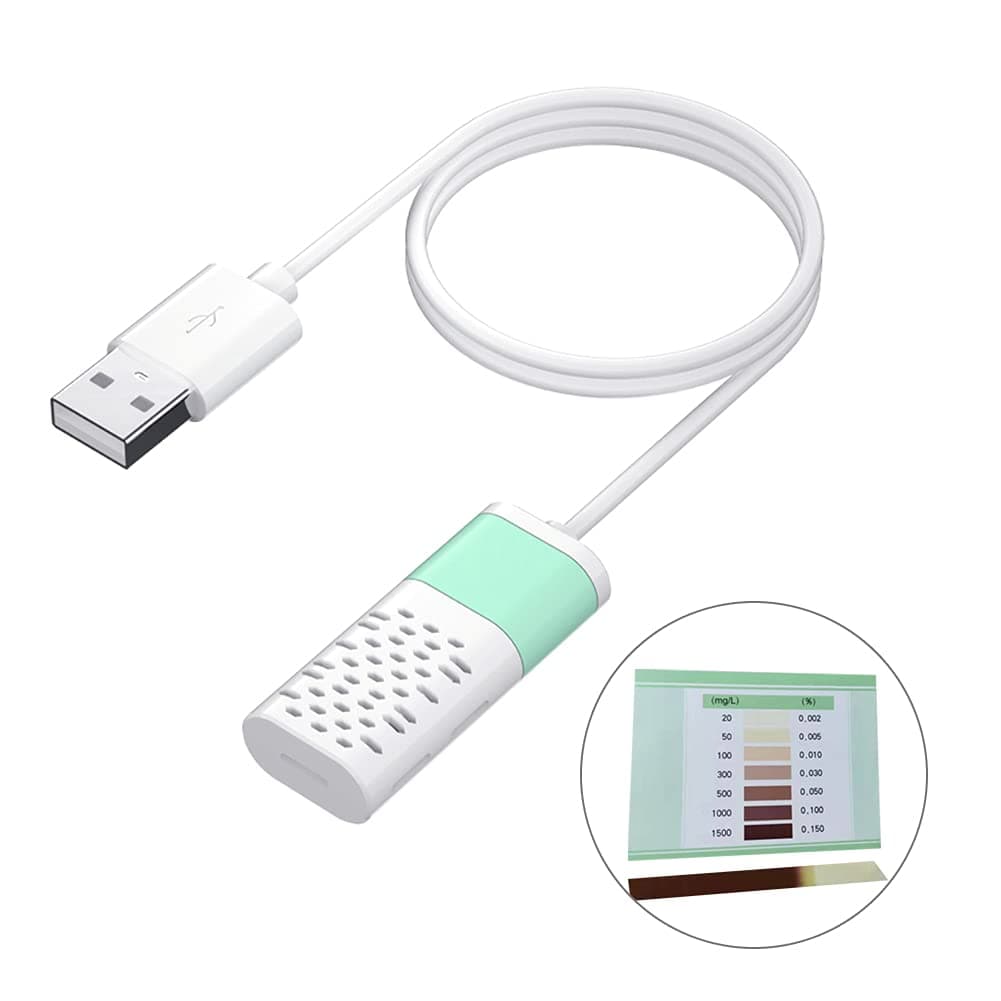
🧼 Clean smarter, save bigger—your personal bleach lab in a pocket!
The PWPAM Sodium Hypochlorite Generator uses 10 watts of electric power and electrolysis technology to convert salt and water into a multi-purpose cleaning solution. Compact and USB-powered, it includes chlorine test strips for precise concentration monitoring. This eco-friendly device offers a cost-effective, safe alternative to commercial bleach, perfect for household and travel use.


| ASIN | B08SMD6WRF |
| Additional Features | Lightweight, Portable |
| Best Sellers Rank | #29,275 in Patio, Lawn & Garden ( See Top 100 in Patio, Lawn & Garden ) #159 in Swimming Pool Chlorine |
| Brand Name | PWPAM |
| Color | Green |
| Customer Reviews | 4.4 4.4 out of 5 stars (386) |
| Engine Power Maximum | 10 Watts |
| Engine Type | 4 Stroke |
| Frequency | 50 Hz |
| Fuel Type | electric |
| Included Components | USB cable, Chlorine test strips, Measuring spoon, English User manual |
| Item Dimensions L x W x H | 1.8"L x 1"W x 0.4"H |
| Item Weight | 0.05 Pounds |
| Manufacturer | SZJH |
| Material Type | ABS, Titanium |
| Model Name | Generator |
| Model Number | G06-L |
| Output Wattage | 10 Watts |
| Power Source | Electric Powered |
| Recommended Uses For Product | Residential |
| Running Wattage | 10 Watts |
| Runtime | 40 minutes |
| Starting Wattage | 10 Watts |
| UPC | 798904886782 |
| Unit Count | 1.0 Count |
| Voltage | 5 Volts |
| Wattage | 10 watts |
E**K
Easy to use; Use a cheper, safer, but equally effective bleach solution made at home.
This product is pretty solid. The weak point is that it would have been nicer to have more detailed instructions, like a table indicating the process and the resultant strengths, but you can do that work yourself with some test strips and a little google. Get yourself chlorine test strips so you know how strong your final solution is. Following the given instructions gives you about 200ppm, which is enough to make a good bleach disinfectant spray for cleaning hard surfaces. Give it more salt and a longer processing time, you should be able to get a solution up to 1% or so, which approaches strong enough to use as bleach. You'll probably need to use 2-3x as much to get the same result as commercial store-bought bleach, but that's not a problem because this amount costs you less than a penny. Although the cost savings could be huge if you're a person who uses a lot of bleach, the biggest plus here is that the bleach solution you get through this electrolysis process will be much safer than anything you buy at the store. Commercial bleach is stabilized with caustic lye, tends to be pretty nasty stuff. Make no mistake, this is chlorine, but the product you make with this process will not be considered "hazardous", unlike store-bought bleach. Also unlike the harsher chemicals in commercial bleach products, these are completely safe for the environment. What you make will decay back into ordinary salt water within a couple weeks. As a side benefit, you can also use this device to make Hypochlorous Acid, with the small addition of an acid to the process. Something like citric acid is best, but you can also get a decent result with acetic (vinegar) acid. This is useful as both a disinfectant and an antiseptic for topical purposes; and also is something that could be sprayed on fresh produce before rinsing to harmlessly disinfect any surface microbes. All in all, this device, while inexpensive, offers very high value for the price, as long as the person using it is willing to do a little bit of research to ensure they're using it safely and effectively.
C**L
Good product, does what i need it for
Product works well, and does what i need it for. Easy to use, no setup, ready to use out of box.
B**S
Best purchase in years!
After reading about hypochlorous acid, I purchased this to simplify my cleaning routine. It's non-toxic when used properly, cheap and easy to make, and most importantly, very effective. I work in an environment that is germ-infested (lots of children around), and I can spray this stuff on anything without worrying about hurting someone. I also use it as hand sanitizer and a face refresher. I make 800mL at a time in a medium-sized Mason jar. I use reverse osmosis water from the grocery refill station with 1tsp each of iodine-free salt and vinegar, then let the device do its thing for about 2 hours in the garage (some chlorine off-gassing that could be dangerous). The concentration turns out to over 200ppm and pH of about 5, which is effective to disinfect in about 30 seconds or less. I have it stored in amber colored spray bottles away from heat and sunlight (they cause the solution to become ineffective quickly) and the leftovers go in the fridge (label to prevent drinking). There is a slight chlorine odor when spraying and using. It's safe to use on anything, including your skin and pets. DO NOT INHALE FUMES when transferring liquid!
J**N
Makes hypochlorous acid if done right
A good basic unit. Overall it seems to work quite well, and produces the same hypochlorous acid that the expensive units do at a fraction of the price. The included instructions aren't quite so insightful, so from my research here is what I came up with. 100ml of water, 1ml of vinegar, and 0.25g of salt. This should be a neutral to slightly acidic PH. If your water starts out more basic, you will need to add more vinegar. If your PH is neutral to slightly acidic, you will get more hypochlorous acid. If it is more basic, you will get more hypochlorite (aka bleach). I premix a bottle with a bunch of vinegar and salt measured out into it with an eye dropper with a 1ml mark on it. Makes it quick and easy. The one star knock off is that it is not built great and you can see that the plates are a bit loose inside, but it does work. Of course verify everything yourself and be cautious with any chemistry you conduct on your own. Test strips are vital when getting started.
D**A
So far so good. Be sure to rinse well between uses or it will likely corrode. Note that any single-cell electrolysis of salt will produce bleach. You need to acidify (for example with vinegar) to get the pH down to the 3.5 to 5.5 range to maximise hypochlorous acid in the solution. Best to add the vinegar in advance, since if you add it after running the device you will create a lot of toxic chlorine gas all at once. By adding vinegar in advance, you get the same amount of chlorine gas but it is produced gradually so it's easier to vent or disperse. The recipe I'm using to generate hypochlorous acid suitable for a topical (skin surface) antiseptic is as follows: In a tall glass or jar add 200 mL of filtered water, 1/2 tsp of pickling salt (or any non-iodized salt), and 3/4 tsp of regular white vinegar (typically 5% acetic acid). Stir until the salt is completely dissolved. Use a 1A@5V adapter. Submerse the device and run it for 15 minutes, stirring occasionally. Be sure to rinse the device well after use. Then use the test strips and dilute with water if necessary to reduce strength. The acidification with vinegar is needed because, in single-cell electrolysis of aqueous NaCl, you get OH- ions also produced, and they make the resulting solution alkaline (giving hypochlorite "bleach"). If you wanted to generate hypochlorous acid directly, without addition of acid, you'd need to run dual-cell electrolysis, with a salt bridge between the two cells. Then one cell (cathode I *think*... been a while...) would contain your hypocholorous acid, the other would contain sodium hydroxide (lye) solution. You could tell which was which by a sniff test - the hypochlorous side would smell of chlorine. Or a pH test, the lye side would have the significantly higher pH. This device is only suitable for single-cell electrolysis. But it still gives usable hypochlorous acid if you acidify appropriately. It won't give you the same quality as commercial hypochlorous acid, which is (surely) produced using dual-cell electrolysis. Full 5/5 stars since they do advertise it as a sodium hypochlorite (i.e. bleach) generator, not a hypochlorous acid generator. Bonus that it *is* at least possible to get hypochlorous acid by using the additional acidification step!
D**I
These work fantastic and deliver as they state. I have 2 of them and make cleaning solution.
T**A
Works as it should
A**N
This product makes BLEACH. It does not make hypochlorous acid. "Sodium hypochlorite solution" is bleach (NaOCl). It is effective at producing bleach and makes a fairly concentrated solution fairly quickly. There is chlorine off-gassing during the operation of the device, so make sure to ventilate your space. Operation is fast and effective. I wish the English instructions on this website were provided with the device - the box I received was primarily in Chinese.
K**Y
No test strips included.
ترست بايلوت
منذ أسبوعين
منذ شهرين