
قم بتنزيل التطبيق


معلومات عنا
حقوق الطبع والنشر © 2024 Desertcart Holdings Limited
قم بتنزيل التطبيق
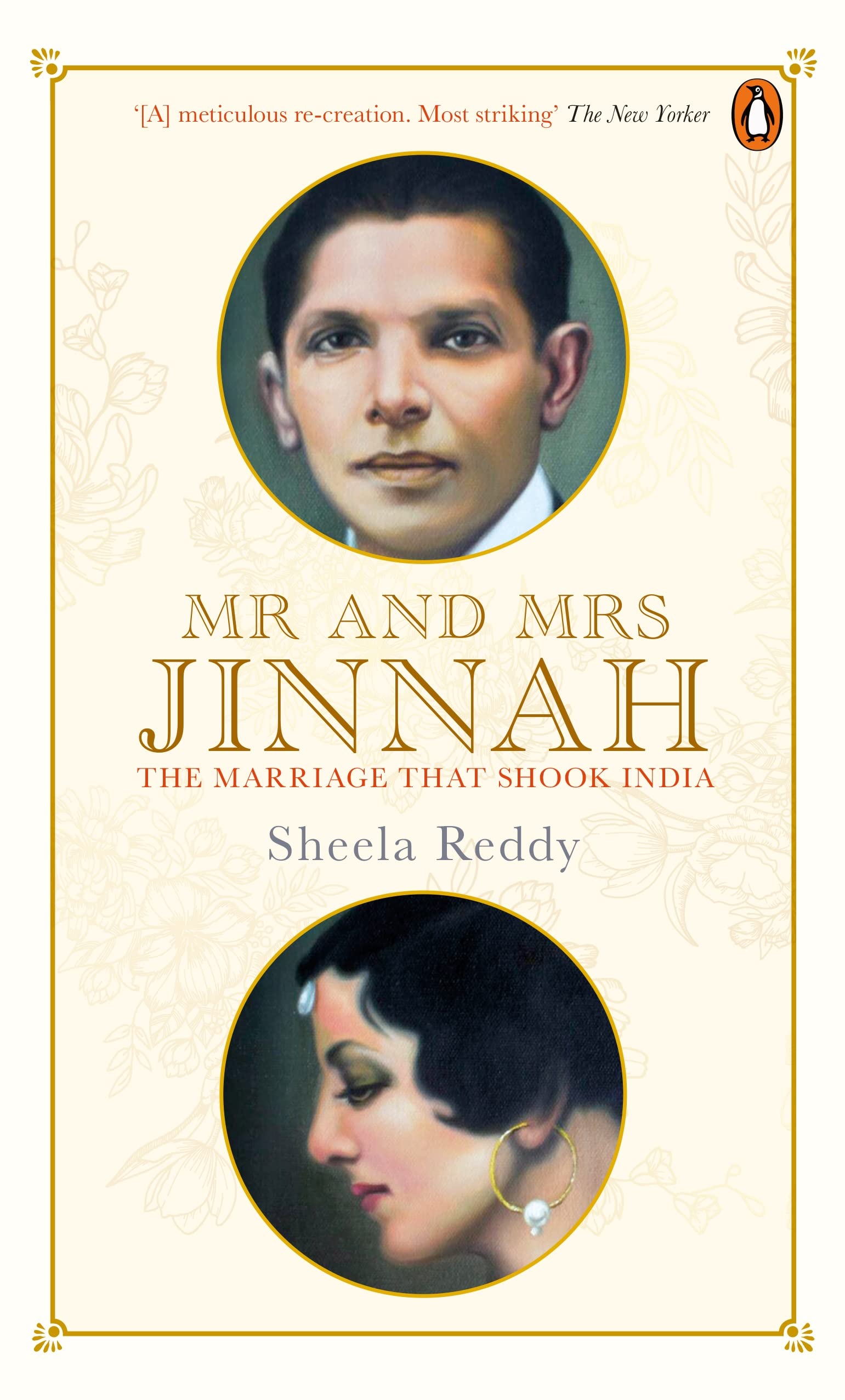
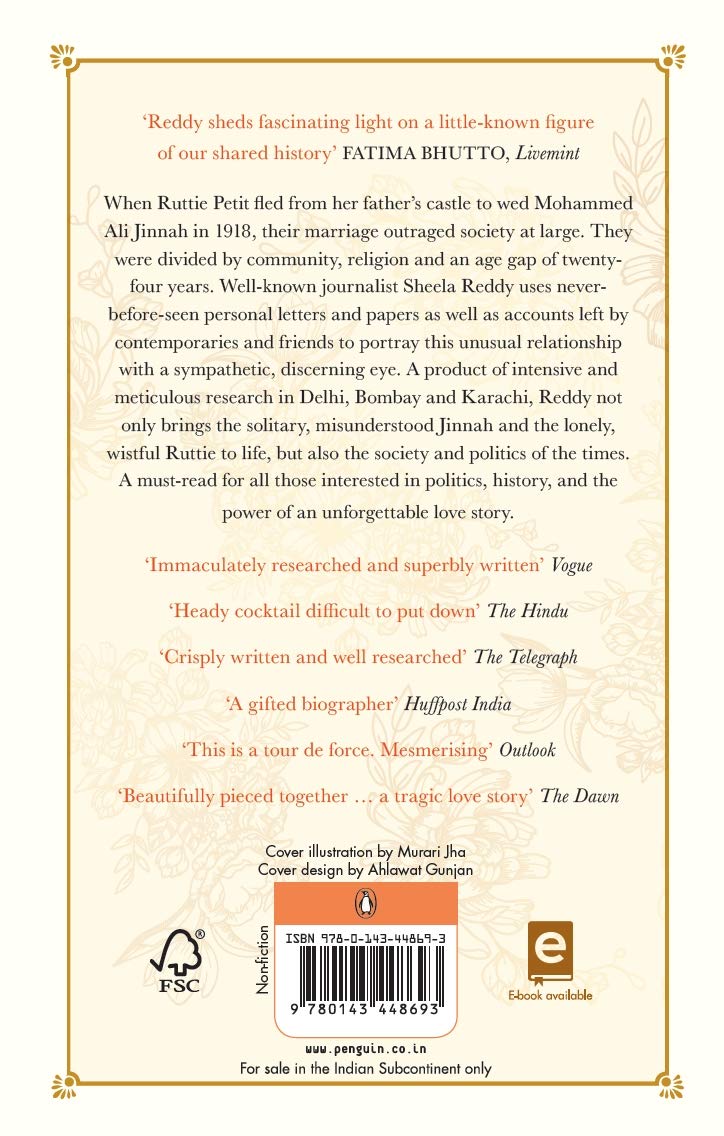
Mr and Mrs Jinnah (PB)
A**R
A beautifully written and well researched book
A beautifully written and well researched book. An indepth look at the history of the times and the intricate revelations of the central characters as well as all their associates. A tragic end to an exquisitely beautiful young girl and her journey.
S**I
Tedious but fine
It was a bit tedious read, I felt the book was also biased on some parts, rather than stating the facts the author went out of the way to express an ' opinion'. Still it was a good read, it created quite a bit of an atmosphere of the pre independence era and highlighted the culture and the differences well.
A**Y
Reading this book is like romancing the Bombay of old
Reading this book is like romancing the Bombay of old. Empty spaces, gorgeous villas, the "new" Bandra & the "old" Colaba and amongst them a man who changed the destiny of India.The book primarily revolves around Jinnah and his wife Rutie's blossoming romance, later the married life and in the end the estrangement which encapsulated Jinnah's mind in how he perceived the world. Things were not black and white anymore, but grey. The other actors involved in the book are filthy rich businessmen, well-known freedom fighters and their views on the Jinnah-Rutie relationship. One other highlighting aspect of the book is Jinnah's frosty relationship with M.K.Gandhi. Surprisingly the details are quite vivid and at least unknown to me before.So if somebody wants to understand the mind of a man who partitioned India, it would be a good book to read. However a lot of chapters are dedicated to his wife too. I thoroughly enjoyed it though.
L**U
Fascinating design
Although, I am sure this is not the intended design, I find it quite amusing.
P**M
An Amazing tale of Mr n Mrs Jinnah
Jinnah is not seen as a nationalist in freedom struggle n his personal life is not very well known. Sheela Reddy has done meticulous work in putting together story of their life in a lucid manner. A great book to read n enjoy about a person who so much misunderstood in India.
A**I
He loved to pontificate and hold forth about politics in private ...
Mr and Mrs Jinnah.This book draws on the marital life of Mohammed Ali Jinnah and Maryam Jinnah ( born Ruttiebhai Petit), the scandal of their marriage, their life together afterwards till Ruttie’s death.There are three stories in the book actually. One of their marriage, and another of Jinnah’s political journey ( goes without saying it covers a lot of the freedom struggle, Gandhi, Muslim League etc), and third covers the unique relationship between Sarojini Naidu & Ruttie.Ruttie belongs to a family of Parsi Baronets ( she is also related to the Tata’s and is practically Parsi Royalty) and Jinnah’s family were originally Hindus from Kathiawar. His grandfather was a trader in fish and was ostracised by their community. His father ( Jinnah’s) thus converted his entire family to Muslims.Its ironic that the father of Pakistan seemed in no way really keen for a separate nation( in this book at least). Nor was he an avid follower of the faith ( he smoke ,drank and ate pork). Neither was he militant nor unreasonable. He was a fastidious man who went to England to study and modelled himself on the ideal of an English Statesman both sartorially and attitudinally. Not sentimental , a work horse and one who dint believe in "Holidays" and relaxation. He loved to pontificate and hold forth about politics in private durbars.Ruttie on the other hand was bought up in the lap of luxury. As was wont of those times ( in rich households), she was raised by an army of nannies and governesses, and was spoiled for creature comforts. Her parents kept a keen eye on her, her three brothers and their health & progress. They were hosts par excellence and their parties ( the house even) was stuff of legends. Not to mention, the women in their house were very progressive and had given up Purdah a long while ago.Jinnah was Ruttie’s fathers age or older and it came as a big shock to the Baronet when Jinnah asked for Ruttie’s hand. Their marriage created a big uproar, and both of them were shunned by the entire Parsi community and the Muslim community. The Parsi Panchayat went as far to say their women need to go back to Purdah and need to be curtailed. Ruttie’s family had to expressly disown her in order not to be treated like pariah themselves. All the Maulanas and Maulvis were aghast at Jinnah’s choice. Ruttie’s provocative clothing choices added fuel to the fire. Even within his own household, his single sister ( Fatima Jinnah) was not for this alliance and resented being shunted off to her older sisters residence to make way for the new bride.Their second shunning came when Jinnah criticised Gandhi openly. Jinnah as a political figure seemed to always be against the tide and believed in fighting through the courts, through debate and carefully structured arguments. He viewed Gandhi ( and so did many others) as an eccentric with hair brained schemes and solutions. He was in the forefront of politics and was tipped to be one of the leaders of free India.The two characters are ( husband and wife) are diametrically opposite in temperament , approaches, social preferences and even food. The marriage was doomed from the beginning as Jinnah is a man with a cold facade who believed revealing emotions spelled weakness in character and Ruttie was madly in love and was heavily influenced by all the romantic poets and literature she read. Having lead a protected life , she imagines the life they would lead full of adventure, exploration, and romance.The authour clearly projects Jinnah to be one blind to his wives feelings and hardships( she recurrently falls ill in her later life). She also hints that her illness was a result of her depression more than any real ailment. Growing up she was used to much socialising and having people around always. Her marriage led her to lose all her Parsi friends, his political choices further narrowed their social life. Finally her own recklessness and need for attention made her dress tantalisingly ( putting it mildly :)), chain smoke, experiment with drugs. It is hinted in the book that she attempted suicide several times. She had no one to share her anguish with on the "marriage ice" ( her term) that she had to endure for years.Ruttie for her part is disillusioned but tries very hard to be his support system. She curates every thing from his clothes, his house and even his meals. They have a child( Dina Jinnah) and tragically Ruttie mirrors his coldness to her , with the child. Sheela Reddy almost goes to say that the child was entirely raised by a battery of support staff. It baffles one to think that the child was not named till she was nine years of age!!!! This was not just Ruttie’s attitude, but Jinnah’s as well.On the other hand, there is an intense graph that projects Ruttie’s dependency on Sarojini and her family. She is shown to be hyper attached to her pets and Sarojini. She even spurns her moms offer for help and decides to make demands on Sarojini instead ( who is torn in all directions on account of her political and personal commitments). She alternately vexes Sarojini in her latter years and makes her anxious with her bouts of ill health, fading vivaciousness and even her will to live. Sarojini treats her on par with her own children. She is known to have been close to both Jinnah and Ruttie. But she does not try to meddle with their relationship.Somehow the authour has stayed completely away from the formation of Pakistan and Jinnah’s role in it, while consistently giving hints to its build up. Jinnah was a formidable man , who for the better part of his political career seemed to be playing the one step forward, two steps back ward game. As a professional though he achieved great success and earned enough wealth to bankroll Ruttie and even quit his career at will. He seems to be someone whose motivation and drive superseded normal drives and this burning need to be a national leader, led him to neglect his wife, child, sister and householder duties. In a bittersweet letter after she leaves him , Ruttie does inform him that she was unhappy in the marriage in her poetic way ( “Try and remember me beloved as the flower you plucked and not the flower you tread upon”.)He seemed to have paid a heavy price for it and suffered regrets on that account.It was enlightening read( and wee tedious or even frivolous at times). Story goes now that Dina Wadia ( true to her blood she chose to defy her father and a marry a Parsi ) is demanding that her fathers house in Mumbai be handed over to her and not be considered an evacuee house.Deliciously Ironic Excerpt from Roses in December (Mahommedali Currim Chagla, who was Jinnah’s assistant at the time)“Jinnah asked Dina ‘there are millions of Muslim boys in India, is he the only one you were waiting for?’ and Dina replied, ‘there were millions of Muslim girls in India, why did you marry my mother then?’”
S**I
Best book I have ever read!
This is the best book I have ever gone throughGives a complete insight of the personal life of Mr. Jinnah the most enigmatic leader of modern history!You completely get lost into that time The Old Bombay, The petit hall and what not while reading itWell researched and presented by Miss.Sheela
D**N
Searing story
This hauntingly beautiful portrait of Ruttie, Jinnah’s wife, is priceless not just because of her story, but also because the author has quoted verbatim lyrical letters written on her by Sarojini Naidu.Set in the 15 years post WW1, book will delight those interested in the independence struggle. Jinnahs’s journey from the liberal statesman he was to the man he finally became is mapped in detail. The book also gives us a reminder of the personal sacrifices made by our freedom fighters.The author combines her experience in journalism with her obvious talent in story telling to bring you a gripping book. Some matter is duplicated in the book, but in different contexts, but all in all a must read.
ترست بايلوت
منذ أسبوعين
منذ أسبوعين