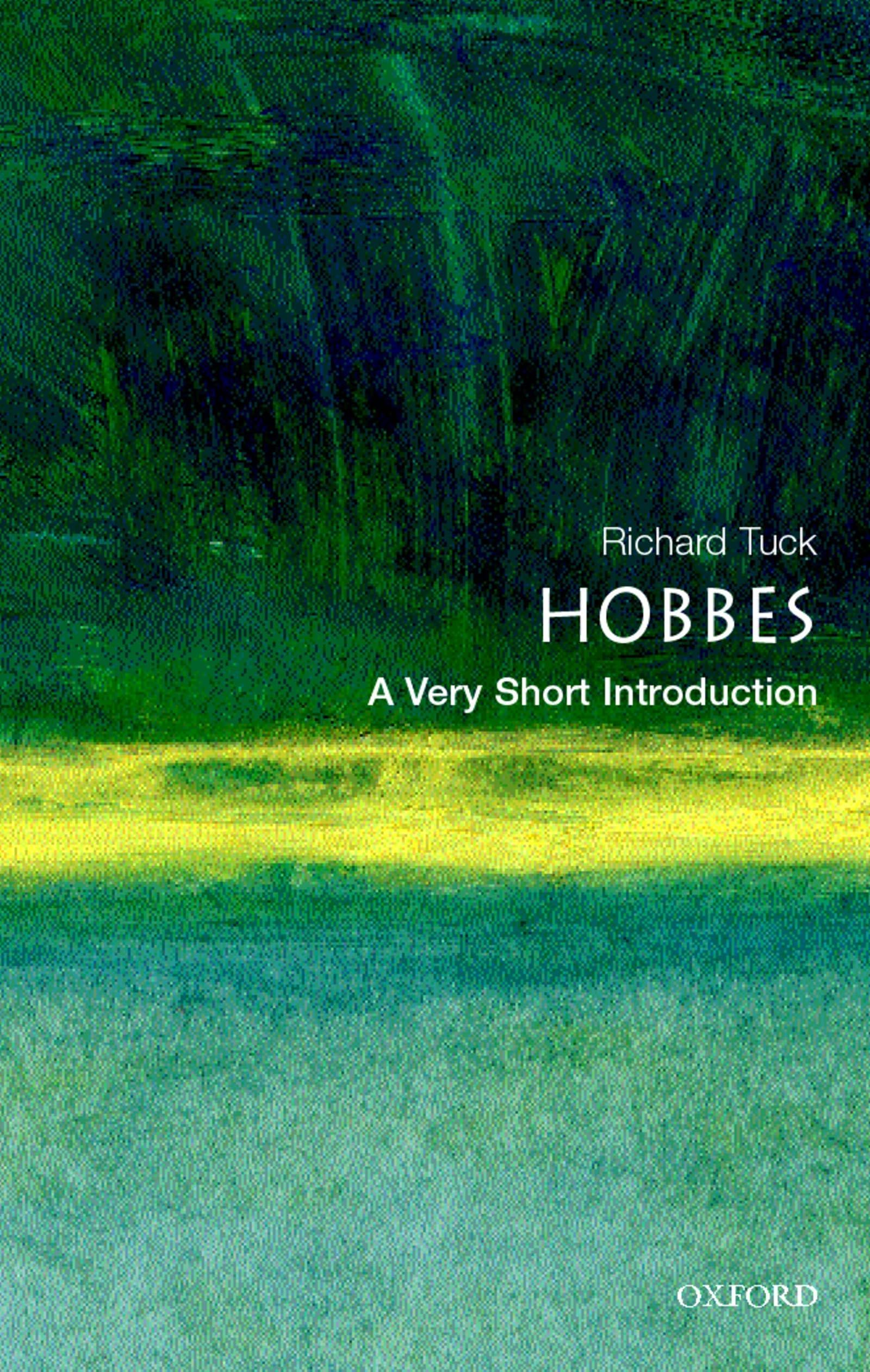
Hobbes: A Very Short Introduction
Product ID: 29637901
Desertcart purchases this item on your behalf and handles shipping, customs, and support to Israel.
Thomas Hobbes (1588-1679) was the first great English political philosopher, and his book Leviathan was one of the first truly modern works of philosophy. Richard Tuck shows that while Hobbes may indeed have been an atheist, he was far from pessimistic about human nature, nor did he advocate totalitarianism. By locating him against the context of his age, we learn that Hobbes developed a theory of knowledge which rivaled that of Descartes in its importance for the formation of modern philosophy. Review: An authoritative introduction to the first great English political philosopher - The author starts by telling us "Hobbes created English-language philosophy". Really? What of Francis Bacon, to whom Hobbes once acted as amanuensis? Poor Bacon does get a brief, grudging mention later on. The description in the blurb of Hobbes as "the first great English political philosopher" is probably more accurate. Certainly he is important, in a broad Western context. He was central to the transition from medieval to modern thought, and was a strong influence on Rousseau and others. Tuck is an expert guide (despite his inexplicable slighting of Bacon) and his style is very readable. This introduction covers Hobbes's life, works and intellectual legacy. Reliable and informative, it is highly recommended as an introduction to, and summary of, Hobbes's ideas, but to better appreciate the context, you might want to read (dare I say it?) Bacon's Essays first. Review: A Good, But Not Great, Introduction - Thomas Hobbes is one of the more obscure of the important philosophers of history. He is, of course, best known for "Leviathan", and its political theory of the absolute authority of the sovereign ruler. What Richard Tuck does well in this book is to locate Hobbes within a larger philosophical context which explores in intricate detail Hobbes's biography. Attention is given to Hobbes's metaphysics, a point often overlooked in introductory remarks on Hobbes's theory. All in all this makes the book very informative. The drawback here is that Tuck has written the book with so much thorough attention given to background and context that it feels as though the meat of Hobbes's philosophy gets lost in translation. Sure, Tuck offers up plenty of reflection on philosophy, but it feels like Hobbes's philosophy isn't the focal point of the book, which makes this read a bit unusual. That said, the good nevertheless outweighs the bad, and I'd recommend this little book to anyone looking to learn more about this important figure.

| Best Sellers Rank | #1,393,543 in Books ( See Top 100 in Books ) #839 in History of Philosophy #1,537 in Modern Western Philosophy #73,032 in Biographies (Books) |
| Customer Reviews | 4.6 out of 5 stars 93 Reviews |
P**E
An authoritative introduction to the first great English political philosopher
The author starts by telling us "Hobbes created English-language philosophy". Really? What of Francis Bacon, to whom Hobbes once acted as amanuensis? Poor Bacon does get a brief, grudging mention later on. The description in the blurb of Hobbes as "the first great English political philosopher" is probably more accurate. Certainly he is important, in a broad Western context. He was central to the transition from medieval to modern thought, and was a strong influence on Rousseau and others. Tuck is an expert guide (despite his inexplicable slighting of Bacon) and his style is very readable. This introduction covers Hobbes's life, works and intellectual legacy. Reliable and informative, it is highly recommended as an introduction to, and summary of, Hobbes's ideas, but to better appreciate the context, you might want to read (dare I say it?) Bacon's Essays first.
C**.
A Good, But Not Great, Introduction
Thomas Hobbes is one of the more obscure of the important philosophers of history. He is, of course, best known for "Leviathan", and its political theory of the absolute authority of the sovereign ruler. What Richard Tuck does well in this book is to locate Hobbes within a larger philosophical context which explores in intricate detail Hobbes's biography. Attention is given to Hobbes's metaphysics, a point often overlooked in introductory remarks on Hobbes's theory. All in all this makes the book very informative. The drawback here is that Tuck has written the book with so much thorough attention given to background and context that it feels as though the meat of Hobbes's philosophy gets lost in translation. Sure, Tuck offers up plenty of reflection on philosophy, but it feels like Hobbes's philosophy isn't the focal point of the book, which makes this read a bit unusual. That said, the good nevertheless outweighs the bad, and I'd recommend this little book to anyone looking to learn more about this important figure.
C**N
A very short (and very good) introduction.
I was very impressed by the author's extensive discussion of the historical and philosophical context in which Hobbes was writing. That helped me understand the author's discussion of Hobbes' beliefs and what Hobbes thought the implications to be. The issues about which Hobbes wrote continue to be critically important, even though I suspect that few of us would find Hobbes' answers satisfactory.
J**M
Buy it. You won't regret it.
This entire series of 'Very Short Introductions' is a small miracle in itself. Each volume clearly and succinctly written, understandable, entertaining, covers in jewel-colored patterns: would that I could collect the whole lot of them! I think you cannot be disappointed by any one of the books offered in this expanding project.
M**I
Very Nice Overview
This is a short, concise, and well written overview of Hobbes and his major works. The author also includes a brief discussion of how Hobbes works may have (possibly) been tinged by the English Civil War. I read the kindle version in about three hours, and I feel I definately understand Hobes (the man) better after reading this brief study.
G**R
This is why I love the VSI series
At their best, the VSI series is arguably the greatest series of introductory volumes on different thinkers and subjects currently being published. Part of it is that many of the volumes are republications of volumes in earlier series by Oxford, the Past Masters and Present Masters series. Tuck's volume on Hobbes is one of those republications. One can easily see why the VSI series editors felt no need to seek out a new publication on Hobbes. Tuck's book is outstanding in content and organization. That organization is very simple. A chapter on Hobbes life and his relationship with his contemporaries and with some earlier thinkers highlights Hobbes relationship to Montaigne, Machiavelli, Descartes and Grotius. The second chapter on Hobbes' theories is a masterpiece of compression. In 55 well-written pages, Tuck ties together the whole of Hobbes' writings into a coherent argument. The third chapter is a history of reaction to Hobbes by other thinkers. I like this chapter unlike one of the reviewers below. Tuck guides us through the reaction of Hume, Kant, the Utilitarians, Toennis, Leo Strauss, C.B. Macpherson, Cassirer, Oakeshott, Quentin Skinner and some lesser lights. As always with the VSI series there is a guide to further reading, a good index, their outstanding format and reasonable price. There may be better books on Hobbes. One of the reviewers below mentions a book by Johann Sommerville. Unfortunately it sells on Amazon for over $50. So my recommendation is read Tuck, read Leviathan and then seek out Sommerville in a library. That's my plan.
J**E
Good very short introduction
I was able to read this entire little book in much less than a day. Especially interesting was the first section, "Hobbes' Life", which described the relationships between philosophers of that time, both between each other and society. The section on Hobbes' philosophy was also well done, and very informitive. The section on interpretations of Hobbes' didn't seem to have a point. It covered the fine distinctions modern scholars are making, which is well outside the scope of a book introducing someone to Hobbes. As this section can simply be skipped it didn't take away from the book, despite it's questionable value.
S**I
Worth while Readi g
Great introduction to Hobbes and many 16 and 17th century philosophers. Relatively easy read and comprehend for a philosophical litrature.
A**W
Great primer
Thomas Hobbes is very difficult to understand and I could never follow the old English language of the original Leviathan. But Richard Tuck puts forward a good explanation of how he sees Hobbes and it's worth reading for the points Richard raises.
G**O
製品は使いやすくて、とても満足しています。
製品は使いやすくて、とても満足しています。
A**R
Very useful and necessary
Very useful and necessary book.
P**E
Four Stars
A very interesting and comprehensive introduction to Hobbes and to the problematics his philosophy underline.
R**I
Simple and helpful
Like all the books in this series they provide a brief overview in an easy to understand format.
Trustpilot
2 days ago
2 weeks ago