

Buy anything from 5,000+ international stores. One checkout price. No surprise fees. Join 2M+ shoppers on Desertcart.
Desertcart purchases this item on your behalf and handles shipping, customs, and support to Israel.
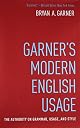
desertcart.com: Garner's Modern English Usage: 9780190491482: Garner, Bryan: Books Review: Use the right words, and use words right [ahem] correctly. This is the best work in its class. - This 2016 edition makes 'Garner's Modern' arguably the best usage dictionary of English ever published. It is notably expanded from the final 'Modern American Usage' edition of 2009, having an entire short book's worth of additional material. Given the difference in page and print size, probably the entirety of 'The New York Times Manual of Style and Usage' could fit within the material Garner added in his new edition. The changes include not only internationalization, but also evidence-based evaluations of changing usage. In this, the work is presently unique, as well as timely, as we enter the second Internet generation. It also features a near-perfect balance between descriptive linguistics and prescriptive advice, with the latter based on logic and the goal of clear communication. In this respect, it (like its earlier editions) happily parts ways from the majority of the heavily prescriptive works, which have a tendency to arbitrary proclamations based on authorial or institutional preference (often excessively nationalistic in ways that defy actual reality), and over-reliance on tradition to the point of ossification. Garner, a lawyer as well as a lexicographer, is no 20-something blogger who thinks making your text "pop" with "coolness" is more important than professional-quality prose that won't look ridiculous in 5 years when your precious buzzwords sound corny (for a good laugh in this vein, pick up a used copy of the once oh-so-hip 'Wired Style: Principles of English Usage in the Digital Age'). Garner is not afraid to lay down a rule – a best practice – when ones seems warranted, unlike some other 21st-century style guides, but he gives clear rationales. He is, however, careful about legitimate dialectal variance, and of the distinctions between different registers of formality. While I describe 'Garner's' as a usage dictionary (like 'Fowler's Dictionary of Modern English Usage', 4th ed. , 'The Associated Press Stylebook', 2015 ed. , and 'New Oxford Dictionary for Writers and Editors', rev. ed. ), It also has short essays on various topics of style and grammar included among the shorter entries, and a separate table of contents for them. Note: This book also supersedes 'The Oxford Dictionary of American Usage and Style', a compressed version of an earlier edition of 'Garner's Modern American Usage'. When Garner does get prescriptive, his tone can be a bit mock-harsh, and less coddling that some others' writing advice, but plenty of us would consider this a strength. Garner also has the lawyer's gift for weaving dry, isolated facts into a persuasive flow, making the book difficult to put down despite being mostly an alphabetical list of items that, taken individually, are trivia. The cross-referencing, consistency, and comprehensiveness of the work rapidly build up an unexpected level of synergy between entries after only a few page skimmings; in-depth reading is very rewarding, despite the entry-based format. This kind of writing is solidly grounded in the "plain English" principles advanced by Orwell and Gowers, being concise, clear, and certain in its purpose, without being terse or dull. It's not like reading a Webster's dictionary. Perhaps the only real flaw in 'GMEU' is that Garner is a writer and editor – an applied user of language more than a student of it – and not an academic linguist, so his usage of certain linguistic terms can be a bit loose at times, both in this book and some of this other works If you have limited bookshelf or desk space, the three references you most need for writing today, for a modern, world-wide audience, are ' 'The Chicago Manual of Style', 16th ed. (North American formal style); 'New Hart's Rules' (international formal style; use Ritter's 2005 edition , as the more recent "update" badly lost its sense of purpose, seeming afraid to actually recommend anything much of the time); and perhaps above all this new edition of 'Garner's Modern Usage'. Both 'Chicago' and 'New Hart's' are style manuals in the chapter-based sense, covering grammar, punctuation, capitalization, italics, citations, etc., in a more programmatic fashion that Garner's essays in the present volume, though he wrote the grammar chapter of 'Chicago', and a greatly expanded version of that material is forthcoming as of this writing, under the title 'The Chicago Guide to Grammar, Usage, and Punctuation' (may 2016). It is no longer necessary to have a comprehensive paper dictionary around if you live or work in tight quarters, since the advent of OxfordDictionariesOnline.com, Dictionary.Cambridge.org, and (with entires from both Random House and Collins) Dictionary.com, all of which are freely available. If you have more room, also get the aforementioned other usage dictionaries. For one thing, the 'AP Stylebook' is essential for the North American variety of less formal journalism and marketing style (for British/Commonwealth news and PR writing, see the various online style guides maintainedt by 'The Guardian', 'The Economist', and other UK newspapers; there is no British equivalent of the monolithic 'AP Stylebook'). If you need to cover science and technology, add 'Scientific Style and Format: The CSE Manual for Authors, Editors, and Publishers', 8th ed. (a chaptered style manual, invaluable for its coverage of numbers and units, just for starters). Even if you are not much of a writer, 'Garner's' will be great subway/bus reading, though it is not a lightweight book. It will be of more benefit to the average person than any guide to business or student writing when it comes to usage. It certainly contains much more value than a dozen of the cutesy little advice books with funny names. If you need help with the basic mechanics of writing well – grammar, punctuation, sentence structure, good paragraph formation – see 'The Elements of Style', 4th ed for the gist, or any of the various college and university textbooks on English composition (though be prepared to pay textbook prices). An affordable crash course, however, can be found in 'The McGraw-Hill Handbook of English Grammar and Usage', 2nd ed. But get 'Garner's', too. Because this new edition is actually tracking the trajectories of many aspects of language change (i.e., it's telling you the direction in which shifting usage is moving, how fast, and how far), this may well be the only style guide available in 2016 that will still be useful in 2026. Review: A worthy heir to Fowler - For most of the 20th century, a single book dominated the market as the authoritative reference in matters of grammar, style, and usage in the English language: "A Dictionary of Modern English Usage" by H.W. Fowler, first published in 1926, ably revised by Sir Ernest Gowers in 1965, and now in its fourth edition. But by the century's last quarter, the modern English language -- particularly its American dialect -- had begun outgrowing Fowler, and several newer guides began competing with it. The third (1996) edition of Fowler was a disappointment, and left the field without a clear leading authority. That gap was filled in 1998, when Bryan A. Garner wrote "A Dictionary of Modern American Usage" (published by the Oxford University Press, which also published Fowler). Finally, someone had written a book that matched Fowler -- not only in its erudition, but also in its accessible style, and even its wry sense of humor. And Garner's book had the advantages of being written both in modern times for a modern audience, and in the United States by an American author about American English. The book is a gem, and as authoritative a reference as you will find in this field in the last several decades (and probably the next several too). "Garner's Modern English Usage" is this oustanding work's fourth edition. The second and third editions were retitled as "Garner's Modern American Usage" after their author, in view of the acclaim that the first edition earned. This new edition has been retitled as "Garner's Modern English Usage" because over the years the book, while rooted in American English, has taken a "broadly inclusive approach to World English, not just to American English and British English." Each new edition has built upon the prior editions, and the fourth edition is no exception. The first edition was a dictionary of words in usage, rather than words about usage, and therefore assumed that the reader possessed a certain working knowledge of basic grammatical terms and concepts. For example, the first edition didn't define such basic terms as "sentence," "phrase," "clause," "word," or "part of speech." The second edition appended a glossary that defined many such basic concepts. (It also appended, as did the first edition, an 11-page chronology of books about usage, which illustrates both the rich tradition that Garner's work joins, as well as the tremendous resources upon which he drew in producing his book.) The third edition added the Language Change Index, which tracks the language as it evolves over time: after all, sometimes yesterday's nonstandard slang is today's standard usage, and the Language Change Index "measure[s] how widely accepted various linguistic innovations have become." The fourth edition also adds the most comprehensive analysis of actual usage in the history of lexicography, using Google and other online resources that weren't available to previous generations of researchers. As one linguist wrote after the first edition appeared, "[H.W.] Fowler, it would appear, is alive and well" in Bryan Garner's magnum opus. This usage dictionary is an indispensable resource for anyone who is serious about using the English language both correctly and artfully.
| Best Sellers Rank | #235,307 in Books ( See Top 100 in Books ) #100 in Grammar Reference (Books) #113 in Words, Language & Grammar Reference #120 in Linguistics Reference |
| Customer Reviews | 4.8 4.8 out of 5 stars (469) |
| Dimensions | 10.1 x 2.7 x 7.4 inches |
| Edition | 4th |
| ISBN-10 | 0190491485 |
| ISBN-13 | 978-0190491482 |
| Item Weight | 4.7 pounds |
| Language | English |
| Print length | 1120 pages |
| Publication date | April 8, 2016 |
| Publisher | Oxford University Press |
S**H
Use the right words, and use words right [ahem] correctly. This is the best work in its class.
This 2016 edition makes 'Garner's Modern' arguably the best usage dictionary of English ever published. It is notably expanded from the final 'Modern American Usage' edition of 2009, having an entire short book's worth of additional material. Given the difference in page and print size, probably the entirety of 'The New York Times Manual of Style and Usage' could fit within the material Garner added in his new edition. The changes include not only internationalization, but also evidence-based evaluations of changing usage. In this, the work is presently unique, as well as timely, as we enter the second Internet generation. It also features a near-perfect balance between descriptive linguistics and prescriptive advice, with the latter based on logic and the goal of clear communication. In this respect, it (like its earlier editions) happily parts ways from the majority of the heavily prescriptive works, which have a tendency to arbitrary proclamations based on authorial or institutional preference (often excessively nationalistic in ways that defy actual reality), and over-reliance on tradition to the point of ossification. Garner, a lawyer as well as a lexicographer, is no 20-something blogger who thinks making your text "pop" with "coolness" is more important than professional-quality prose that won't look ridiculous in 5 years when your precious buzzwords sound corny (for a good laugh in this vein, pick up a used copy of the once oh-so-hip 'Wired Style: Principles of English Usage in the Digital Age'). Garner is not afraid to lay down a rule – a best practice – when ones seems warranted, unlike some other 21st-century style guides, but he gives clear rationales. He is, however, careful about legitimate dialectal variance, and of the distinctions between different registers of formality. While I describe 'Garner's' as a usage dictionary (like 'Fowler's Dictionary of Modern English Usage', 4th ed. , 'The Associated Press Stylebook', 2015 ed. , and 'New Oxford Dictionary for Writers and Editors', rev. ed. ), It also has short essays on various topics of style and grammar included among the shorter entries, and a separate table of contents for them. Note: This book also supersedes 'The Oxford Dictionary of American Usage and Style', a compressed version of an earlier edition of 'Garner's Modern American Usage'. When Garner does get prescriptive, his tone can be a bit mock-harsh, and less coddling that some others' writing advice, but plenty of us would consider this a strength. Garner also has the lawyer's gift for weaving dry, isolated facts into a persuasive flow, making the book difficult to put down despite being mostly an alphabetical list of items that, taken individually, are trivia. The cross-referencing, consistency, and comprehensiveness of the work rapidly build up an unexpected level of synergy between entries after only a few page skimmings; in-depth reading is very rewarding, despite the entry-based format. This kind of writing is solidly grounded in the "plain English" principles advanced by Orwell and Gowers, being concise, clear, and certain in its purpose, without being terse or dull. It's not like reading a Webster's dictionary. Perhaps the only real flaw in 'GMEU' is that Garner is a writer and editor – an applied user of language more than a student of it – and not an academic linguist, so his usage of certain linguistic terms can be a bit loose at times, both in this book and some of this other works If you have limited bookshelf or desk space, the three references you most need for writing today, for a modern, world-wide audience, are ' 'The Chicago Manual of Style', 16th ed. (North American formal style); 'New Hart's Rules' (international formal style; use Ritter's 2005 edition , as the more recent "update" badly lost its sense of purpose, seeming afraid to actually recommend anything much of the time); and perhaps above all this new edition of 'Garner's Modern Usage'. Both 'Chicago' and 'New Hart's' are style manuals in the chapter-based sense, covering grammar, punctuation, capitalization, italics, citations, etc., in a more programmatic fashion that Garner's essays in the present volume, though he wrote the grammar chapter of 'Chicago', and a greatly expanded version of that material is forthcoming as of this writing, under the title 'The Chicago Guide to Grammar, Usage, and Punctuation' (may 2016). It is no longer necessary to have a comprehensive paper dictionary around if you live or work in tight quarters, since the advent of OxfordDictionariesOnline.com, Dictionary.Cambridge.org, and (with entires from both Random House and Collins) Dictionary.com, all of which are freely available. If you have more room, also get the aforementioned other usage dictionaries. For one thing, the 'AP Stylebook' is essential for the North American variety of less formal journalism and marketing style (for British/Commonwealth news and PR writing, see the various online style guides maintainedt by 'The Guardian', 'The Economist', and other UK newspapers; there is no British equivalent of the monolithic 'AP Stylebook'). If you need to cover science and technology, add 'Scientific Style and Format: The CSE Manual for Authors, Editors, and Publishers', 8th ed. (a chaptered style manual, invaluable for its coverage of numbers and units, just for starters). Even if you are not much of a writer, 'Garner's' will be great subway/bus reading, though it is not a lightweight book. It will be of more benefit to the average person than any guide to business or student writing when it comes to usage. It certainly contains much more value than a dozen of the cutesy little advice books with funny names. If you need help with the basic mechanics of writing well – grammar, punctuation, sentence structure, good paragraph formation – see 'The Elements of Style', 4th ed for the gist, or any of the various college and university textbooks on English composition (though be prepared to pay textbook prices). An affordable crash course, however, can be found in 'The McGraw-Hill Handbook of English Grammar and Usage', 2nd ed. But get 'Garner's', too. Because this new edition is actually tracking the trajectories of many aspects of language change (i.e., it's telling you the direction in which shifting usage is moving, how fast, and how far), this may well be the only style guide available in 2016 that will still be useful in 2026.
B**Z
A worthy heir to Fowler
For most of the 20th century, a single book dominated the market as the authoritative reference in matters of grammar, style, and usage in the English language: "A Dictionary of Modern English Usage" by H.W. Fowler, first published in 1926, ably revised by Sir Ernest Gowers in 1965, and now in its fourth edition. But by the century's last quarter, the modern English language -- particularly its American dialect -- had begun outgrowing Fowler, and several newer guides began competing with it. The third (1996) edition of Fowler was a disappointment, and left the field without a clear leading authority. That gap was filled in 1998, when Bryan A. Garner wrote "A Dictionary of Modern American Usage" (published by the Oxford University Press, which also published Fowler). Finally, someone had written a book that matched Fowler -- not only in its erudition, but also in its accessible style, and even its wry sense of humor. And Garner's book had the advantages of being written both in modern times for a modern audience, and in the United States by an American author about American English. The book is a gem, and as authoritative a reference as you will find in this field in the last several decades (and probably the next several too). "Garner's Modern English Usage" is this oustanding work's fourth edition. The second and third editions were retitled as "Garner's Modern American Usage" after their author, in view of the acclaim that the first edition earned. This new edition has been retitled as "Garner's Modern English Usage" because over the years the book, while rooted in American English, has taken a "broadly inclusive approach to World English, not just to American English and British English." Each new edition has built upon the prior editions, and the fourth edition is no exception. The first edition was a dictionary of words in usage, rather than words about usage, and therefore assumed that the reader possessed a certain working knowledge of basic grammatical terms and concepts. For example, the first edition didn't define such basic terms as "sentence," "phrase," "clause," "word," or "part of speech." The second edition appended a glossary that defined many such basic concepts. (It also appended, as did the first edition, an 11-page chronology of books about usage, which illustrates both the rich tradition that Garner's work joins, as well as the tremendous resources upon which he drew in producing his book.) The third edition added the Language Change Index, which tracks the language as it evolves over time: after all, sometimes yesterday's nonstandard slang is today's standard usage, and the Language Change Index "measure[s] how widely accepted various linguistic innovations have become." The fourth edition also adds the most comprehensive analysis of actual usage in the history of lexicography, using Google and other online resources that weren't available to previous generations of researchers. As one linguist wrote after the first edition appeared, "[H.W.] Fowler, it would appear, is alive and well" in Bryan Garner's magnum opus. This usage dictionary is an indispensable resource for anyone who is serious about using the English language both correctly and artfully.
D**7
The best usage guide available.
Snoots can rejoice with the release of Garner's Modern English Usage--the fourth edition of Garner's Modern American Usage, renamed to reflect the its wider scope. I was looking forward to this new edition, and it's well worth it. Garner is a masterly lexicographer and his usage guides have always been authoritative, insightful, witty, and highly readable. This one is no exception. You'll find yourself looking up a word or phrase only to be sidetracked by other interesting entries that catch your eye along the way. The most notable new feature of the fourth edition is the inclusion of data from Google Ngrams, which are explained in the preface. Garner incorporates this big data into his entries, and provides ratios of the number of times recommended forms are used in the Ngram database with the number of times a particular variant form is used. This takes a lot of the guesswork and speculation out of the recommendations, and bolsters the credibility of the guide. If you already have the third edition of Garner's Modern American Usage, this edition is likely to be more a luxury than a necessity. But if you're looking for a usage guide and are unfamiliar with Garner's previous work, I strongly recommend Garner's Modern English Usage.
W**N
The very bese usage guide for English.
This is the Bible of usage. If you have an interest in English as a language, this is the one reference you need. It isn't cheap, but it is the best. I taught college English before my retirement, and I still need to check something now and then. It even shows you how the language is changing and which usage choice is most popular -- and by how much.
N**A
Journey of research I have started some years before has now ended after believing on this Best Book till date I had.
H**J
English usage の定番辞典とも言える Garner’s Modern American Usage の第4版。 改版にあたり題名の American Usage が English Usage に変更された。英語はいま や American とか British の枠をこえ、ビジネスと学術の世界では lingua franca つ まり World Englishとなっているからだ。 GMEUの特色は、ある語法とその異形(variant)の使用頻度を Google Ngram Viewer を使って調べ、その使用比率を示していることだ。例えば、bride-to-be と bride-elect の比率は 9:1 としている。また言葉というものは常に変化する。 GMEUは、Language-Change Index を次の5段階に分けた。 Stage 1 (Rejected) Stage 2 (Widely shunned) Stage 3 (Widespread but) Stage 4 (Ubiquitous but) Stage 5 (Fully accepted) たとえば、bride-elect (for bride-to-be) は Stage 2というぐあい。そのほか、 lawyer; attorney; counsel; counselor など類語の違いについても、わかりやすい 解説があり、たいへん参考になる。 GMEUは1000頁を超える大型本(25.7×6.6×18.8 cm)であり十分に網羅的だが、ど んな辞書も、知りたいことがすべて載っているわけではない。例えば、 goods は 商 品を意味するときはふつう複数形であるが、サミュエルソンやマンキューの経済学教 科書は個別の商品を a good と書いている。ビジネス英語辞典は good を a thing that is made to be used or sold などと定義している。つまり経済学用語という限 定つきながら認知しているが、このような言い方の Language-Change Index は何 なのか? Garner 先生の見解をただしたいところだが、本書には残念ながら 記載が ない。
B**O
Still has slight American English bias but justified by that being the dominant modern usage globally. I love the paper. Still has some minor bugs in presentation and usability. Worst part is Amazon’s packing. The two copies i bought separately both have dented corners and damaged dust covers. If you really love books, buy from a physical store.
E**S
I won't belabor a point here that was made much better in an excellent article by David Foster Wallace on the first edition of this excellent guide to English writing: you can find it on the Internet, I think, just by searching. He lays out the reasons why this guide is so special, why its scholarship is impeccable, why it has gained (and deserves) such an unassailable reputation for integrity and thoroughness in the task at hand. This is an excellent work for anyone wishing to write next-level English prose, or even someone (such as, for example, my non-native-speaking partner) who wants to navigate the oftentimes difficult and seemingly arbitrary finer points of how to write in English. I can't recommend it enough; it should be a necessary addition to the reference library for anyone who wants to write seriously.
P**S
A mainstay for writers. I have the previous version also—this one is better.
Trustpilot
1 month ago
2 days ago