
قم بتنزيل التطبيق


معلومات عنا
حقوق الطبع والنشر © 2024 Desertcart Holdings Limited
قم بتنزيل التطبيق


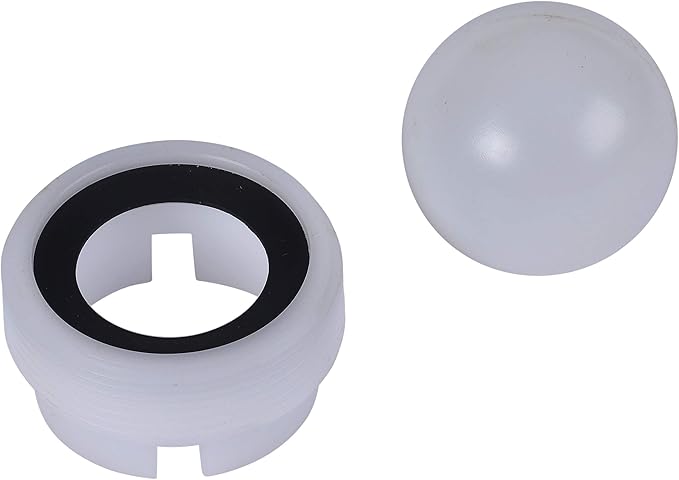


🚫💧 Stop backups before they start — your plumbing’s silent guardian!
The Oatey 42725 Backwater Valve Device is a compact, ASTM-certified plumbing component designed to convert standard 2-inch floor drains into reliable backwater valves. Made from durable polypropylene and PVC, it features a precision-fit male LPS connection and a sealing ball mechanism to prevent sewage backup and flooding, ensuring long-lasting protection for your home’s drainage system.





| Manufacturer | Oatey |
| Part Number | 42725 |
| Product Dimensions | 5.08 x 5.08 x 7.62 cm; 40.82 g |
| Item model number | 42725 |
| Size | 2 inches |
| Material | Polyvinyl Chloride (PVC) |
| Item Package Quantity | 1 |
| Number of Pieces | 1 |
| Certification | ASTM |
| Batteries included? | No |
| Batteries Required? | No |
| Item Weight | 40.8 g |
R**N
Fits my 1940's basement floor drain "P-Trap drain" just perfectly. Finally got the old one out and this dropped in like a charm. Be aware the rubber rim is thin and not robust material. The seal, when I originally installed it, was very good. However... I tried to lube it up with WD40 after it was installed, thinking that might tighten the seal, since it did upleak a tiny bit when my washing machine is trying to force-feed a tub-full of water down the basement drain (only enough to very slightly fill the drain's cup). However the WD40 corrupted the rubber, causing it to buckle & crinkle and therefore it started leaking way too much. I then tried Dupont Silicone spray, which is supposed to be safe on rubber. I guess it was the volatiles used in the spray delivery, because it buckled again and I had to replace it with a fresh one. Which, thanks to the low price of this item, is not painful. It would be nicer if this had a nice big faux-rubber "O" ring that could withstand some crap instead of a thin, obviously real-rubber skirt, but as long as I don't do anything stupid, I think the seal this provides is solid enough, and will hopefully last a while. Make sure to pair it with a water-leak alarm just in case ;) P.S. Yes my antique cast-iron 1939 version of this ball valve was difficult to get out... it was rusted in there good. Finally the light bulb came on, and I grabbed my sawz-all with a metal-cutting blade and cut a little chunk out of the old collar, after that I was able to chisel it loose and unscrew it. Just don't go deeper than necessary with the sawz-all to avoid damaging the threads in the female portion of the drain in the floor. Hope that helps -- it only took me 14 years to figure out how to get the old one out!! :)
K**S
I am a contractor, I bought this thinking it would work, for the life of me I could not figure out what it did or how it worked, sent it back to Amazon
K**Z
Easy peasy. You put it in your floor drain, it stops back flows during storm surges etc. Hasn't been through a big storm yet but looks like it should work in theory.
D**O
These work in our home basement floor drains. However, the rubber skirt shows buckling and failure to seal, at about the 3 year mark. Be prepared to replace these every 3 years :(.
P**H
Worked perfectly to fix my basement floor drain that would sometimes drain slowly. I was poking around with the old valve and it seemed like it was getting stuck closed sometimes. I found this, took the old one out, put this one in, and it drains very nicely now. It's a standard design, but still a little akward to remove or install. Google said to use a cold chisel, but I ended up using a small bolt held in the center with vice grips. That allowed me to apply pressure on both sides at once and worked quite well.
ترست بايلوت
منذ شهر
منذ 3 أسابيع