
قم بتنزيل التطبيق


معلومات عنا
حقوق الطبع والنشر © 2024 Desertcart Holdings Limited
قم بتنزيل التطبيق
Full description not available
A**A
Schools Should Teach This Instead Of Frankenstein
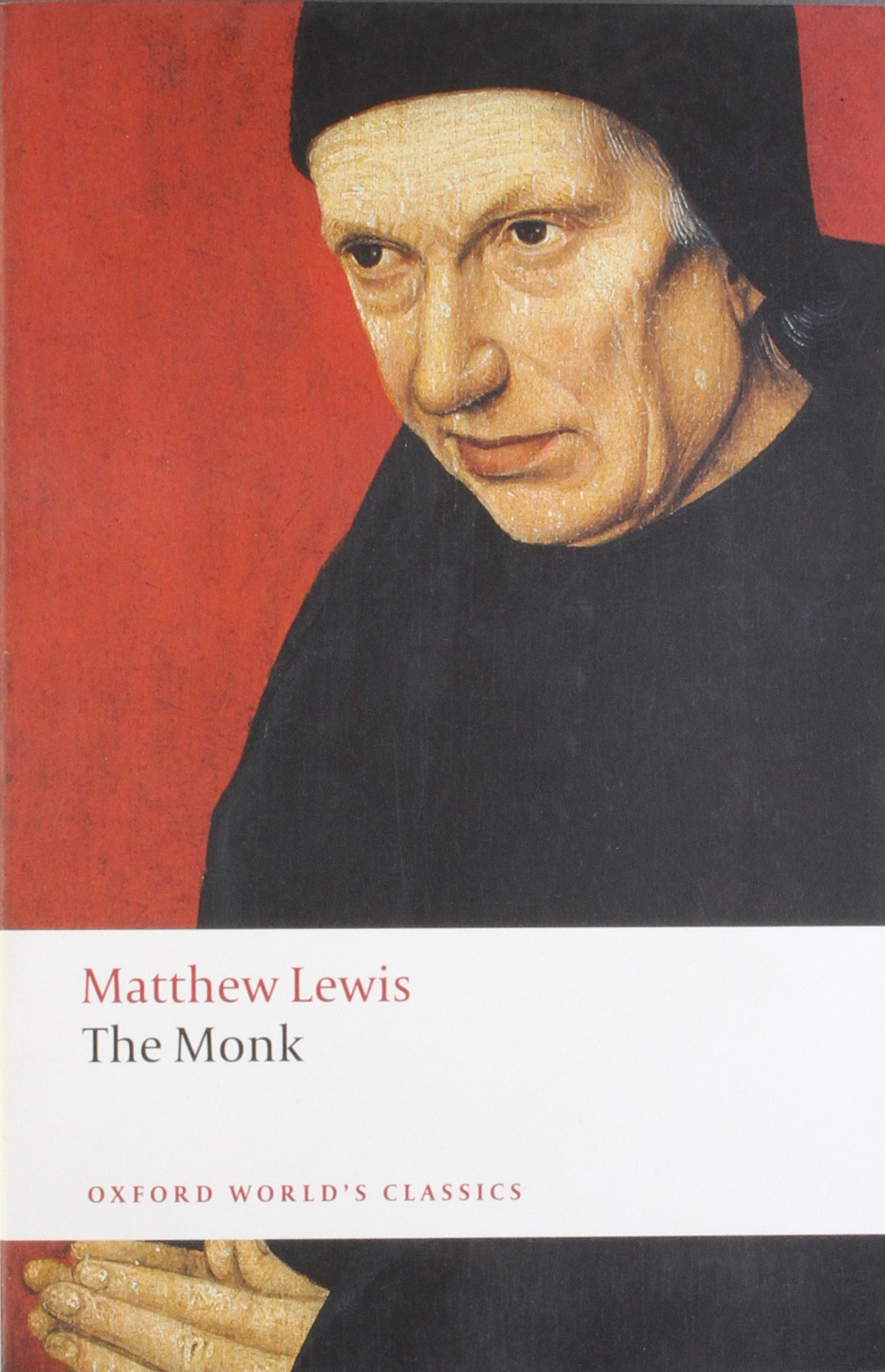
M. G. Lewis wrote The Monk in a handful of weeks when he still a teenager, and though he wrote other works in a similar vein, none of them earned him half the fame––notoriety rather––of The Monk. After having read this work, I can see why it was so talked about when it came out. (I also venture to suggest that we should have more MPs who wrote novels of this nature before their political careers began!) The work is deliciously juicy, never hesitating to drop the other shoe in a manner that retains its power to shock even today's terribly desensitized readers, and yet of course the 18th-century sensibilities prevent this shoe-dropping from being truly offensive, landing firmly in what we might call 'safely titillating territory'. (Well…maybe not entirely safe.) A more or less unrelated set of chapters detailing an exciting encounter with bandits serves as a slightly tamer interlude from the main scene of hot-blooded Mediterranean Catholic unreason and wickedness. Some of the details of the events that befall the fainting maiden for whom our naughty, naughty monk yearns still draw a horror-stricken grimace. No one expects the Spanish Inquisition, but they do make a brief appearance towards the end. And Rosario…I shouldn't say anything more about this companion to the central villain Ambrosio except that he is full of surprises! Bodices heave, boundaries are transgressed, mobs run about angrily, and of course the monastery has vast subterranean passages below it (it couldn't be a real monastery without them, you understand). By the end of the book one wonders if any more stops could have been pulled out, until Mr. Lewis makes a few more stops on the spot and pulls them out. This is all done from a conservative perspective of demonstrating the fall of a would-be hero due to a tragic flaw and the inevitable, just punishment of vice, but less harrumph-prone readers than I would probably admit that Mr. Lewis enjoyed the depiction of vice perhaps a shade too much for the moral lesson to remain the dominant feature of his novel.Oxford World's Classics always does a stellar job, with an attractive and sensible formatting, an apt cover, a sound introduction, and ample textual notes. Huzzah for that.I should say that this book is not recommended for those of very tender age, or practicing Catholics who are unable to get past the seriously anti-Catholic stereotyping in the novel motivated by a strange mix of heartfelt English prejudice and detached Enlightenment disdain. But for lovers of the Gothic and novices alike, it's high time to do some dungeon-crawling with "Monk" Lewis.
C**S
Gothic Masterpiece
Why this book is not as popularly read as Mrs. Radcliffe's doorstops will remain a mystery to me deeper than any to be found in this delightfully wicked and addictively readable masterpiece. That the author was only 19 when it was published puts him in the precocious genius department. What most new readers to this novel won't realize until they start is how much fun it is to read. Yes, the wicked are really bad (they really do consort with Satan) and the good generally come to a bad end but the sheer narrative rush of the book, the nuggets of wit that show the author winking out now and then, and all the demonic clergy, gloomy sepulchers and restless ghosts that you could ever wish for take this novel into that enviable category of one-of-a-kind reading experiences. Lewis has the courage of his conventions and won't cop out at the end like Mrs. Radcliffe will which makes this more a successor to "The Castle of Otranto" than any of her productions. And the lustful goings on would bring a blush of modesty to any of her virginal heroines (you can see why this novel was expurgated for it's fourth edition). Yet the dangers and horrors come on so fast and thick that you won't be bored and will soon understand why this was a major hit when first published and gave the author the nickname "Monk" Lewis for the rest of his writing days (which in keeping with his Romantic peers, was way too short). If you can look past the archaic locutions and enjoy the Sturm und Drang rules of the game, this is a novel you won't want to miss.
K**R
Gothic excellence
The genre of Horrid or Gothic novels is a favorite of mine. Ann Radcliffe & others became an interest to me, when reading Jane Austin ' s wonderful books. Through her books, I managed to find the Horrid Novels of N. Abbey & was introduced to these books.Poetry, terrors of reason, morals are all a part of the experience. As many of these novels are available free, I read them voraciously.I highly recommend The Monk as 1 of these novels to be read slowly & savored. ..especially when storming! Enjoy & answer the discussion questions in the back of the book...you may find yourself realizing a part of the plot you hadn't considered.
F**S
Modern Readers may Tire of the 18th Century Gothic Tropes
If you majored in English or literature you probably had to read this. If you have a MA in Gothic literature, as I do, you read this about 5-7 times.Unless you are a horror fan who also enjoys romantic elements, this is not for the average modern reader. It follows a specific Gothic pattern that is amped up to include incest, matricide, gender-bending, and some very graphic violence - and of course an appearance of Satan, described sort of like the Satan on "South Park" without the sweety voice.It is an easy read. Be prepared that good does not always win in this novel, but I still enjoyed more than Anne Radcliff's anything.
J**N
A classic 18th-century Gothic novel very much worth reading
I was pleasantly surprised by Lewis's novel. Despite its length, I read it in a rather brisk two weeks given my work schedule. Wikipedia will tell you about the subplot involving supernatural characters like the Bleeding Nun and the Wandering Jew, as well as discussing the novel's use of the medieval morality tale with respect to the novel's eponymous character Ambrosio. It is true that evil is much more often represented than the forces of good, but you will have to read until the end to find out which ultimately prevails. In general, I highly recommend this novel.
S**E
Kept me fairly glued...
This book kept me fairly glued. It amazed me that it was written by such a young man. Historically it was interesting. My problem was that the author was making a point for how superstitious people can really ruin other people's lives, but then he would throw in this supernatural stuff that was the kind of stuff that the superstitious people were afraid of. That made it a bit inconsistent. The characters, though, made it a pretty good read for me.
T**M
The Monk
I stumbled across this book via Amazon's financially lethal `recommendations'. As a 27 year old bloke I was slightly seduced by the sordid plot description, but also by the fact that I like to read things that are slightly off beat but known of (if that makes sense); the Walter Scott "epoch in our literature" quote did a lot to secure my purchase.The book is pitched as a gothic horror by some but it comes nowhere near the likes of Dracula and Frankenstein in terms of its requirements for the reader to dispel a grasp on reality. Whilst there are elements of the `supernatural' they do not dominate the book and prove more allegorical to the characters motivations and feelings than anything else.The atmosphere of the book I found very `close', almost claustrophobic at times; it is primarily set in Madrid and unsurprisingly is predominantly focused around a monastery. There is a broad cast of characters but I did feel they were, at times, distant from the reader; Lewis does not foster the character development of many classic authors and this did lead me to feel slightly detached from their respective endings and the conclusion to the various plots. In this vain it does take a while for the book to get going (I started to get really involved after 260 pages), but in this time the characters (barring what I said above) do develop and do become enticingly intertwined, leading you through to an exciting conclusion. I think my main gripe was that I wasn't quite sure where the 260 pages went, I've felt more attached to characters in other books after a couple of pages: this could however be as a result of the age of the book and perhaps a feeling that the characterisations are now a little dated.This book is an education if nothing else and does present a good read: there's no denying you want to see how it all turns out at the end. It is easy to read given its age but the reader must, at times, adopt a `getting through it' attitude. It does build to a crescendo though which makes it all worthwhile.
S**Y
Legendary literature
Excellent reading. Could not literally put it down. Great addition to my library. I love this book. Buy it folks. You won't regret it.
T**G
Four Stars
Good dark gothic novel which reads more like a modern novel not one written in the 1800s.
M**N
excellent value and delivered fast
great value book for my daughters studies
M**T
Five Stars
an excellent work.
ترست بايلوت
منذ شهر
منذ 3 أسابيع