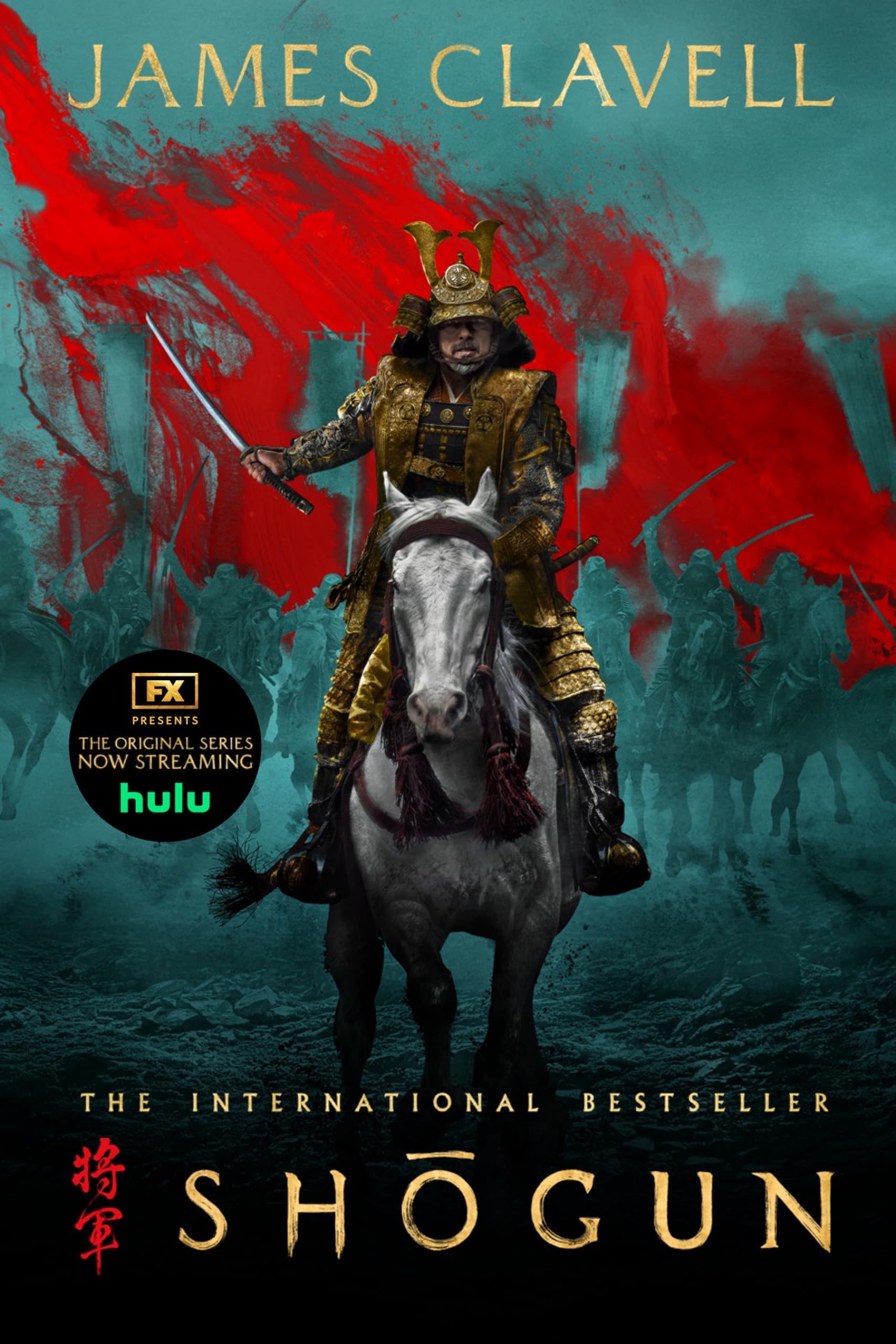
Shogun (Asian Saga, 1)
Product ID: 120325180
Shogun (Asian Saga, 1) [Clavell, James] on desertcart.com. *FREE* shipping on qualifying offers. Shogun (Asian Saga, 1) Review: I did not choose to be what I am. It is my karma. - Wow. Yep, that's a five star book. And a long one at that! Over 1,100 pages of small type, coming to together into one hell of a story. I took my time with this, savoring it, and I'm impressed by James Clavell. He has crafted a story here that picks you up and places you, no, forcesyou into 1600 Japan. Studied historians may disagree (or may not, I don't know), but wow did he do an excellent job of immersing you in Japanese culture of that time. Through the eyes of stranded English pilot John Blackthorne (who will come to be known as Anjin) the reader is shown a living, breathing Japan. The discipline, the manners, the political manuevering, the brutality and utter loyalty of the Samurai; we get a front row seat. As Blackthorne deals with the language barrier and tries to survive in a foreign land, so too do we. Japan is subject to a precarious peace with the recent death of the Taiko, the once-peasant conqueror of Japan who has left behind a sole heir not yet old enough to inherit power. The Council of Regents attempts to hold the country together as all of its major players cultivate their own ambitions; Ishido and master strategist Toranaga chief among them. The presence of the Christian faith, brought to the island by the Portuguese; key trade partners and now residents of Nagasaki, complicates the political climate even further. The stage is set for a memorable tale. Beyond an intriguing plot Clavell cultivates some truly beautiful scenes, and has brought to life an enormous cast of characters, all with their own motives, loyalties, and dreams. Blackthorne, Toranaga, Mariko, Yabu, Alvito, Omi, Buntaro, the list goes on (and on). Yoshi Toranaga was an absolute thrill to read about; and god help anyone who thinks they've gotten the better of him. Though the book was lengthy, it could have easily continued with no complaint from me. Clavell has carved out a piece of time here and given us the full story, with a tangible feeling that the story had been barreling along before we were privy to it, and would continue to do so when we were done. I suppose I'll take that as a sign that I should read the next book in his Asian Saga. I did not choose to be what I am. It is my karma. Review: One of the best books ever written - This is one of the best books ever written, and that is the hill I will die on. It just has everything for me. Great characters that are very well written, amazing storyline and plot set in Japan in the 17th century with awesome samurai, and a beautiful love story. Amazing historical fiction that everybody should read.


| Best Sellers Rank | #810,755 in Books ( See Top 100 in Books ) #1,149 in Family Saga Fiction #4,376 in Historical Fiction (Books) |
| Customer Reviews | 4.7 4.7 out of 5 stars (26,959) |
| Dimensions | 6.25 x 2.5 x 9.25 inches |
| Edition | Unabridged |
| ISBN-10 | 1982537523 |
| ISBN-13 | 978-1982537524 |
| Item Weight | 3.9 pounds |
| Language | English |
| Print length | 1299 pages |
| Publication date | June 4, 2019 |
| Publisher | Blackstone Pub |
B**D
I did not choose to be what I am. It is my karma.
Wow. Yep, that's a five star book. And a long one at that! Over 1,100 pages of small type, coming to together into one hell of a story. I took my time with this, savoring it, and I'm impressed by James Clavell. He has crafted a story here that picks you up and places you, no, forcesyou into 1600 Japan. Studied historians may disagree (or may not, I don't know), but wow did he do an excellent job of immersing you in Japanese culture of that time. Through the eyes of stranded English pilot John Blackthorne (who will come to be known as Anjin) the reader is shown a living, breathing Japan. The discipline, the manners, the political manuevering, the brutality and utter loyalty of the Samurai; we get a front row seat. As Blackthorne deals with the language barrier and tries to survive in a foreign land, so too do we. Japan is subject to a precarious peace with the recent death of the Taiko, the once-peasant conqueror of Japan who has left behind a sole heir not yet old enough to inherit power. The Council of Regents attempts to hold the country together as all of its major players cultivate their own ambitions; Ishido and master strategist Toranaga chief among them. The presence of the Christian faith, brought to the island by the Portuguese; key trade partners and now residents of Nagasaki, complicates the political climate even further. The stage is set for a memorable tale. Beyond an intriguing plot Clavell cultivates some truly beautiful scenes, and has brought to life an enormous cast of characters, all with their own motives, loyalties, and dreams. Blackthorne, Toranaga, Mariko, Yabu, Alvito, Omi, Buntaro, the list goes on (and on). Yoshi Toranaga was an absolute thrill to read about; and god help anyone who thinks they've gotten the better of him. Though the book was lengthy, it could have easily continued with no complaint from me. Clavell has carved out a piece of time here and given us the full story, with a tangible feeling that the story had been barreling along before we were privy to it, and would continue to do so when we were done. I suppose I'll take that as a sign that I should read the next book in his Asian Saga. I did not choose to be what I am. It is my karma.
J**Y
One of the best books ever written
This is one of the best books ever written, and that is the hill I will die on. It just has everything for me. Great characters that are very well written, amazing storyline and plot set in Japan in the 17th century with awesome samurai, and a beautiful love story. Amazing historical fiction that everybody should read.
E**K
Epic Story, Culturally Enlightening, Fantastic Kindle Edition
First off, I find it odd that at the time I'm writing this review the Kindle edition is not available in the U.S. (I purchased it nearly a year ago for my Kindle in the U.S.). Aside from that, this has been the first time I've tackled a novel of such epic proportions from the size of the novel to the extent of the story and more. I was never much of a literary type, and I've generally been ignorant when it comes to the great works and authors of the 20th century with the exception of those famous authors every high schooler reads. Now as I approach middle age, I've chosen to tackle works and authors that seem to be accepted or destined to be classics. Shogun was a different type of novel for me in the sense that it is historical fiction set in Japan. Having been to Japan, I was curious to read this book. I am not sorry I did. The beauty of this book is that the story fantastically tells a story about Japan that serves perhaps a greater purpose in relating the culture of the country. While the setting may be centuries ago, the cultural aspects seem well connected to what I experienced in my own travels. There is something peaceful in the exotic nature of the Japanese Culture, and this book really sucks one into it. The narrative is fantastic from the point of view of the English ship pilot, Blackthorne. I'll have to admit that I was surprised to find this character and point of view right from the beginning. Only knowing the title of the book, I had thought I might have the wrong book even, but once the English ship becomes stranded in Japan, those thoughts vanished. It then becomes apparent that James Clavell intended Blackthorne in a dual role. Not only is he the protagonist of the story, he is the link between the Western and Eastern world. I really felt that as the story progressed and Blackthorne becomes Japanese through his own awareness of the culture, so did I. It is a story that leaves one feeling accomplished and educated. While the plot itself has its ups and downs be it political corruption, strife, conflict, etc., I felt I achieved something and obtained something from a novel that is not often obtained from the books I've read. As for the Kindle edition... I loved it. This book is a monster from what I've seen at book stores. The presentation and editing seem perfect. I was a bit concerned this would be an OCR'd copy, and it may be, but it is well edited. There have been some rare typos (I've noticed 2 over the whole book). My only other complaint is that there are certain words that are italicized repeatedly that feel a little silly (e.g. ninja towards the end of the book), but that may very well have been in the original printings. The Kindle format kept the size of the novel from being intimidating although I often wish the Kindle itself could hide the progress bar and percentage. I'm not a fast reader, and it was disheartening at times to spend an hour reading only to find I've gone 1 or 2% on the progress bar.
T**O
great story, great story-telling, the end is unexpected and even if you put down that book with a lingering flavor that tastes a little bit acrid, this is eventually why you like the book too. life is not flat and this story isn't as well.
A**Y
I never really liked reading until somebody lent me this book. So, maybe I’m a little biased. My paperback copy was so old and faded that reading was really hard. I found this in the kindle store for really cheap, possibly because the tv show had just come out and had to purchase it. It’s a long read, but the story is wonderfully written. If you are fascinated by Japan, its culture, and history, you’ll like this book.
M**M
Excelente libro
E**A
Romance eletrizante que apresenta bastante da cultura japonesa. Partes emocionantes da trama não estão na série de TV. Recomendo a leitura.
S**H
Has to be the best book written about early Japanese and the early European dealings , the clash of cultures and the influence of the church
Trustpilot
3 days ago
5 days ago